Charuni seeks hike in financial aid for farmers under govt scheme
Source Entity
Latest News: Todays Latest News Headlines from India & World | Hindustan Times | Hindustan Times
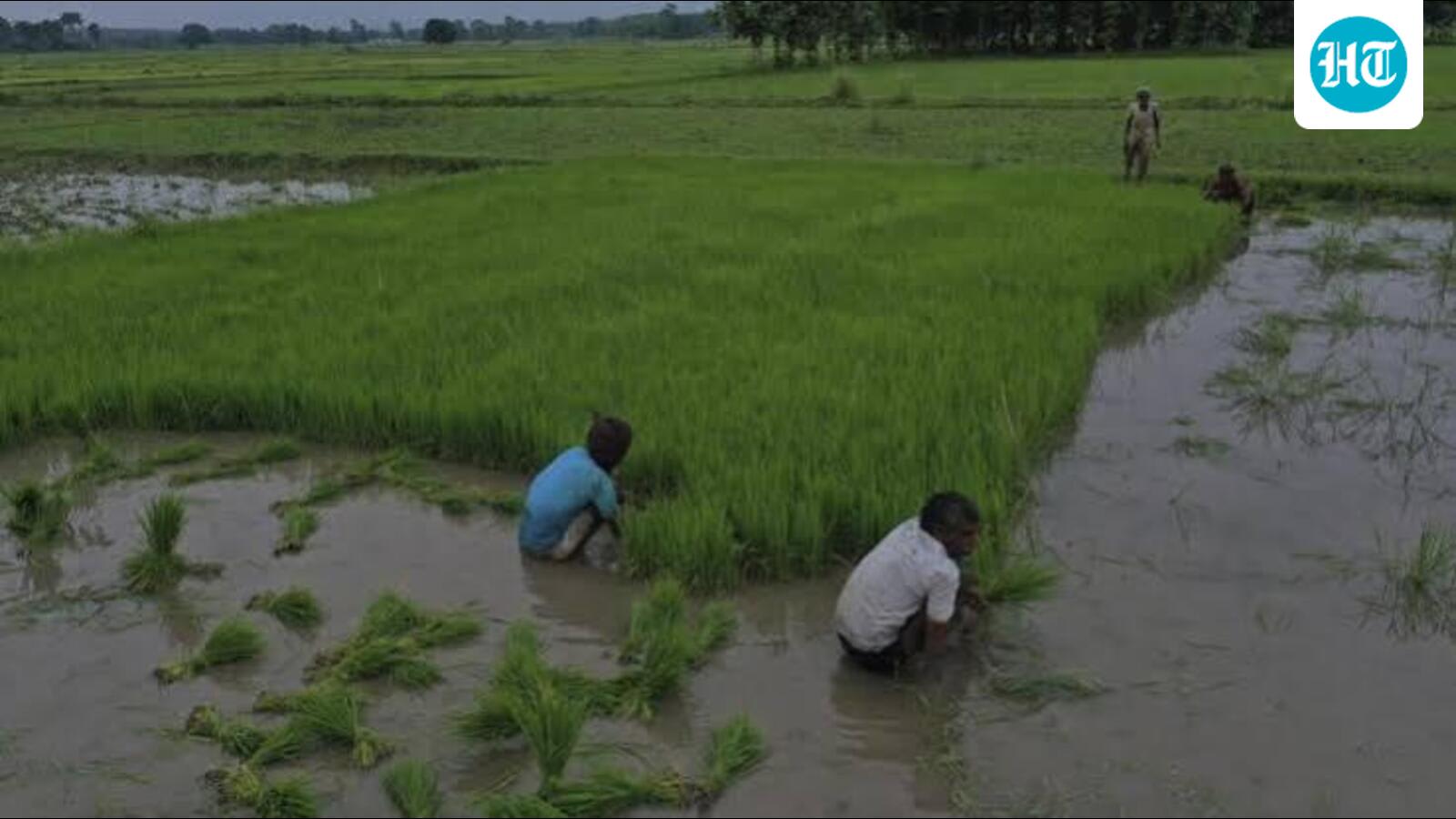
The Bharatiya Kisan Union (Charuni) has formally requested the Haryana government to significantly increase compensation under the 2013 Kisan evam Khetihar Mazdoor Jeevan Suraksha Yojana. Led by Gurnam Singh Charuni, the union seeks a five-fold hike in financial aid for accidental deaths and permanent disabilities to better support affected farming families.
Demand for Enhanced Agricultural Compensation in Haryana
The Bharatiya Kisan Union (Charuni), under the leadership of Gurnam Singh Charuni, has initiated a significant push for policy reform regarding the social security of farmers and agricultural laborers in Haryana. The union is specifically targeting the ‘Chief Minister’s Kisan evam Khetihar Mazdoor Jeevan Suraksha Yojana, 2013,’ a state-sponsored welfare scheme designed to provide financial relief in the event of accidents. By submitting a formal memorandum to the Chief Minister, the Agriculture Minister, and the chairman of the Haryana State Agricultural Marketing Board, the union has signaled a coordinated effort to modernize compensation structures that have arguably failed to keep pace with inflation and the rising costs of medical care.
The Proposed Financial Restructuring
The core of the union’s demand lies in a substantial upward revision of existing payout slabs. Currently, the scheme provides ₹5 lakh in the event of an accidental death; the union is advocating for a five-fold increase to ₹25 lakh. Furthermore, for cases involving spinal cord fractures or permanent disabilities—conditions that often leave families in severe economic distress due to long-term care requirements—the union has requested an increase from ₹2.5 lakh to ₹15 lakh. These figures reflect a push to align government aid with the modern realities of high healthcare costs and the loss of earning capacity within agricultural households.
Addressing Partial Disabilities and Limb Loss
Beyond catastrophic injuries and death, the memorandum emphasizes the need for a proportional increase in compensation for the loss of limbs and fingers. Agricultural labor is inherently hazardous, involving heavy machinery and unpredictable field conditions. The union argues that current compensation levels for partial disabilities are insufficient to cover rehabilitation or vocational retraining, effectively leaving injured laborers without a path back to economic self-sufficiency. By seeking a proportional scale, the BKU (Charuni) aims to create a more nuanced and responsive safety net.
Historical Context and Scheme Evolution
The ‘Chief Minister’s Kisan evam Khetihar Mazdoor Jeevan Suraksha Yojana, 2013’ was established to provide a safety buffer for those working in the primary sector. However, as agricultural technology advances and the cost of living increases, the original 2013 framework is being scrutinized for its adequacy. The union's demand represents a broader trend in Indian agrarian politics, where farmer organizations are increasingly focusing on institutionalized social security and risk mitigation, rather than just crop pricing or procurement issues.
Broader Implications for State Policy
If the Haryana government chooses to entertain these demands, it could set a precedent for other states to re-evaluate their own agricultural safety schemes. Fiscal constraints often dictate the pace of such policy shifts; however, the political pressure exerted by influential unions like the BKU (Charuni) often forces governments to balance budgetary limitations against the imperative of rural welfare. The outcome of this negotiation will likely hinge on the state’s ability to reallocate funds or increase the budgetary outlay for the marketing board’s welfare programs.
Future Outlook for Agrarian Welfare
Looking ahead, the success of this campaign may dictate the future relationship between the state government and farmer unions in Haryana. If the government agrees to these hikes, it would signal a major victory for the BKU (Charuni) and demonstrate a willingness to address the long-term sustainability of agricultural labor. Conversely, a rejection or partial acceptance could lead to further mobilization. Ultimately, this development highlights the critical necessity of updating welfare legislation to ensure that the risks inherent in farming do not translate into permanent poverty for the nation's agricultural workforce.
Verification Required?