
The End of Agrarian Optimism
For decades, sustainable intensification lived in the dirt. The goal was simple: squeeze more calories out of every hectare without destroying the planet. We saw this in the Green Revolution's obsession with high-yield varieties and the subsequent pivot toward precision agriculture. But let's be honest. Optimizing a field is still a gamble against a volatile atmosphere. You can have the best sensors in the world, but a single freak weather event in the Midwest or a prolonged drought in the Mekong Delta renders your data points irrelevant. The systemic risk isn't the lack of technology; it is the reliance on the outdoors.
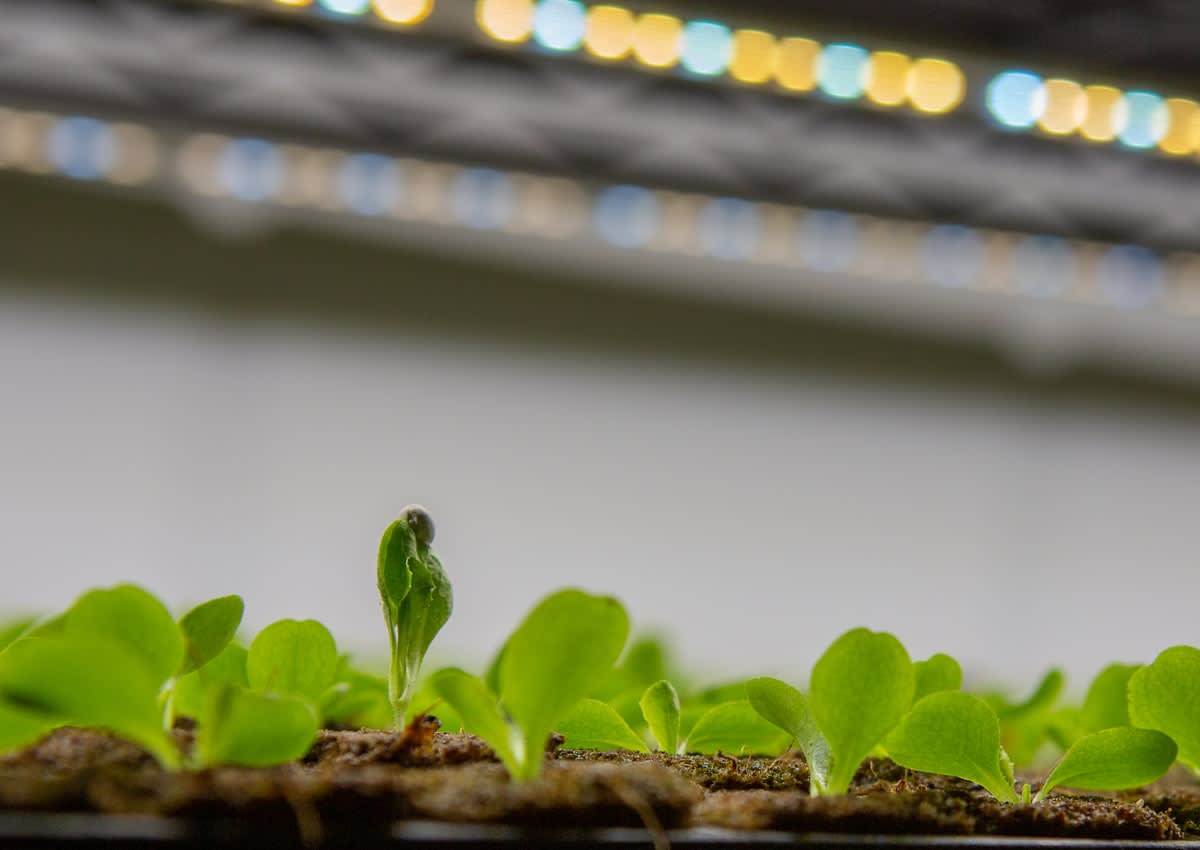
Why continue trying to tame a wild system when we can build a controlled one? The vertical pivot represents a fundamental shift in philosophy. We are moving from 'optimizing nature' to 'engineering production.' This isn't just about hydroponic lettuce in a shipping container. It is a wholesale migration of the production cycle into the factory. By moving the point of intensification from the field to the facility, we eliminate the most unpredictable variable in the food chain: the environment. Does this sound like industrialization? It is. But it is an industrialization designed for resilience rather than mere volume.
"The field was the center of the world for ten thousand years. Now, the factory is the only place where we can actually guarantee a harvest in a volatile century."— Industry Analyst, Global Ag-Systems
The Logic of the Factory Floor
Control is the ultimate currency in sustainable intensification. In a factory setting, variables like nutrient delivery, light spectrum, and humidity are tuned to the millisecond. This level of precision allows for a compression of growth cycles that would be impossible in a field. We aren't just growing plants; we are running an optimization algorithm where the plant is the hardware. This shift allows for a drastic reduction in inputs. When you recycle 95% of your water in a closed-loop system, the concept of a drought becomes a historical curiosity rather than a business risk.
But the pivot goes deeper than vertical farming. Look at the rise of precision fermentation and cellular agriculture. These are the ultimate expressions of the vertical pivot. Why grow an entire cow—with its massive methane footprint and inefficient caloric conversion—when you can grow the protein in a bioreactor? This is the essence of moving from the field to the factory. We are stripping away the biological overhead of the animal and the soil, leaving only the desired output. It is the lean manufacturing of calories.
| Metric | Traditional Field | Controlled Factory (CEA/Cellular) |
|---|---|---|
| Water Usage | High (Evaporative loss) | Ultra-Low (Closed-loop recycling) |
| Land Footprint | Extensive (Hectares) | Intensive (Square meters/Vertical) |
| Production Cycle | Seasonal/Linear | Continuous/Cyclical |
| Input Control | Reactive (Pesticides/Fertilizer) | Proactive (Precision Dosing) |
| Risk Profile | Climate-Dependent | Energy-Dependent |
This transition shifts the primary risk from climate to energy. In the field, you pray for rain; in the factory, you pray for a stable grid. This is a trade-off that strategic thinkers are increasingly willing to make. Why? Because energy can be decarbonized and decentralized through solar and wind, whereas you cannot 'decarbonize' a drought or 'engineer' a sudden frost out of a traditional wheat field. The factory model transforms food security into an infrastructure problem, which is far more solvable than an ecological one.
Case Study: The Urban Laboratory
Singapore's '30-by-30' goal is the gold standard for this pivot. By aiming to produce 30% of its nutritional needs locally by 2030, a city-state with virtually no arable land is proving that geography is no longer a prerequisite for food sovereignty.
Geography is No Longer Destiny
For millennia, the map of global power was drawn by the location of fertile river valleys. The Nile, the Indus, the Yangtze—these were the engines of civilization. The vertical pivot effectively erases these lines. When you can produce high-quality protein and produce in a factory in the middle of the Rub' al Khali desert or the frozen tundra of the Nordics, the strategic importance of arable land plummets. We are witnessing the decoupling of food production from geography.
Consider the implications for global trade. Currently, we ship water-intensive crops across oceans, essentially exporting the water of one region to quench the hunger of another. This is an absurdity of the old agrarian model. The factory model allows for hyper-localization. Production happens at the point of consumption. The 'food mile' disappears, replaced by the 'food meter.' This doesn't just reduce carbon emissions from transport; it eliminates the fragility of global supply chains that we saw collapse during recent geopolitical shocks.
Is this a utopian vision? Hardly. The CAPEX required to build these facilities is staggering. We are trading the low entry cost of a seed and a plow for the massive upfront investment of steel, sensors, and software. This creates a new power dynamic where the 'landowners' of the future aren't those with the most soil, but those with the most capital and the most efficient intellectual property. The divide is shifting from a rural-urban split to a tech-legacy split.
Investment Shift in AgTech (Relative Growth)
Executive Insight
+18.4%
YTD Growth
Yet, the momentum is undeniable. The efficiency gains are too large to ignore. When you can produce 100 times more yield per square meter than a traditional farm, the high cost of electricity becomes a rounding error in the long-term balance sheet. The question is no longer whether we can afford to move to the factory, but whether we can afford to stay in the field. The risk of total crop failure in a warming world is a cost that no sovereign nation can truly hedge against using traditional methods.
The Systemic Synthesis
We must avoid the trap of thinking this is a binary choice. The future isn't a world without farms; it is a world of hybrid systems. We will still need the field for staples that are too calorically dense or structurally complex for current bioreactors—think of the vast grains and oilseeds. But the high-value, nutrient-dense, and protein-heavy components of our diet are migrating. The field will become the place for ecological restoration and carbon sequestration, while the factory handles the heavy lifting of caloric production.
This is the true promise of the vertical pivot. By moving production into the factory, we can finally give the land back to nature. Imagine a world where millions of hectares of monoculture farmland are rewilded, not because we found a way to grow more on less land, but because we stopped needing the land for those specific crops entirely. This isn't just about food security; it is about planetary recovery. The factory is the tool that allows the field to breathe again.
The pivot is inevitable because it is logical. We are moving from a system of hope—hoping for rain, hoping for a good season—to a system of certainty. In an era of systemic instability, certainty is the most valuable commodity on earth. The factory isn't just a place of production; it is a fortress of resilience. The great decoupling has begun, and the blueprint for the next century of human nutrition is being written in code and steel, not in soil and seed.