
The global food map is being redrawn, not in the rural heartlands, but in the concrete canyons of the world's megacities. For decades, the urban model relied on a precarious 'just-in-time' logistics chain that stretched across oceans and continents. Now, a silent pivot is underway. Cities are no longer content to be passive consumers at the end of a long, fragile line; they are becoming producers. This isn't a hobbyist's return to community gardening. It is a strategic, industrial-scale migration toward food sovereignty.
What drives this shift? The realization that geographic distance is a systemic vulnerability. When a city depends on a supply chain spanning ten thousand miles for its basic nutrients, it isn't just importing food—it is importing risk. The move toward hyper-local hubs represents a fundamental decoupling from this volatility. By treating the city itself as the farm, urban planners are turning non-arable land—rooftops, abandoned warehouses, and underground vaults—into the new agricultural frontier.
The Engineering of Autonomy
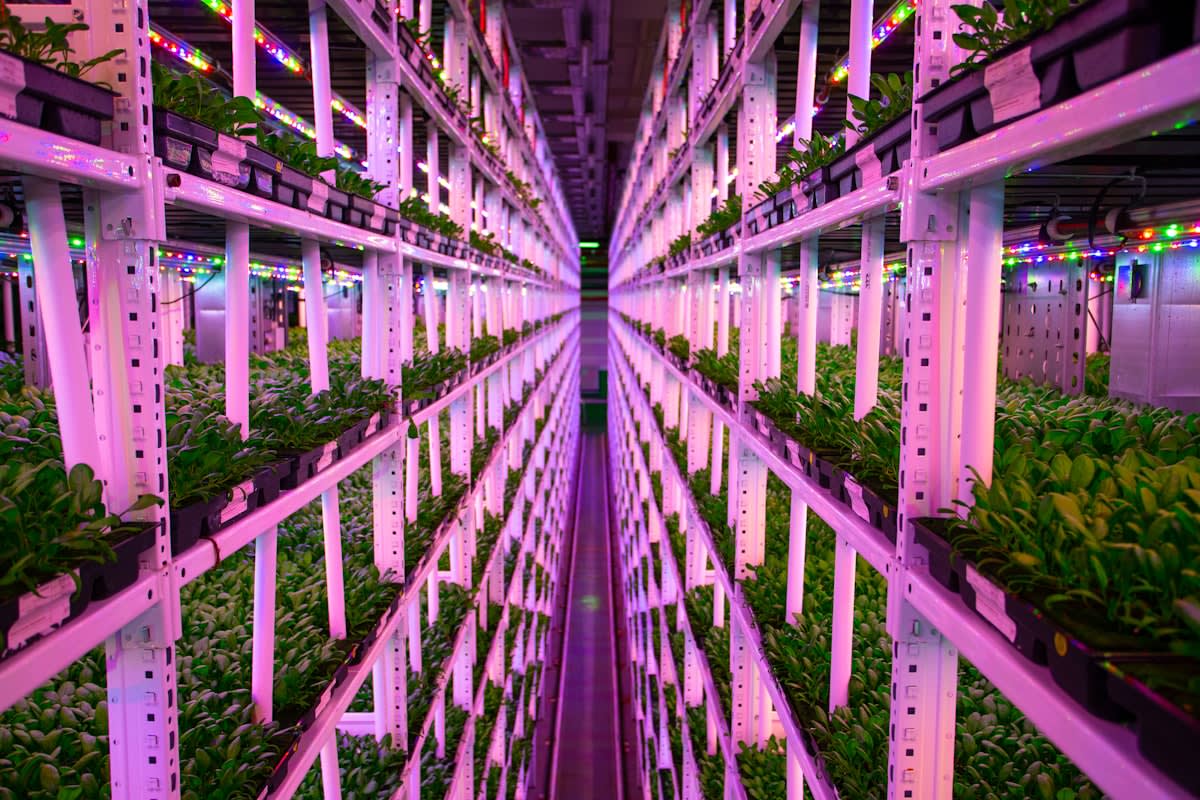
The catalyst for this transformation is the rapid maturation of Controlled-Environment Agriculture (CEA). We are seeing a departure from traditional soil-based farming toward hydroponics and aeroponics. These systems don't just save space; they rewrite the laws of agricultural productivity. Hydroponic systems, which grow plants in nutrient-rich water solutions, are achieving yields 10 to 12 times higher per square meter than traditional farming. More impressively, they do this while slashing water usage by a staggering 90%.
The Efficiency Gap
The efficiency delta is massive. While traditional farming fights against the unpredictability of weather and soil degradation, CEA creates a perfected, closed-loop environment where every milliliter of water and every photon of light is optimized for growth.
This technological leap allows cities to ignore the limitations of their own geography. You no longer need a river valley or a fertile plain to feed a population. Instead, you need a power grid and a climate-control system. This shift is moving from theoretical to operational across diverse urban landscapes, turning the 'food desert' narrative on its head by placing the means of production directly within the neighborhoods that need them most.
Global Frontlines: From Singapore to New York
Singapore serves as the global blueprint for this transition. With almost no traditional farmland, the city-state has adopted an aggressive '30 by 30' goal, aiming to produce 30% of its nutritional needs locally by 2030. This isn't a vague aspiration; it is a hard-coded policy. The result is an ecosystem of high-density hubs that treat calories as a matter of national security rather than just commodity trading.
Look at Sky Greens in Singapore. This vertical farm produces 1 ton of vegetables daily on a mere 0.2 hectares of vertical space. When you analyze the data, the land productivity rate is 10 to 15 times higher than that of conventional farms. It is a surgical application of technology to solve a geographic deficit, proving that high-calorie output can be decoupled from land ownership.
Across the world in the United States, the shift is manifesting through a combination of private innovation and legislative incentives. In New Jersey, AeroFarms operates a 70,000 square foot facility that yields 2 million pounds of produce. This scale of production within a warehouse setting eliminates the need for long-haul trucking, reducing the carbon footprint and the time between harvest and consumption to nearly zero.
New York City is doubling down on this trend through the Urban Agriculture Tax Credit. By providing financial incentives for the adoption of urban farming, the city is effectively subsidizing its own resilience. The goal is clear: transform the city's dormant architectural assets into active food-producing hubs, ensuring that the food supply is not subject to the whims of interstate logistics or fuel price spikes.
| Metric | Conventional Farming | Urban CEA (Hydroponics) |
|---|---|---|
| Water Usage | 100% (Baseline) | 10% (90% Reduction) |
| Yield per Sq Meter | 1x (Baseline) | 10-12x Increase |
| Land Productivity | Standard | 10-15x Higher (Vertical) |
| Supply Chain Distance | Thousands of Miles | Hyper-Local (City-wide) |
The Sovereignty Framework: Beyond the Harvest
This isn't just about the technology of growing plants; it is about the politics of who controls the food. Recent research by Rivera, Díaz de León, and Pérez-Salazar (2024) highlights the drivers of food systems based on food sovereignty domains. They argue that the shift toward local control is a response to the systemic failures of globalized industrial agriculture. Food sovereignty is the right of peoples to healthy and culturally appropriate food produced through ecologically sound and sustainable methods.
When cities integrate these hubs, they are effectively reclaiming their agency. The 'Silent Pivot' is a movement toward governance where food production is integrated into urban planning rather than treated as an external dependency. This involves a shift in social movements and institutional governance, moving away from the 'efficiency' of global markets toward the 'resilience' of local networks.
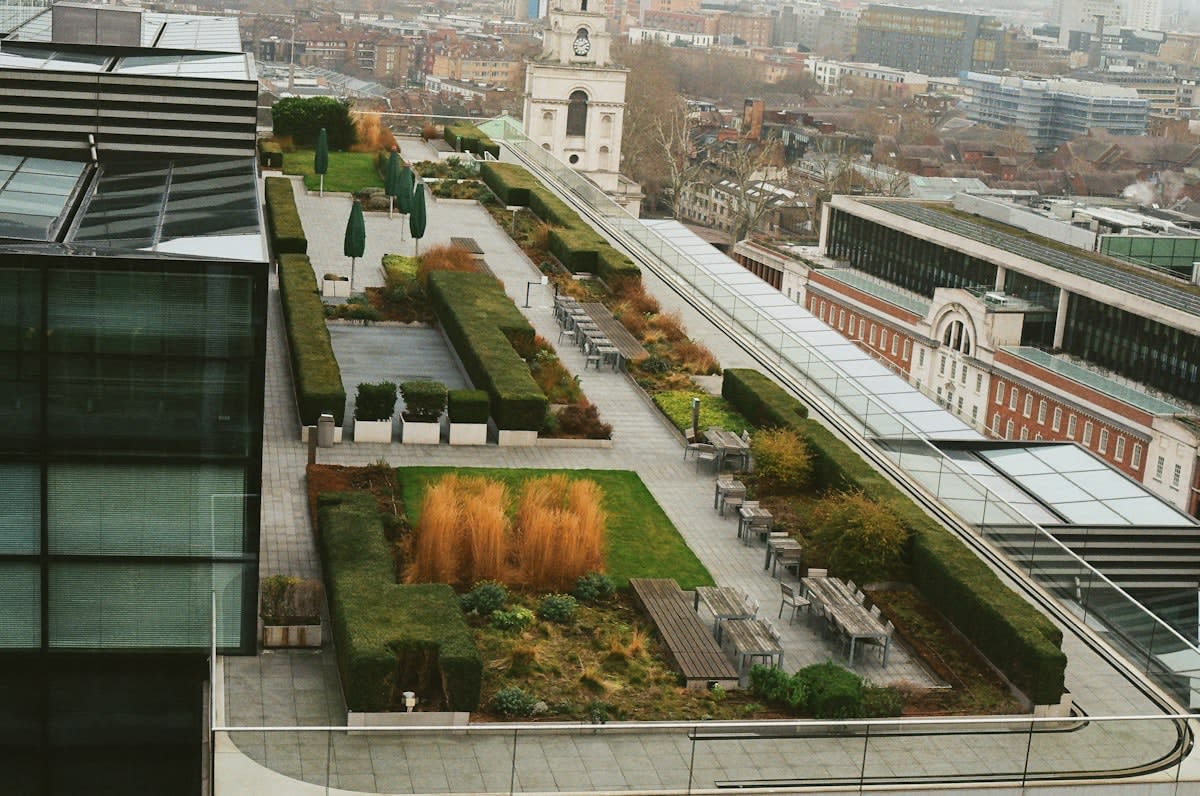
The integration of these systems allows for the use of spaces that were previously considered useless. Rooftops, abandoned buildings, and underground spaces are no longer liabilities; they are assets. This repurposing of the urban fabric is a key component of achieving Sustainable Development Goal 11 (Sustainable Cities) and Goal 12 (Responsible Consumption and Production).
The Next Frontier: Circularity and Bio-Integration
The evolution of these hubs is moving toward a circular-economy model. The next phase isn't just growing food in the city, but using the city to fuel that growth. We are seeing the emergence of systems that utilize food waste-derived fertilizers, turning the urban waste stream into a nutrient stream. This closes the loop, reducing the need for synthetic inputs imported from outside the city.
Furthermore, the integration of bio-integrated systems is on the horizon. The use of microbial inoculants to enhance nutrient uptake in CEA systems will further push the boundaries of yield and efficiency. This represents a shift from simple hydroponics to a complex, engineered ecosystem that mimics natural biological processes within a sterile, controlled environment.
Why does this matter now? Because the delta between 2024 and 2025 shows an accelerating adoption rate. While vertical farming was once a niche curiosity, the combination of tax credits in New York and national mandates in Singapore has moved it into the realm of critical infrastructure. Cities are no longer asking if they can grow their own food; they are calculating how fast they can scale.
The pivot to food sovereignty is an admission that the old world of globalized abundance was a fragile illusion. By building hyper-local protein and produce hubs, cities are constructing a new form of security. This is not a retreat from the world, but a strategic adaptation to it. The city of the future is not just a hub of finance and culture—it is a self-sustaining organism.