
The Great Urban Pivot
The timing of the current shift in urban agriculture is not accidental. In the span of just a few weeks throughout July and August 2026, a series of reports have fundamentally altered how we view the ground beneath our skyscrapers. We are witnessing a transition from the outdated concept of 'urban gardening'—often a hobbyist pursuit—to a rigorous, industrial-scale regeneration of urban soil. This is no longer about adding a few planters to a balcony; it is about the systematic recovery of the urban support system to solve a global food gap that has long plagued densely populated centers.
Why does this matter now? For decades, urban soil was treated as a liability—a contaminated layer of debris to be paved over. The current trend reverses this logic, treating the city as a nutrient mine. By integrating circular nutrient management and nature-based solutions, cities are transforming organic waste into high-yield agricultural substrates. This alchemy turns the 'concrete jungle' into a productive ecosystem, reducing the reliance on fragile global supply chains and bringing calorie production back to the point of consumption.
The Lima Blueprint: Beyond Aesthetics
Look at the recent developments in Rimac, Lima. As of August 2026, a proposed sustainable urban support regeneration system is attempting to do more than just 'beautify' a historic landscape. The district of Rimac has long struggled with citizen insecurity, unplanned urban growth, and a critical lack of green areas. The current strategy focuses on recovering the historic urban landscape by treating the soil as a foundational element of social and environmental stability. When you regenerate the soil, you don't just grow plants; you reconnect a disconnected urban environment.
The Rimac case proves that soil regeneration is a tool for urban recovery. By addressing the limited percentage of green areas through a structured regeneration system, the project targets the root causes of urban decay. This approach acknowledges that a city cannot be sustainable if its land is biologically dead. The result is a hybrid model where heritage conservation meets food security, proving that historic centers can be both museums of the past and engines of future nutrition.
"The recovery of the historic urban landscape is not merely an architectural challenge, but a biological one. Without a sustainable urban support system, the city remains a fragment of its potential."— Analysis of the Rimac Regeneration Proposal (2026)
This shift in Peru reflects a broader global movement. We are seeing a departure from the 'top-down' landscaping of the 2010s toward 'co-creation' and public sociology. The goal is to integrate the local population into the regeneration process, ensuring that the new green lungs of the city also serve as food sources. It is a strategic move that transforms the urban landscape from a passive backdrop into an active participant in the city's survival.
While Lima focuses on the landscape, the technical engine driving this trend is emerging from the European research sector.
ECONUTRI and the Science of Circularity
The ECONUTRI project, reporting its results in late July 2026, provides the technical manual for this revolution. The project has identified and developed a portfolio of 24 innovative technologies and nature-based solutions. This isn't just a few new tools; it is a holistic concept for circular nutrient management. The core objective is to recover nutrients from organic wastes—specifically manure, digestate, and other organic residues—and feed them back into the urban and peri-urban crop production cycle.
The precision of this approach is what separates it from previous efforts. By utilizing sensors and hyperspectral imaging, farmers and urban agronomists can now detect nutrient deficiencies and diseases in real-time. This allows for precision fertilization, ensuring that the regenerated soil receives exactly what it needs without the runoff and pollution associated with traditional chemical fertilizers. It is the application of high-tech diagnostics to the most ancient of resources: the earth.
| Metric | Traditional Urban Farming | 2026 Regenerative Model (ECONUTRI) |
|---|---|---|
| Nutrient Source | Imported Chemical Fertilizers | Recovered Organic Waste/Digestate |
| Resource Loop | Linear (Input -> Waste) | Circular (Waste -> Input) |
| Application Method | Broad-spectrum Spraying | Precision Sensors & Hyperspectral Imaging |
| Environmental Impact | Nitrate Runoff/Soil Degradation | Carbon Sequestration/Soil Recovery |
Beyond simple composting, the ECONUTRI framework introduces advanced nutrient recovery from drainage water, which is then reused to irrigate other crops. This creates a closed-loop system that minimizes water waste and maximizes nutrient efficiency. By treating every drop of drainage as a potential resource, the project demonstrates that the 'waste' of a city is actually the 'wealth' of its food system.
The Technology Leap
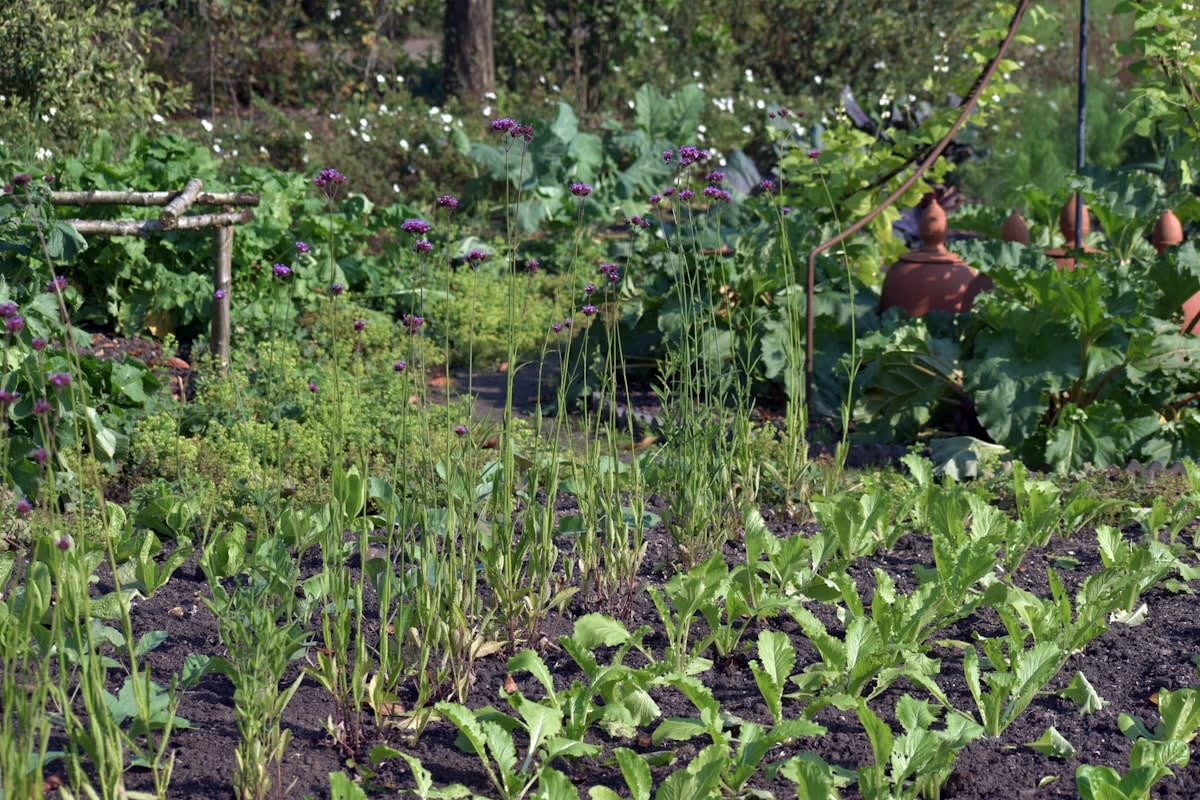
The deployment of 24 distinct nature-based technologies marks the transition from experimental urban farming to a scalable industrial standard for nutrient recovery.
The integration of these technologies is not without its hurdles, but the momentum is undeniable. The focus has shifted toward improving farm competitiveness by reducing the costs of external inputs. When a city can produce its own fertilizer from its own organic waste, the economic equation of urban farming changes entirely, making it a viable alternative to long-haul food transport.
This technological surge creates a stark contrast when compared to the methods used just a year ago.
The Delta: 2025 vs. 2026
Twelve months ago, urban soil discussions were dominated by 'remediation'—the act of cleaning up toxins so that land was no longer dangerous. In 2026, the conversation has evolved into 'regeneration.' We are no longer asking how to make soil safe; we are asking how to make it super-productive. The delta is a shift from a defensive posture (avoiding harm) to an offensive posture (creating abundance).
The introduction of digital decision-support systems has accelerated this timeline. Where 2025 relied on periodic soil testing and guesswork, 2026 utilizes continuous monitoring. This real-time data flow allows for an agile response to soil health, turning the urban underground into a managed asset. The result is a significant increase in nutrient use efficiency, which directly translates to higher crop yields in smaller spaces.
Shift in Urban Soil Strategy Focus (2025-2026)
Executive Insight
+18.4%
YTD Growth
This evolution is not limited to wealthy nations. The synchronization of the Rimac project in Peru and the ECONUTRI project in Europe suggests a global consensus. Whether the driver is the recovery of a historic district or the optimization of agricultural competitiveness, the solution is the same: treat the soil as a living, circular system. The global food gap is not being solved by finding more land, but by making the land we already have work harder.
As we look toward the end of the decade, the 'Hidden Alchemy' of the concrete jungle will likely become the standard for urban survival. The ability to turn organic residue into nutrient-dense soil is the ultimate resilience strategy. Cities that embrace this circularity will not only feed their populations but will also heal their environments, transforming the urban sprawl into a network of regenerative hubs.