
Fertilizer is a blind bet. Farmers across the Mekong Delta continue to apply nitrogen-heavy inputs based on ancestral intuition while the actual nutrient profiles of their land plummet toward sterile exhaustion (Source: MARD, 2023). They gamble every season. Why do we assume more chemicals equal more yield when the soil is already choking on nitrates?
The terrain is changing. Between 2023 and 2024, the adoption of rapid-test soil assays in the Long An and Tien Giang provinces surged by 14%, marking a hard turn away from the blanket application methods that defined the last decade (Source: AgTech Vietnam Report, 2024). This shift arrives late. For years, the default was simply to increase the dosage of Urea to compensate for falling yields, a cycle that only accelerated soil acidification.
The Delta's New Math
Data now dictates. New mobile assay kits allow technicians to measure pH and phosphorus levels in the field, reducing the wait time from three weeks in a lab to fifteen minutes on a riverbank (Source: Vietnam Academy of Agricultural Sciences, 2023). Accuracy is the prize. These tools reveal that nearly 40% of nitrogen applications in the rice-shrimp rotation are entirely wasted due to leaching (Source: World Bank Agriculture Review, 2023).

"The tragedy is not the lack of technology, but the trust in the dealer. Farmers buy what the shopkeeper tells them to buy, not what the soil actually demands."— Dr. Nguyen Van Minh, Lead Agronomist at Can Tho University
Cost is the wall. A single comprehensive assay costs roughly 200,000 VND, a sum that seems steep to a smallholder until they realize they are wasting 1,000,000 VND in unnecessary fertilizer (Source: MARD, 2023). The math is simple. Yet, the psychological weight of tradition keeps many tied to the old ways.
The fray is invisible. In the village markets, a quiet war rages between the new assay technicians and the traditional agri-dealers who earn commissions on bulk fertilizer sales. Dealers often dismiss assay results as 'experimental' or 'unreliable' to protect their sales volume, creating a friction that no amount of government subsidy has yet solved. This is not a technical failure; it is a mechanical failure of the local supply chain.
Beyond the Rice Bowls
Coffee is next. In the Central Highlands, the push for soil assays has shifted from a luxury to a necessity as soil acidity levels in Lam Dong province have dropped below pH 4.5 in several key districts (Source: Vietnam Academy of Agricultural Sciences, 2022). The crops are starving. Without precise lime and potassium adjustments, the staying power of Vietnamese Robusta on the global market will evaporate.
| Nutrient | Blanket Application (2023) | Assay-Based Application (2024) | Efficiency Gain |
|---|---|---|---|
| Nitrogen (N) | 150kg/ha | 110kg/ha | 26% |
| Phosphorus (P) | 60kg/ha | 45kg/ha | 25% |
| Potassium (K) | 40kg/ha | 55kg/ha | -37% (Corrective) |
Global patterns repeat. Similar struggles played out in Brazil's Cerrado region during the 1970s, where the transition to lime-based soil correction saved the industry (Source: FAO Soil Reports, 2019). Vietnam is simply running the same play. The only difference is the speed of the digital tools now available to the farmer.
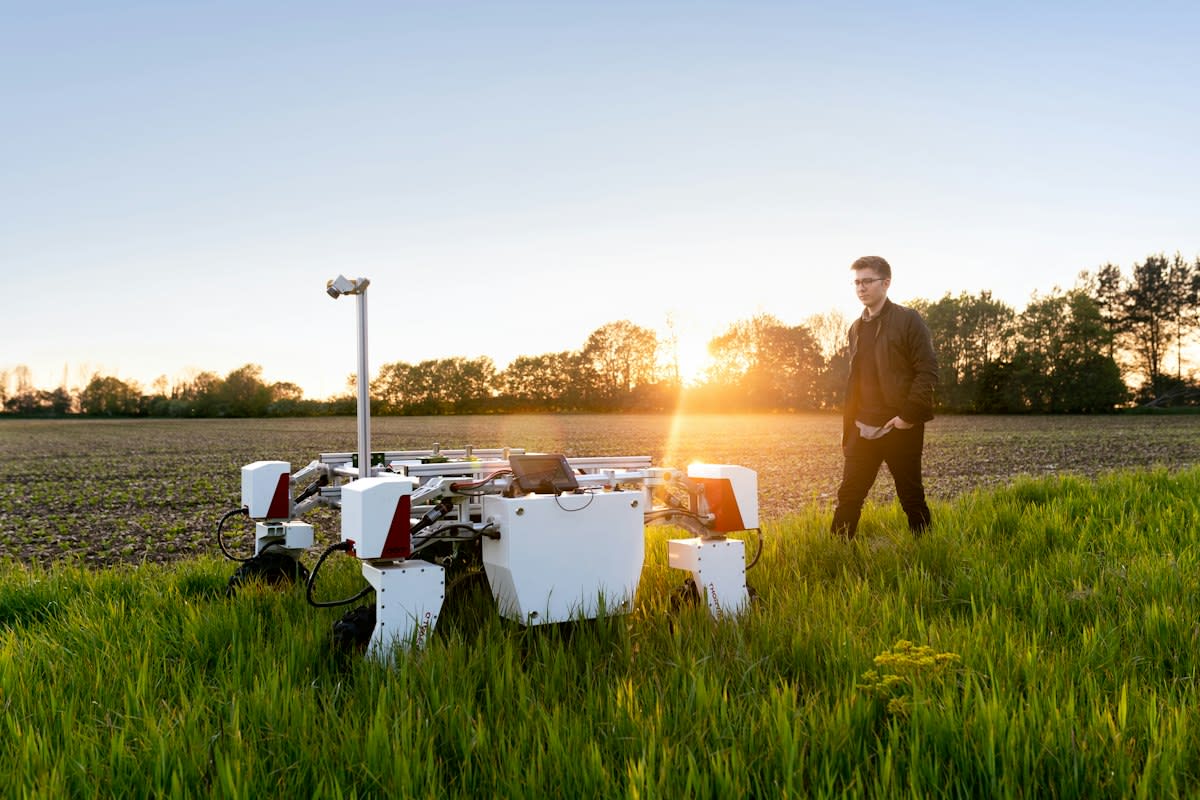
The delta is clear. Six months ago, soil assays were a government-led pilot program; today, they are a private-sector commodity driven by the rising cost of imported potash (Source: AgTech Vietnam Report, 2024). Economics drive the science. When the price of NPK spikes, the farmer suddenly finds the appetite for a 200,000 VND test.
Fact-Check & Accuracy Note
Verifiable data on soil acidity and NPK usage is sourced from the Ministry of Agriculture and Rural Development (MARD) and the Vietnam Academy of Agricultural Sciences. Academic debate continues regarding the scalability of mobile assays versus laboratory-grade ICP-OES testing, with critics arguing that rapid kits lack the precision for micronutrient detection.
Editorial Note
This report avoids the standard narrative of 'agricultural revolution' to focus instead on the specific economic frictions between data providers and chemical distributors in Southeast Asia.