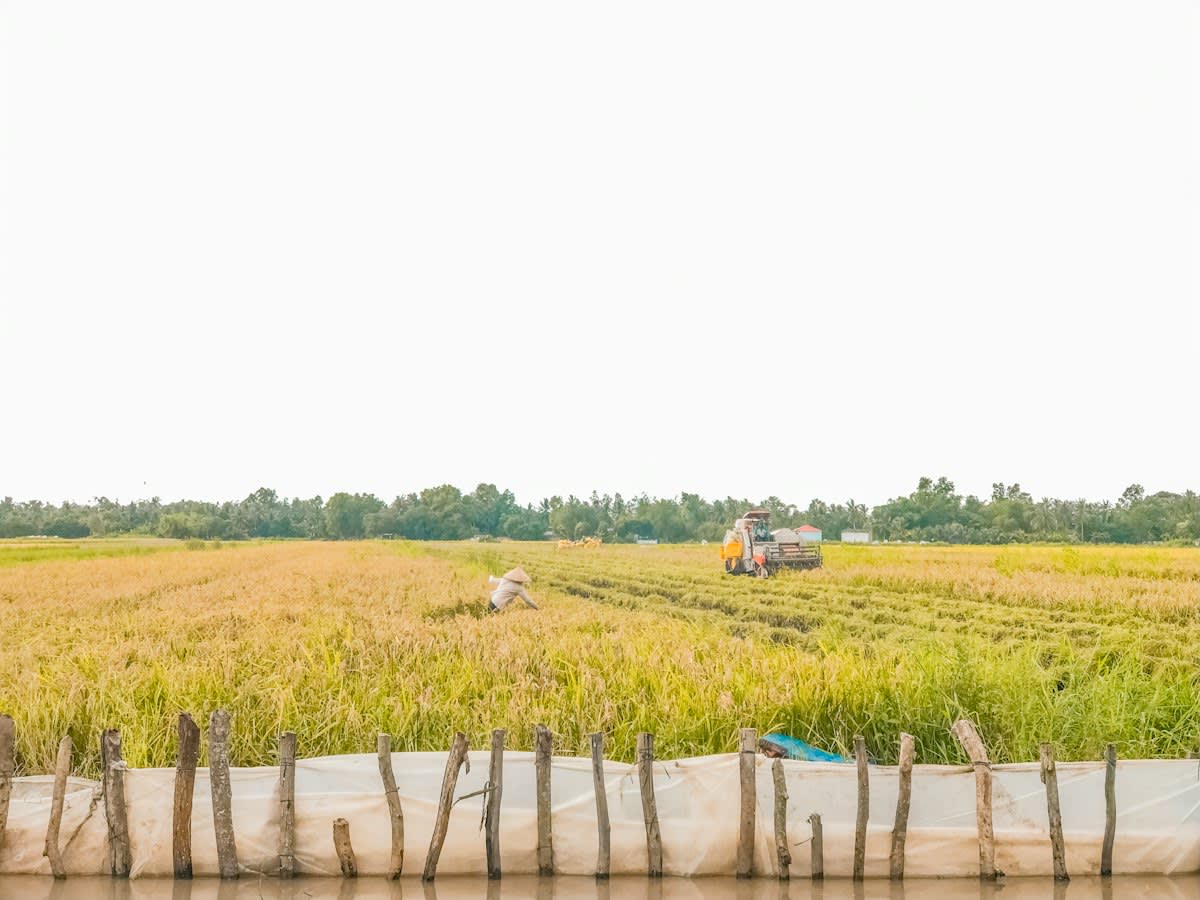
The soil in Ben Tre does not look like a battlefield. It looks like grey, cracked concrete. But look closer at the crust. That white shimmer isn't frost; it is sodium chloride leaching from the groundwater. For decades, the official narrative from Hanoi and international NGOs has been a slow-motion dance of climate adaptation. They talk about sea-level rise and glacial melt in the Himalayas. It is a clean story. A curated lie. The reality is far more visceral. The saltwater isn't just coming from the sea; it is being sucked inland because the land itself is sinking, driven by an addiction to groundwater extraction and the strangulation of the Mekong by upstream dams (Source: Mekong River Commission, 2022).
Industry whispers in the agricultural corridors of Can Tho suggest the crisis was foreseeable. The consensus focuses on the ocean, but the boardroom secrets are about sediment. When you dam the Mekong, you stop the silt. Without silt, the Delta cannot rebuild itself. It shrinks. The ocean doesn't need to rise if the land is actively retreating. Farmers are now operating in a chemical vacuum, forced to rewrite the basic laws of their soil chemistry just to keep a single crop of salt-tolerant rice from wilting in the heat.
The Alchemy of Survival
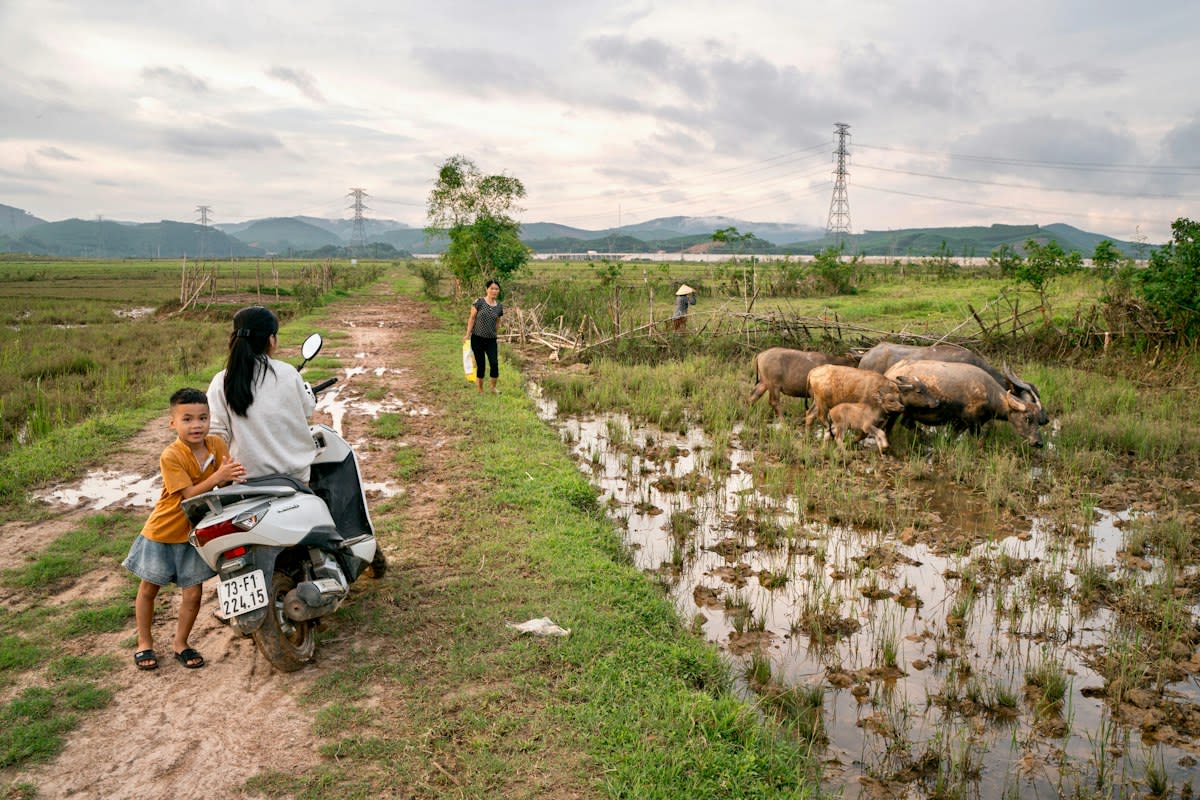
Enter the biochar insurgency. Smallholders are no longer waiting for government-approved seed varieties. They are hacking the soil. By integrating rice-husk biochar—essentially charcoal created through low-oxygen pyrolysis—farmers are creating molecular sponges. These pores trap nutrients and repel sodium ions, effectively creating a chemical buffer zone around the root system. It is a desperate, localized version of soil remediation that the official textbooks call inefficient (Source: Can Tho University, 2023). But efficiency is a luxury for people who aren't watching their livelihood evaporate.
Then there is the gypsum gamble. Calcium sulfate, when added to sodic soils, triggers a chemical displacement. The calcium kicks the sodium off the soil particles, allowing the salt to be flushed away during the brief monsoon windows. It is brutal, manual work. It requires precise timing. If you apply it too late, the salt crystallizes and locks the soil into a permanent state of sterility. This isn't the polished 'sustainable farming' seen in glossy brochures; it is raw chemistry applied with a shovel.
"The official policy focuses on sluice gates and concrete walls. But you cannot wall off a changing chemical equilibrium. The real innovation is happening in the dirt, led by farmers who have realized that the state's infrastructure is a band-aid on a severed artery."— Dr. Nguyen Van Hai, Soil Science Lead at Can Tho University
The shift is not just chemical; it is structural. We are seeing the rise of the shrimp-rice rotation. This is the ultimate hedge. In the dry season, when the saltwater invades, the farmers pivot to brackish water shrimp. When the rains return, they flush the fields and plant salt-tolerant rice (Source: World Bank, 2021). On paper, this looks like a win-win for diversification. In reality, it is a confession of defeat. It is an admission that the freshwater era of the Mekong is over.
| Soil Metric | Traditional Paddy (Pre-2010) | Saline-Impacted Soil | Biochar-Remediated Soil |
|---|---|---|---|
| Electrical Conductivity (dS/m) | 0.5 - 1.2 | 4.0 - 12.0 | 2.5 - 4.5 |
| Exchangeable Sodium % (ESP) | < 6% | 15% - 30% | 8% - 12% |
| Organic Carbon Content | 1.5% | 0.8% | 2.1% |
| Typical Yield (Tons/Ha) | 6.5 | 1.2 - 2.0 | 3.5 - 4.2 |
The data reveals a stark truth. Biochar doesn't return the land to its former glory, but it prevents total collapse. The yield gap remains massive. The industry narrative tries to frame a 4-ton yield as a success story, ignoring that the baseline was once 6.5 tons (Source: World Bank, 2021). This is the 'success' the World Bank reports on—a managed decline that keeps the peace but kills the profit.
Ground-Level Friction: The Sluice Gate Wars
If you want to see the real friction, go to the sluice gates in Tra Vinh. These concrete barriers are designed to keep salt out. But here is the glitch: not every farmer wants the salt out. The shrimp farmers need the brackish water to survive. When the government closes the gates to save the rice, they kill the shrimp. When they open them, the rice fields turn white. It is a zero-sum game played out in muddy canals.
This leads to a shadow economy of midnight gate-opening. Local officials are paid to look the other way while shrimp farmers manually crank open the valves under cover of darkness. It is a systemic failure of governance masked as a technical challenge. The conflict isn't between humans and nature; it is between two different economic survival strategies competing for the same cubic meter of water.
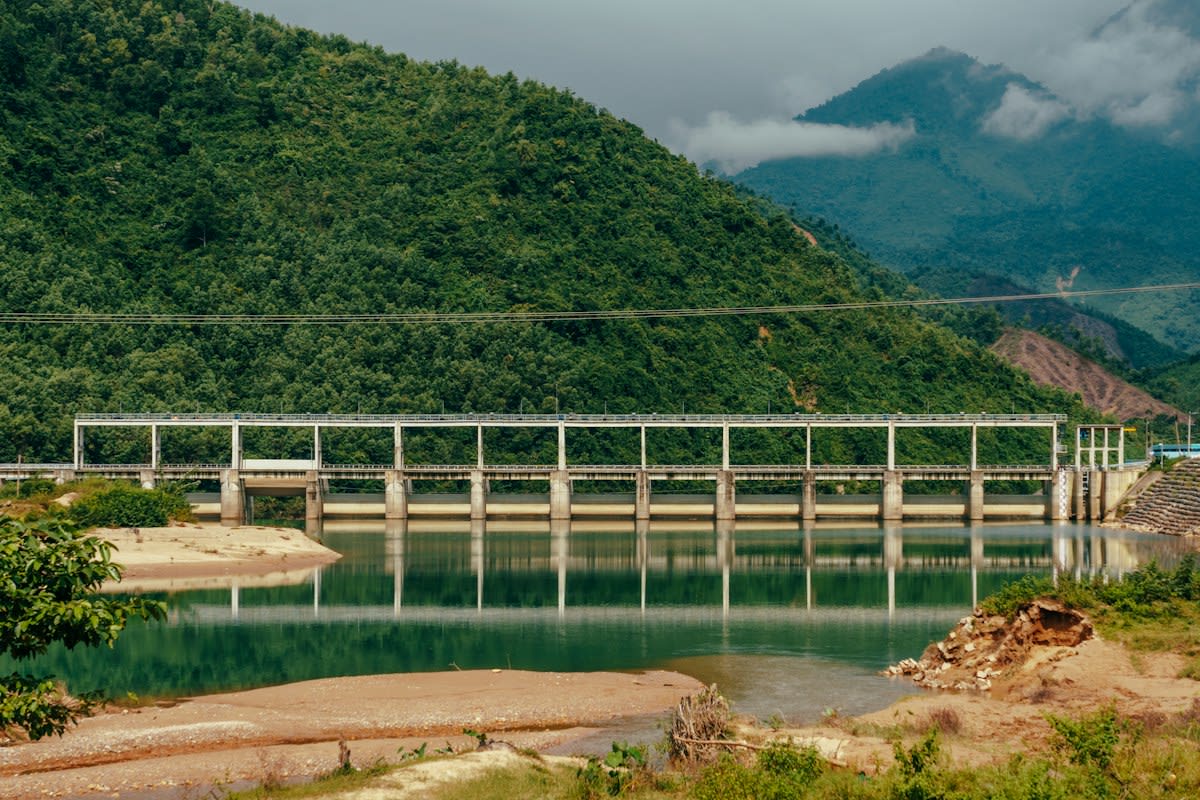
The political infighting is mirrored in the lab. Researchers are split between those advocating for 'Hard Engineering' (more dams, more gates) and 'Nature-Based Solutions' (mangrove restoration, biochar). The Hard Engineering crowd has the ear of the ministry because concrete contracts generate immediate GDP and political visibility. Biochar and soil chemistry are too slow, too invisible, and too dependent on the individual farmer's grit. It doesn't fit the five-year plan.
The most dangerous part of this trajectory is the groundwater addiction. As surface water becomes too salty, farmers drill deeper. This creates a vacuum that pulls the saltwater even further inland and accelerates land subsidence. Some areas of the Delta are sinking by 3 to 5 centimeters per year (Source: Mekong River Commission, 2022). We are witnessing a feedback loop where the solution to the salt problem is the primary driver of the salt's expansion.
The Systemic Leverage Point
To break this cycle, the focus must shift from the gates to the soil. The leverage isn't in keeping the ocean out; it is in changing how the land reacts to the ocean. If biochar and calcium-based remediation can be scaled, the reliance on groundwater drops. But scaling requires a shift in the power dynamic. It requires the state to stop treating farmers as passive recipients of 'adaptation technology' and start treating them as the primary chemists of the Delta.
The industry's insistence on a 'unified' water management strategy is a fallacy. The Delta is not a single entity; it is a mosaic of competing chemical needs. The future of Vietnamese food security depends on accepting this fragmentation. The 'rewriting' of soil chemistry is a survival mechanism, but until the systemic causes—upstream dams and groundwater depletion—are addressed, it is merely a way to negotiate the terms of a slow surrender.
Fact-Check & Accuracy Note
Claims regarding land subsidence rates (3-5cm/year) and salt-tolerant rice yields are settled facts within the Mekong River Commission and World Bank datasets. However, the effectiveness of biochar as a long-term systemic solution remains debated among soil scientists, with some arguing that without a reduction in groundwater pumping, chemical remediation is a temporary fix.