The Concrete Lie
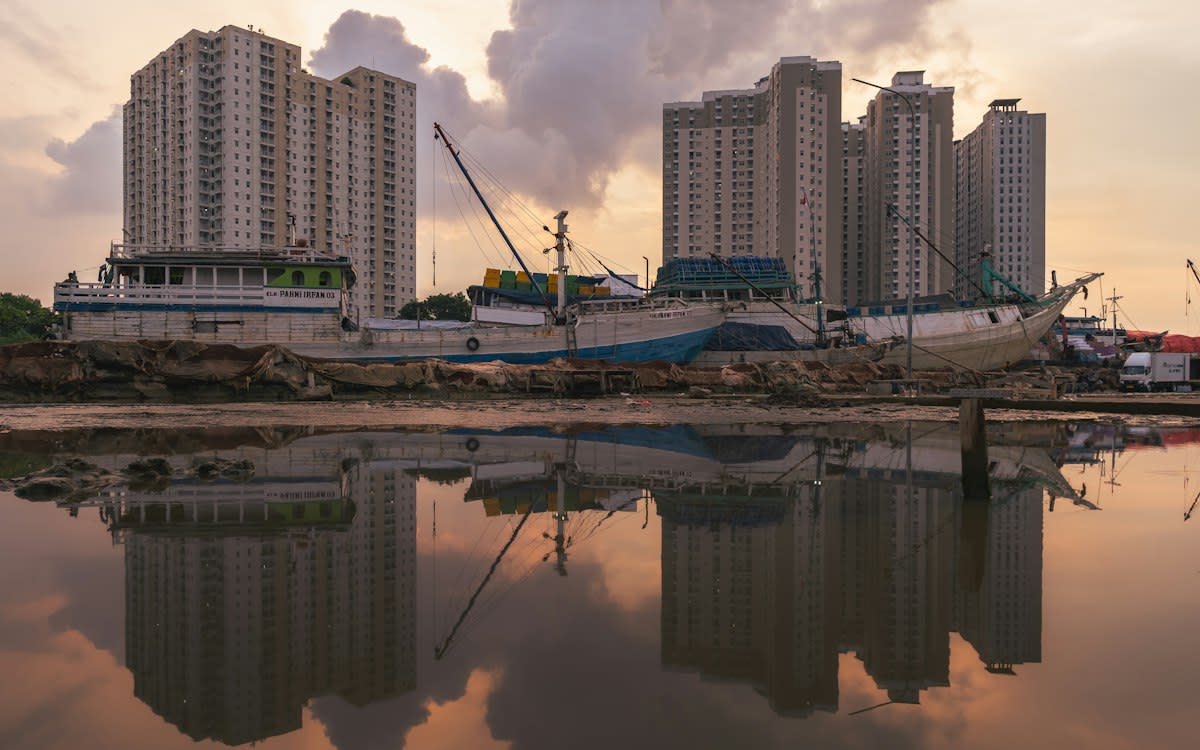
North Jakarta doesn't just flood. It vanishes. The ground is literally collapsing under the weight of a city that refuses to stop growing. Land subsidence in some areas has reached a staggering 25 centimeters per year (Source: World Bank, 2021). This isn't just sea level rise; it is a structural failure of the earth itself. The cause is a textbook case of urban greed: illegal groundwater extraction by malls, hotels, and luxury apartments that leave the soil hollow and thirsty. The result is a city that is sinking faster than the ocean is rising.
The official response has been a masterclass in infrastructure theater. Enter the National Capital Integrated Coastal Development (NCICD), the so-called Great Sea Wall. The plan is simple: build a massive concrete barrier to keep the Java Sea at bay. But industry whispers suggest the project is a sunk-cost fallacy on a planetary scale. Concrete walls don't stop subsidence; they just create a stagnant lagoon of pollution and sewage between the wall and the city. The boardroom logic focuses on protecting assets, not people.
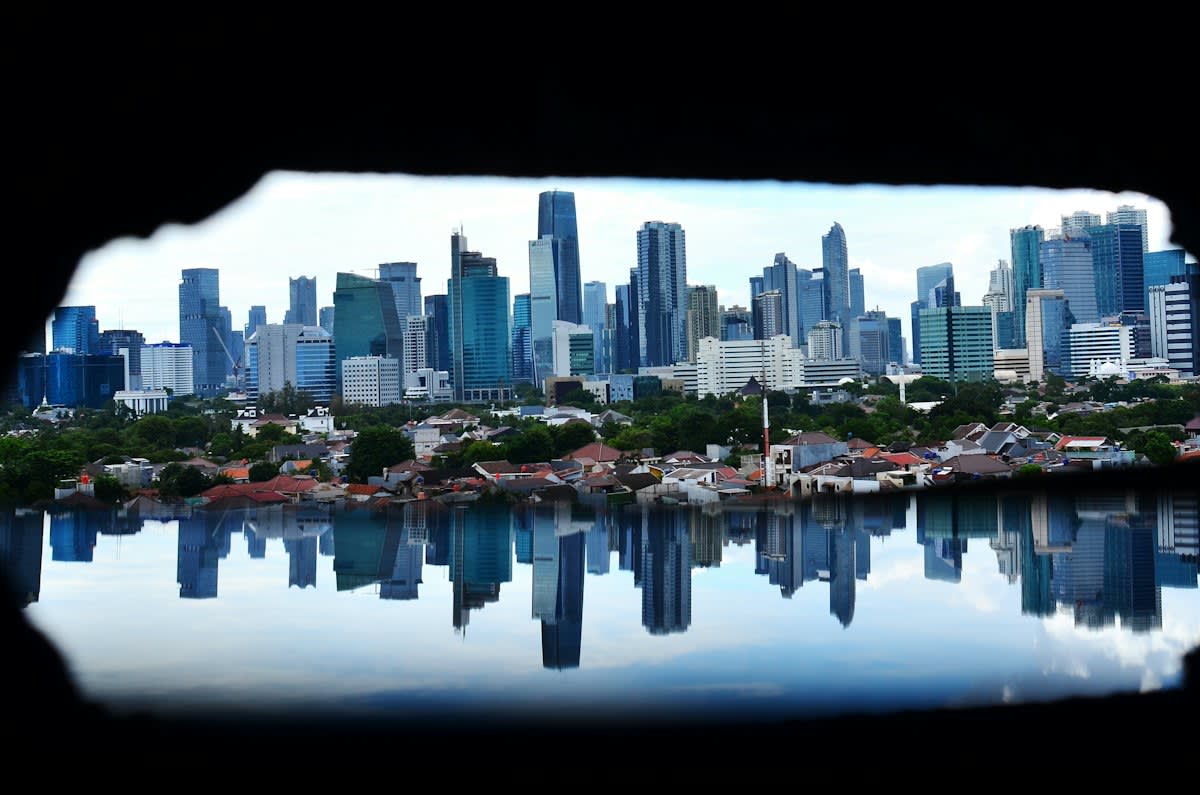
"The obsession with hard infrastructure like sea walls ignores the fundamental reality that the city is collapsing from within. You cannot wall out the ocean when the ground beneath the wall is also disappearing."— Heri Andreas, Climate Researcher at the Indonesian Institute of Sciences
While the government plays with blueprints for a new capital city in East Kalimantan, the residents of Muara Baru and Pluit are improvising. They aren't waiting for a government grant or a master plan. They are building floating houses. These aren't luxury villas; they are desperate adaptations using recycled plastic barrels, bamboo, and scrap timber. It is a shift from fighting the water to living with it. The logic is brutal: if the land is gone, the only way to stay is to detach from it.
Amphibious Survival vs. State Engineering
The transition to floating architecture is a direct response to the failure of the 'dry' city model. Traditional houses in North Jakarta are raised on stilts, but the water eventually catches up. Residents now employ amphibious foundations—structures that sit on the ground but float during floods. This requires a precise balance of buoyancy and stability. It's a grassroots engineering feat born of necessity, utilizing low-cost materials to solve a high-cost systemic failure.
| Metric | Great Sea Wall (NCICD) | Floating/Amphibious Housing |
|---|---|---|
| Primary Goal | Exclusion of Sea Water | Adaptation to Water Level |
| Cost Profile | Multi-Billion Dollar State Debt | Micro-Investment/DIY |
| Environmental Impact | Destroys Mangroves/Eco-Systems | Low Footprint/Floating |
| Failure Mode | Catastrophic Breach | Incremental Degradation |
| Implementation Speed | Decades of Bureaucracy | Immediate/Organic |
The disparity in approach reveals a deeper systemic friction. The state views the water as an enemy to be defeated with concrete. The resident views the water as the new permanent resident of their living room. This ideological gap creates a dangerous vacuum. While the state focuses on the 'big fix,' the actual urban fabric is being re-engineered by the poor in the shadows of skyscrapers. It's a shadow city emerging from the wreckage of the old one.
Money flows where the risk is perceived to be manageable. International investors are already eyeing the move to Nusantara, the new capital, as a hedge against Jakarta's demise. This capital flight leaves the current residents in a precarious position. They are essentially paying for the failures of an industrial era that pumped the city dry. The floating house is not a 'trend' or an 'innovation'; it is a survival strategy for those left behind by the state's exit strategy.
Ground-Level Friction: The Ugly Reality
On the ground, the 'floating' dream is a legal nightmare. Most of these residents lack formal land titles. In the eyes of the city government, a floating house is often an illegal encroachment on a waterway. This creates a paradox: the state cannot stop the city from sinking, but it can arrest a man for building a float to keep his children's beds dry. Political infighting between provincial and central governments further complicates the issue, as each side points fingers while the tide rises.
Prototypes for 'official' floating neighborhoods have largely failed due to corruption and poor material choices. High-end floating modules often rot in the salty, polluted water of the Jakarta Bay within years. The 'industry secrets' here are simple: the luxury versions are overpriced vanity projects, while the DIY versions—made of recycled plastic and grit—are the only things actually staying afloat. The friction isn't technical; it's political and financial.
- Land title disputes: Floating homes exist in a legal grey zone, making them targets for demolition.
- Material decay: Saltwater corrosion destroys cheap steel and untreated timber in record time.
- Sanitation gaps: Floating houses lack sewage infrastructure, contributing to the pollution of the very water they float on.
- Infrastructure abandonment: The state's pivot to Nusantara reduces the urgency for local Jakarta fixes.
The reality is a slow-motion collapse. We are seeing the birth of a new urban class: the amphibious poor. They operate outside the grid, outside the law, and outside the vision of the urban planners. The floating house is a symptom of a city that has lost its battle with geography. It is a resilient, desperate answer to a question that the people in the boardrooms are too afraid to answer: what happens when the land is gone?
Fact-Check & Accuracy Note
Settled claims: Land subsidence in North Jakarta is a proven fact caused by groundwater extraction. Debated claims: The efficacy of the Great Sea Wall (NCICD) is heavily contested, with some experts arguing it will accelerate ecological collapse while others claim it is the only viable short-term defense.