Madras High Court bans protests that ‘abuse, defame’ sitting judges, threaten judiciary
Source Entity
Somya Tyagi
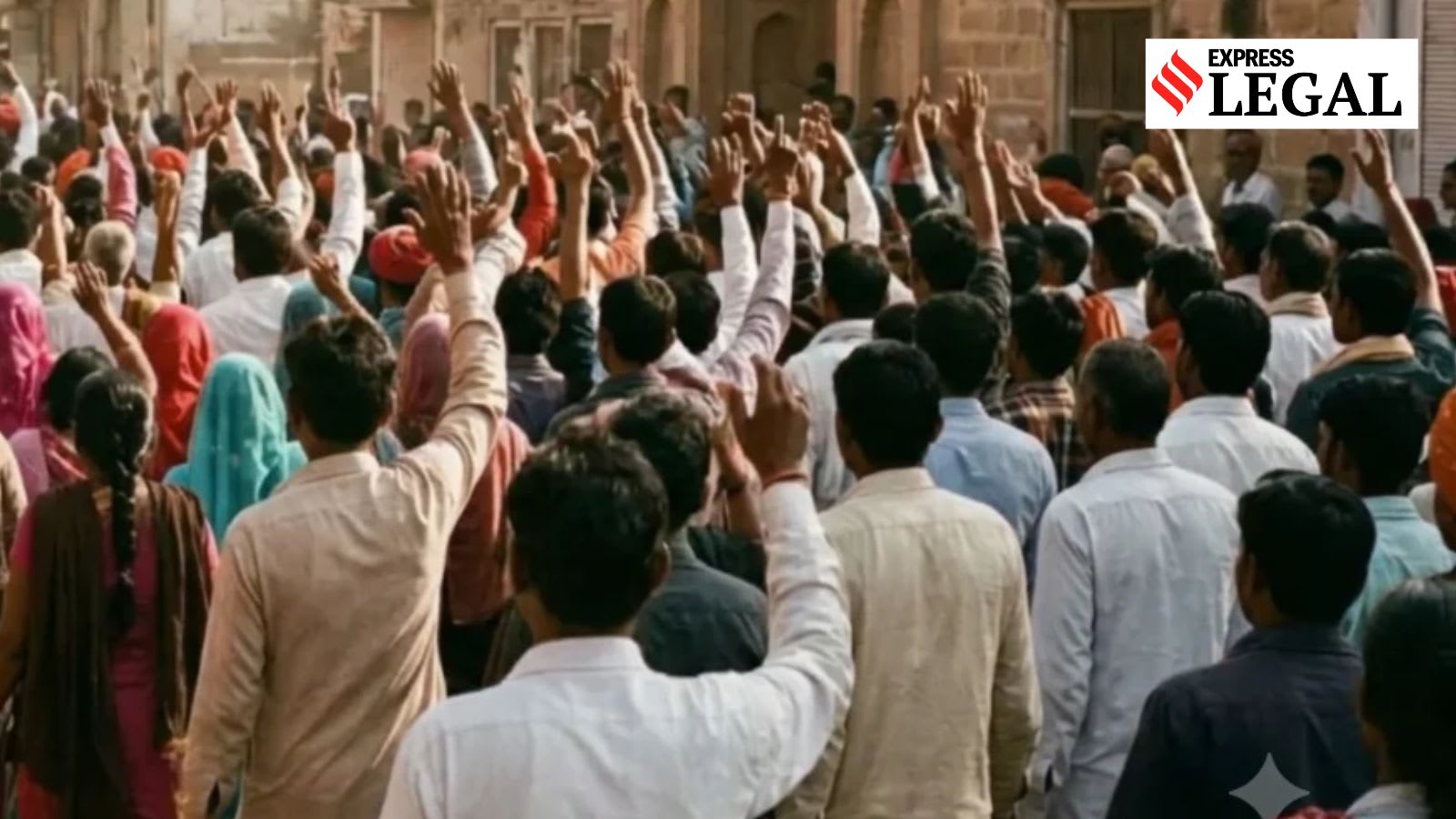
The Madras High Court has issued a directive banning public protests that target or intimidate judges, while also appointing a Board of Management to oversee the Chidambaram Sabanayagar Temple due to maladministration. These rulings aim to protect judicial integrity and restore administrative order in religious institutions.
Strengthening Judicial Independence and Religious Governance
On October 30, 2026, the Madras High Court delivered two significant rulings that address critical intersections of judicial autonomy and the administration of religious institutions in Tamil Nadu. The first major development involves a directive issued by Chief Justice Sushrut Arvind Dharmadhikari and Justice G. Arul Murugan, which explicitly prohibits the state police from granting permission for public gatherings designed to personally attack or intimidate sitting judges. This order arose from a Public Interest Litigation (PIL) filed by R. Karthikeyan, which sought to address the growing trend of campaigns that scandalize the judiciary rather than engaging in constructive legal critique.
Protecting the Judiciary from Targeted Harassment
The court’s directive draws a vital legal distinction between legitimate criticism of a judicial conclusion and the malicious targeting of an individual judge. By instructing the state police and district administration to continuously evaluate applications for public meetings, the court is proactively creating a buffer against efforts to compromise judicial independence. The ruling emphasizes that judges must be shielded from intimidation to ensure they can decide cases based strictly on law and facts, rather than bowing to external pressure or fear of public backlash.
Addressing Administrative Failure at Chidambaram Temple
In a parallel development, the Madras High Court addressed long-standing issues within the Chidambaram Sabanayagar Temple. A Division Bench comprising Justices G. Jayachandran and E. Manoharan concluded that the Podhu Dikshidars—the hereditary priesthood—had failed to manage the temple effectively since they assumed control following a 2014 Supreme Court mandate. The court’s decision to intervene marks a shift toward state-supervised oversight to restore the temple's operational standards and overall prestige.
The New Board of Management Framework
To rectify the identified maladministration, the court has instituted a robust Board of Management (BoM). This body will be led by retired High Court judges V. Bharathidasan and R. Suresh Kumar, who will serve as chair and co-chair, respectively. They will be supported by retired IAS officer C. Rajendran, alongside the secretary of the Podhu Dikshidar’s association and the secretary of the Hindu Religious and Charitable Endowments (HR&CE) department. This multi-stakeholder structure is designed to balance community tradition with administrative accountability.
Future Implications and Institutional Stability
These rulings signify a proactive judicial stance in maintaining order within the state. By curbing targeted protests against the bench, the Madras High Court is attempting to safeguard the sanctity of the legal system against modern forms of digital and physical harassment. Simultaneously, the intervention in temple administration reflects the judiciary’s role as a final arbiter in ensuring that religious institutions, which hold significant social and cultural weight, are managed with transparency and administrative efficiency. Together, these actions illustrate a judiciary committed to upholding the rule of law both within the courtroom and in the broader governance of public and religious affairs.