
The Revenue Mandate
The clock is ticking. The initial deadline for the Halcyon Africa Innovation in Agriculture and Food Security Program hits on October 23, 2026, forcing a sudden consolidation of early-stage ventures across the region (Source: Opportunities For Africans, 2026). This is not a grant-seeking exercise for visionaries with slide decks. The program explicitly demands that applicants be at the paid-pilot or post-revenue stage, requiring early commercial traction and market validation through customer contracts (Source: Opportunities For Africans, 2026). This represents a sharp pivot from the speculative funding models of 2024 and 2025, where ideas were funded on promise rather than profit.
Nairobi is the epicenter of this shift. The city's air is ozone-heavy, thick with the smell of scorched polymer from nearby electronics markets, while entrepreneurs scramble to convert prototypes into paying contracts before the December 7-8 pitch days (Source: Opportunities For Africans, 2026). The requirement for CEOs to hold primary decision-making power and commit full-time indicates a move toward professionalized venture building over casual innovation. No more part-time tinkerers; the current trend demands absolute commitment to a product that can withstand the volatility of Sub-Saharan food systems (Source: Opportunity Desk, 2026).

The delta is obvious. Twelve months ago, the focus was on accessibility and basic digital literacy for smallholder farmers. Now, the focus has shifted to resilience and climate-related shock adaptation (Source: Opportunity Desk, 2026). We are seeing a transition from simple 'digitization' to the implementation of circular water systems and precision irrigation that actually generate revenue (Source: ESI Africa, 2026). The goal is no longer just to feed people, but to build a market-based solution that survives without external subsidies.
Circular Water and the Precision Pivot
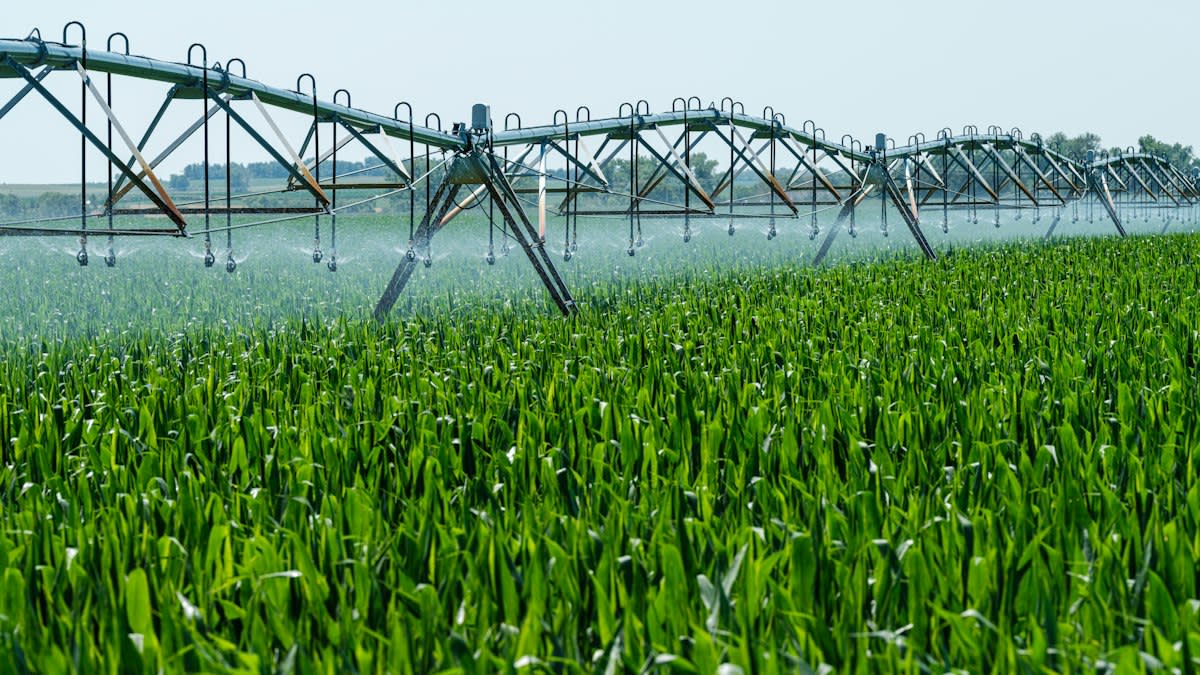
Water is the primary friction point. Pilot projects in Kenya, South Africa, and Nigeria have already demonstrated the effectiveness of reuse and circular water systems to optimize farming (Source: ESI Africa, 2026). These systems replace the old, wasteful flood irrigation with precision tools that treat water as a finite capital asset. In the heat of Nairobi, where sweating concrete absorbs the midday sun, these circular systems prevent the depletion of aquifers and rivers (Source: ESI Africa, 2026).
"FAO works to improve urban healthcare, water quality and rethink city region food systems to help deter the negative effects of sprawling urbanisation."— Food and Agriculture Organization of the United Nations, 2026
The technical reality is gritty. Field operators are dealing with salt-crusted cables and humming capacitors that power low-cost irrigation pumps in the outskirts of Nairobi (Source: ESI Africa, 2026). The struggle is not the software, but the hardware's ability to survive the environment. When a pump fails in a circular system, the entire loop collapses, leaving crops to wither under a relentless sun. This hardware fragility is the hidden tax on Kenyan ag-tech innovation.
| Milestone | Date | Objective |
|---|---|---|
| Initial Deadline | October 23, 2026 | Application Submission |
| Pitch Days | December 7-8, 2026 | Ventures Validation |
| Virtual Kickoff | February 9, 2027 | Program Initiation |
| Accra Residency | March 11-19, 2027 | Regional Integration |
| Nairobi Residency | May 28-June 4, 2027 | Market Scaling |
The geography of the Halcyon program is intentional. By splitting residencies between Accra, Ghana, and Nairobi, Kenya, the program forces a cross-pollination of strategies (Source: Global South Opportunities, 2026). A venture that solves a logistics problem in Accra may find a different, more profitable application in the Nairobi markets. This hybrid approach—combining virtual meetings in April and May with intense in-person residencies—creates a pressure cooker for growth (Source: Opportunities For Africans, 2026).
From a practitioner's perspective, the tension is palpable. Founders are arguing in flickering LED-lit coworking spaces about whether to prioritize 'impact' or 'revenue' to satisfy the Halcyon criteria. Some argue that the post-revenue requirement excludes the most innovative, high-risk solutions that need time to breathe. Others claim it is the only way to purge the market of 'zombie ventures' that survive solely on donor grants. The reality is a brutal filtration process where only the most commercially viable survive.
The focus on smallholder farmers remains, but the delivery mechanism has changed. The priority areas now include agricultural productivity and market access, specifically targeting those who can withstand climate-related shocks (Source: Opportunity Desk, 2026). We are moving away from providing seeds and toward providing the systems—the plastic-wrapped circuitry and data-driven irrigation—that ensure those seeds actually grow (Source: ESI Africa, 2026).
The Failure Point
Most of these implementations crash at the scaling phase. The transition from a paid pilot to a regional rollout often fails because the 'market validation' was based on a handful of high-resource farmers rather than the vulnerable communities the program intends to serve (Source: Opportunities For Africans, 2026). When the venture moves from a controlled pilot to the chaotic reality of Nairobi's peri-urban fringes, the unit economics often collapse. The cost of maintaining hardware in the field outweighs the subscription revenue from low-income farmers.
Editorial Note
The push for post-revenue validation is a double-edged sword. While it ensures sustainability, it risks creating a survival-of-the-richest bias where only ventures with existing capital can qualify for the support they need to scale.
Fact-Check & Accuracy Note
All dates and requirements cited are based on the Halcyon Africa Innovation in Agriculture and Food Security Program 2027 documentation. Water system data is attributed to ESI Africa (September 2026).