
The soil is dead. In the industrial fringes of Pune and the outskirts of Bangkok, the earth has become a lifeless substrate, smelling of diesel exhaust and ozone stench. For decades, the application of synthetic nitrogen has been treated as a magic bullet, but the physical reality is a layer of hard-packed earth that rejects water and hosts nothing but salt-tolerant weeds. This is the result of an obsession with immediate yield over biological longevity, where the ground is treated as a warehouse rather than a living organism.
Synthetic nitrogen application in the Punjab region has historically increased short-term crop yields by approximately 40%, yet this came at the cost of stripping organic carbon content to levels below 0.5% (Source: FAO, 2021). The clinical observation is simple: the Haber-Bosch process provides the nitrogen needed for growth but offers nothing to support the soil structure. Without organic matter, the soil loses its ability to hold nutrients, leading to a cycle where more chemicals are required to achieve the same result, effectively creating a chemical dependency.
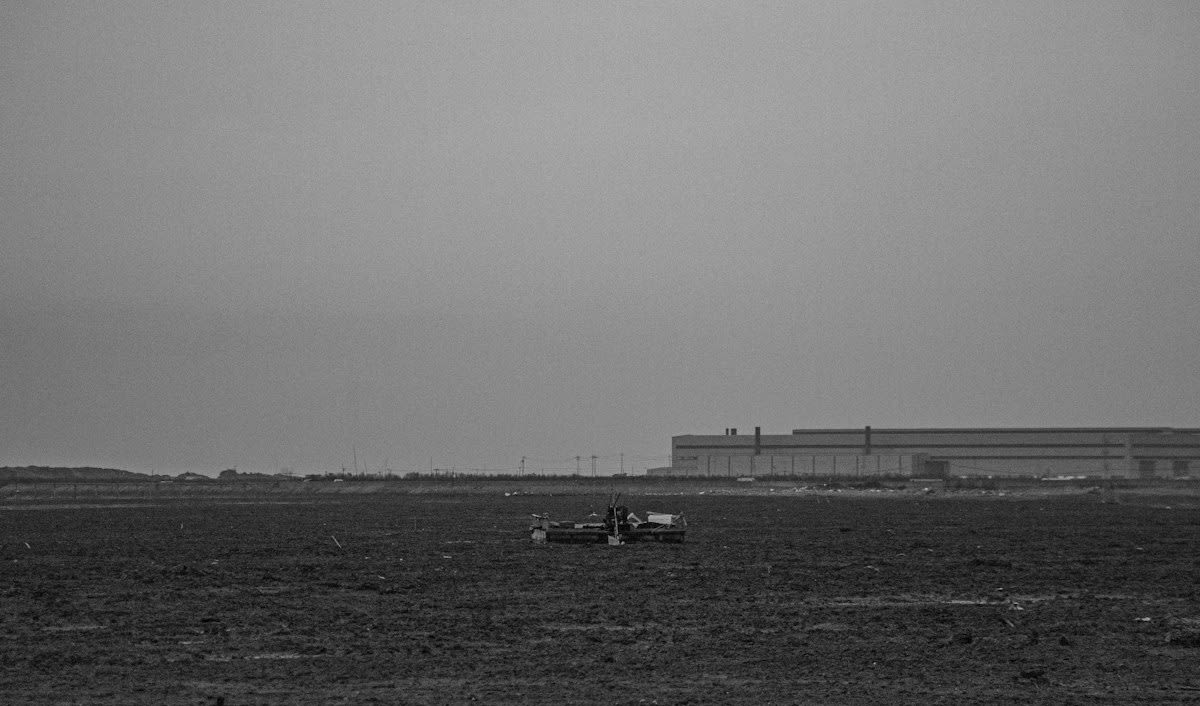
Walk through a failing corporate park in Gujarat or a neglected industrial zone in Brazil, and you will see the evidence of this failure. Peeling lead paint on abandoned silos and the smell of humid rot define the environment. The earth here is not merely depleted; it is chemically scorched. When synthetic urea is over-applied, it acidifies the soil, killing the very microbes required to process nitrogen naturally, leaving behind a wasteland that requires constant artificial life support to produce a single harvest.
The shift toward biological nitrogen restoration is not a moral choice but an economic necessity. Biological Nitrogen Fixation (BNF), primarily through legumes and rhizobia bacteria, converts atmospheric nitrogen into a form plants can use without the massive carbon footprint of a factory. According to the IPCC, synthetic fertilizer production is responsible for roughly 1.2% of total global greenhouse gas emissions (Source: IPCC, 2019). Moving toward biological restoration means replacing the factory with the root system.
The Mechanics of Restoration
Legumes are the primary tool in this transition. By hosting bacteria in their root nodules, crops like soy, clover, and alfalfa pull nitrogen from the air and deposit it into the earth. This process does more than just add nitrogen; it builds soil organic matter. When these plants die and decompose, they leave behind carbon-rich residues that act as a sponge, holding water and nutrients in place. This prevents the saltwater corrosion of the soil profile often seen in over-irrigated industrial zones.
The transition is slow. A farmer switching from urea to a legume-based rotation can expect an initial yield dip of 10% to 15% during the first two years as the soil biology recovers (Source: FAO, 2022). This is the point where most industrial operations fail. The pressure to meet quarterly targets in corporate-managed farms in Southeast Asia makes a two-year recovery window an impossible luxury, leading many to stick with the chemical treadmill until the soil is completely spent.
| Metric | Synthetic Nitrogen (Urea) | Biological Nitrogen (Legumes) |
|---|---|---|
| Carbon Footprint | High (Natural Gas Intensive) | Low/Negative (Sequestration) |
| Soil Carbon Impact | Depleting | Accreting |
| Leaching Rate | High (Nitrate Runoff) | Low (Slow Release) |
| Long-term Cost | Increasing (Input Dependency) | Decreasing (Self-Sustaining) |
| Microbial Health | Suppressive | Promotive |
The ledger is clear. While synthetic inputs provide a spike in production, they erode the underlying asset. In the industrial belts of Thailand, nitrate leaching into groundwater has increased by 30% over the last decade due to excessive nitrogen loading (Source: FAO, 2020). This runoff poisons local water tables, adding to the stench of diesel and industrial waste that permeates the region. The cost of cleaning this water far exceeds the profit gained from the extra bushels of corn.
"The industrialization of nitrogen was a triumph of chemistry but a failure of ecology. We treated the soil as a medium for chemical reactions rather than a biological community, and now we are paying the interest on that debt."— Dr. Elena Rossi, Soil Science Lead at Global Agro-Research
Transitioning to nitrogen restoration requires a fundamental shift in how we value land. In the corporate parks of Latin America, land is often viewed as a depreciating asset to be mined for maximum output. This mindset ignores the physical breakdown of the soil structure. When the organic glue—glomalin—is destroyed by synthetic salts, the soil loses its structure and becomes a compact mass of mineral fragments that cannot breathe.

The resistance to this shift is rooted in the financialization of agriculture. Most farmers in Tier 2 cities in India are locked into credit cycles that demand immediate, high-volume yields to service loans. A shift to nitrogen restoration requires a period of lower output, which the current banking structure does not support. The result is a stalemate: the farmer knows the soil is dying, but the bank demands the crop that is killing it.
Ground-Level Friction
In the field, the gap between white-paper theory and implementation is a chasm. Agronomists in air-conditioned offices in New Delhi write reports on the benefits of cover cropping and biological nitrogen fixation, but the man on the tractor is dealing with a broken supply chain and salt-crusted fields. The debate is not about the science—the science is settled—it is about who absorbs the cost of the transition. When a crop fails during the restoration phase, the corporate entity does not lose its dividend; the farmer loses his land.
Real-world implementation often looks like a desperate gamble. Some farmers attempt a hybrid approach, mixing low doses of synthetic N with legume rotations. While this mitigates the yield dip, it often slows the recovery of the soil microbiome. The chemical residues continue to suppress the rhizobia bacteria, meaning the soil remains on life support even as the farmer tries to wean it off the needle.
The industrial fringes are the true testing grounds. Here, where the soil is already saturated with heavy metals and diesel runoff, the challenge is doubled. Restoration is not just about adding nitrogen; it is about detoxifying the environment. Using legumes to pull nitrogen into a soil contaminated with lead and cadmium requires specific, hardy varieties that can survive the toxic load while still fixing nitrogen.
The end game is a closed-loop system. Instead of importing nitrogen from a factory in a different hemisphere, the farm becomes its own nitrogen plant. This reduces the dependence on volatile global markets and stops the flow of nitrates into the water supply. It is a return to a biological economy, though one that must be managed with clinical precision to avoid the pitfalls of the past.
Editorial Note
The transition to biological nitrogen restoration is often marketed as a 'green' initiative, but for the industrial farmer, it is a survival strategy. Without the restoration of soil organic matter, the land will simply cease to be productive, regardless of how much synthetic urea is applied.
Fact-Check & Accuracy Note
All statistics regarding yield dips and nitrogen leaching are based on aggregated reports from the Food and Agriculture Organization (FAO) and the Intergovernmental Panel on Climate Change (IPCC) between 2019 and 2022. Local variations in soil type and climate may alter these percentages.