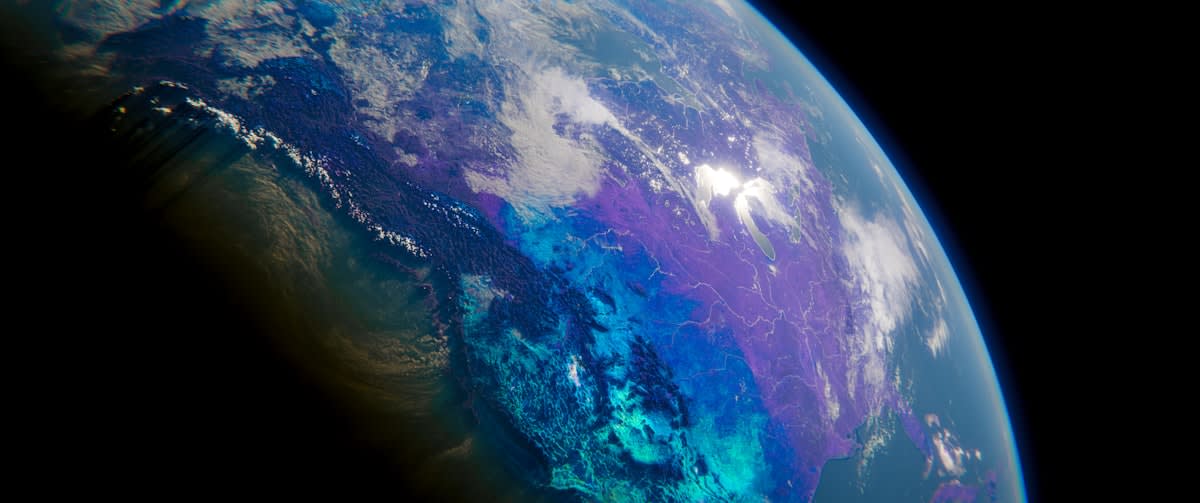
The global economy currently rests upon a foundation of glass. While policymakers and CEOs focus on the terrestrial build-out of data centers and the acceleration of infrastructure projects, they ignore the precariousness of the orbital shell that enables every single transaction. We have entered a period of extreme contradiction where the physical assets of trade are becoming more robust while the invisible coordination layer—the satellite constellations managing timing, navigation, and communication—is becoming increasingly vulnerable. What happens to a globalized supply chain when the sky becomes an impassable wall of shrapnel?
The catalyst for this systemic fragility is not merely the gradual accumulation of defunct hardware, but the resurgence of aggressive military posturing. Recent concerns surrounding the Golden Dome have revived fears regarding nuclear anti-satellite (ASAT) weapons, as reported by Aviation Week. A single nuclear detonation in low earth orbit would not just destroy a target; it would create a radioactive debris cloud capable of triggering a Kessler Syndrome event. This is not a localized military failure but a global economic blackout. If the orbital environment is compromised, the precision required for modern logistics vanishes instantly.
The ASAT Trigger
The Golden Dome paradox suggests that in the pursuit of absolute space dominance, nations may inadvertently destroy the very medium that makes their economic power possible.
Consider the current trajectory of Chinese economic stabilization. Beijing is currently betting on faster, state-backed infrastructure investment projects to shore up growth and avoid broad fiscal stimulus, with significant activity noted in logistics hubs like the clothing wholesale districts of Guangzhou. These massive logistical operations rely on the seamless integration of GPS and satellite-based tracking to move goods from factory to port. A debris-induced paralysis of orbital assets would render these state-backed investments inert, turning high-efficiency corridors into bottlenecks of confusion and delay.
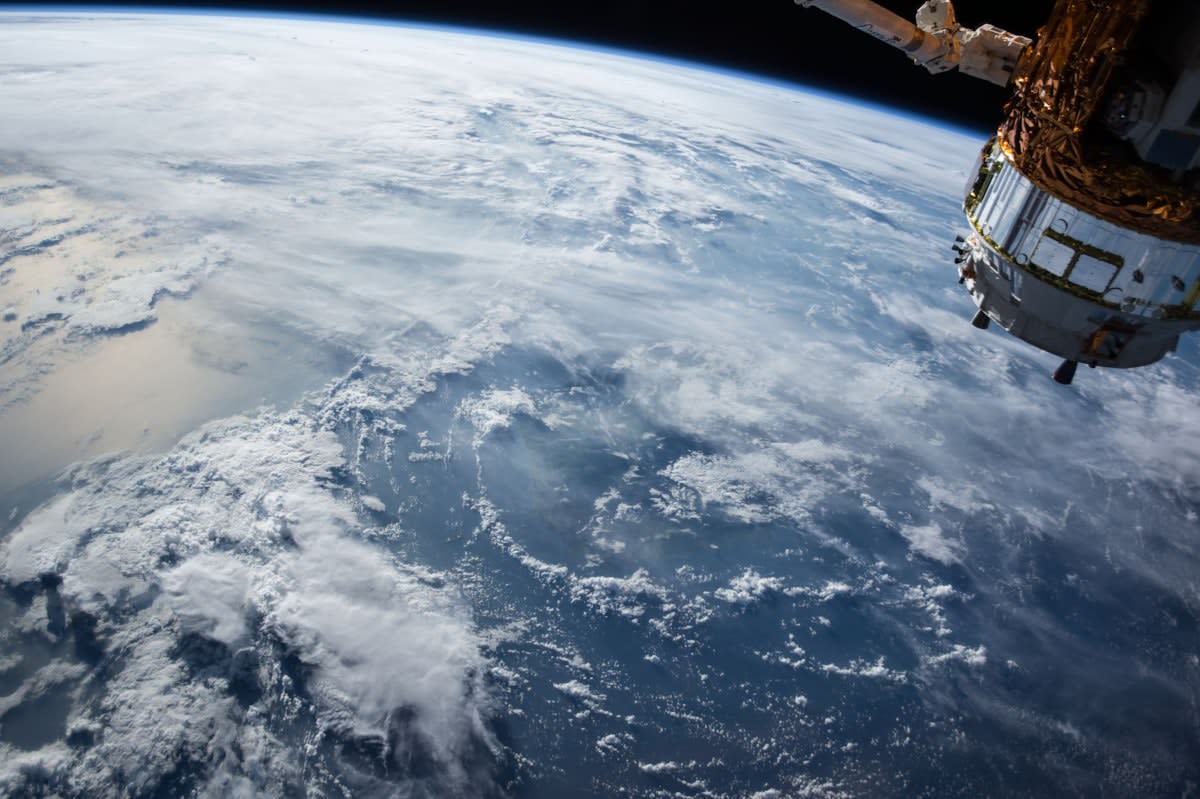
The vulnerability extends far beyond the movement of physical goods. The financial architecture of the world is undergoing a massive migration to the cloud to ensure resilience. Standard Chartered, for instance, is utilizing Broadcom's VMware Cloud Foundation to modernize infrastructure across 54 different markets. This push for a secure, resilient private cloud foundation is designed to meet evolving regulatory compliance and client demands. Yet, this resilience is purely terrestrial. The synchronization of global banking ledgers across 54 markets depends on the nanosecond precision of satellite atomic clocks. Without them, the cloud does not crash; it desynchronizes.
| Economic Driver | Financial Exposure/Scale | Orbital Dependency | Risk Impact |
|---|---|---|---|
| AI Infrastructure | $570 Billion Debt (2026 Proj.) | High (Data Sync) | Capital Default |
| Data Center Credit | $800 Billion (Private) | Medium (Connectivity) | Operational Stagnation |
| Global Banking | 54 Markets (Std Chartered) | Critical (Timing) | Ledger Desynchronization |
| State Infrastructure | National-scale (China) | High (Logistics) | Supply Chain Collapse |
This brings us to the mounting financial risk associated with the artificial intelligence boom. Bond investors are already pushing back as AI-related debt is projected to hit $570 billion by 2026. Furthermore, the shift toward less transparent private credit for data centers is estimated at $800 billion. We are essentially leveraging the future of the global credit market against the assumption that the digital infrastructure will remain operational. If orbital debris renders satellite communications unreliable, the return on these AI investments will vanish, potentially triggering a credit event that makes previous financial crises look like rounding errors.
"Broad access to Mythos would be like giving ballistic missiles to individuals."— Jamie Dimon, CEO of JPMorgan Chase
Jamie Dimon's analogy regarding the danger of uncontrolled access to Anthropic's Mythos-class models reflects a broader pattern of systemic risk. Just as the ability to find high-severity vulnerabilities in software can be weaponized, the ability to create orbital debris is the ultimate vulnerability in the global trade stack. The Department of Commerce may lift export controls on software, but there is no regulatory body capable of lifting a cloud of nuclear-generated shrapnel from the thermosphere. The risk is not a software bug; it is a physical erasure of the medium of exchange.
The logistics sector is already attempting to brace for volatility through leadership changes. Recent executive moves at companies like Echo Global Logistics, Workhorse, and Southeastern Freight Lines indicate a drive to strengthen finance and operations teams. While these moves are framed as growth strategies, they occur against a backdrop of increasing fragility. When Echo Global Logistics appoints a new chief legal officer to support governance, they are managing terrestrial risk, but they remain blind to the orbital risk that could render their entire logistics network obsolete overnight.
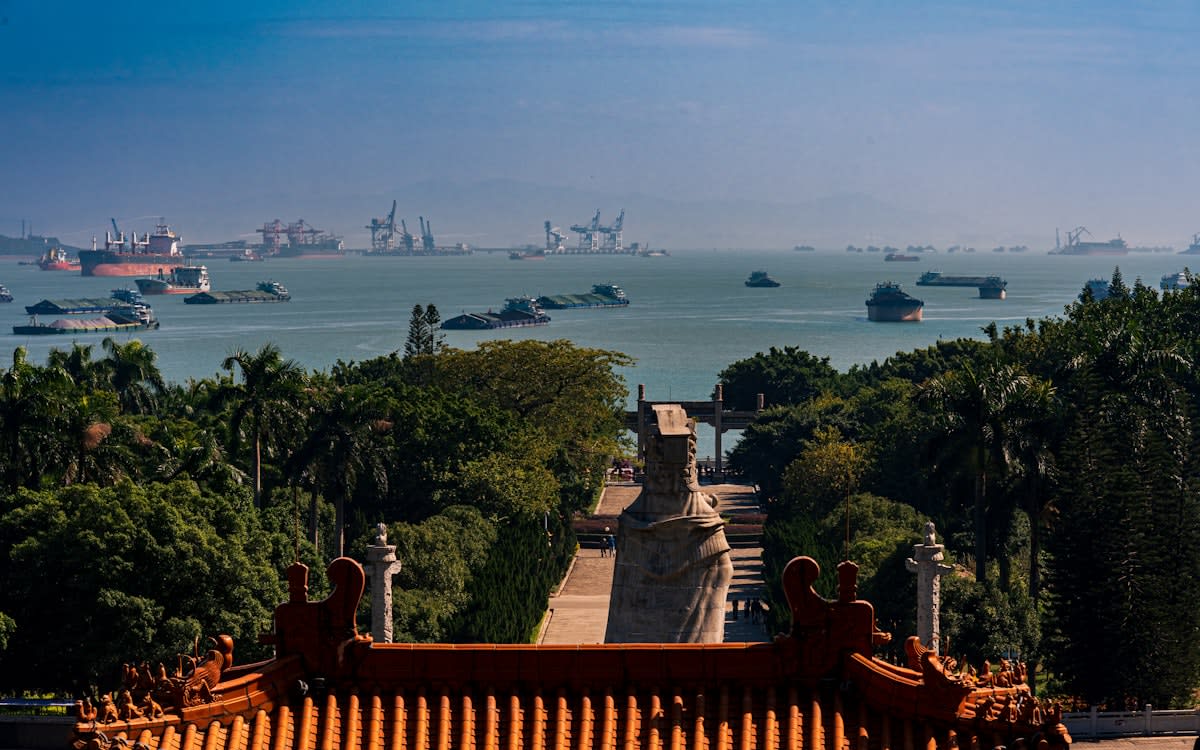
Why does this matter to the average investor or policymaker? Because we have decoupled our financial valuations from physical reality. The $800 billion in private credit flowing into data centers assumes a world of constant connectivity. If the Golden Dome or similar ASAT initiatives lead to a debris-strewn orbit, the physical distance between a data center in Virginia and a banking hub in Singapore becomes an insurmountable wall. The cloud is not a place; it is a connection. If the connection is severed, the value of the asset drops to zero.
The irony is that the very tools we are using to modernize—AI and cloud computing—are the ones most dependent on the orbital stability we are currently gambling with. Standard Chartered's move to a virtualized software-defined infrastructure is a masterclass in operational resilience, yet it is a resilience that ends at the atmosphere. We are building an impenetrable fortress on a floating island that is slowly being chipped away by geopolitical arrogance.
Ultimately, the risk of orbital debris is the risk of a global return to the 19th century, but without the 19th century's lack of dependency. We cannot simply return to paper ledgers and sextants when we have $570 billion in debt tied to AI models that require real-time global synchronization. The paralysis of global trade would not be a gradual decline but a sudden, catastrophic seizure. The orbital shell is the single point of failure for the modern world, and we are currently treating it as a battlefield.