Russian online retail warehouses hit by deadly Ukrainian strikes
Source Entity
BBC News
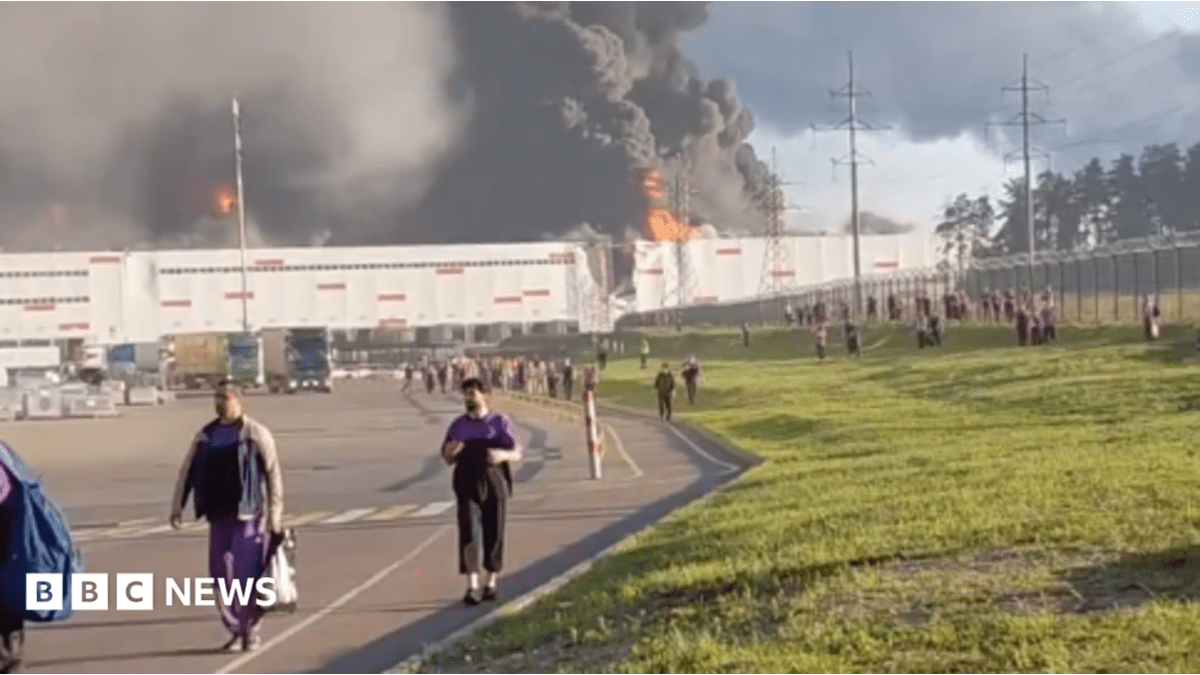
Ukrainian drone strikes on two Wildberries warehouses in Russia have resulted in eight deaths and 62 injuries. President Zelensky stated the facilities were targeted for supplying sanctioned components for Russian military production.
Analysis of Ukrainian Drone Strikes on Russian Logistics Infrastructure
The Escalation of Strategic Targeting
Recent military developments have seen a significant shift in the operational theater of the ongoing conflict, with Ukrainian drone strikes successfully penetrating deep into Russian territory to target critical logistics infrastructure. The strikes on Wildberries warehouses—Russia's largest online retailer—in Tambov and Elektrostal mark a departure from purely frontline military engagements. By targeting these massive distribution hubs, Ukraine has signaled a strategic intent to disrupt the supply chains that underpin both the Russian domestic economy and its defense-industrial capabilities.
Disruption of Dual-Use Logistics
According to official statements from Ukrainian President Volodymyr Zelensky, these warehouses were not merely civilian retail centers but were utilized as "major logistics facilities" for the storage and transit of sanctioned components. Specifically, these components are reportedly essential for Russian drone production and navigation equipment. By neutralizing these nodes, Ukraine aims to stifle the flow of critical technology that fuels Russia's own aerial offensive capabilities, thereby creating a feedback loop of industrial disruption.
Human Cost and Operational Impact
The human toll of these strikes has been significant, with Russian officials reporting eight fatalities and 62 injuries across the two locations. The disparity in casualties—seven deaths in Tambov versus one in Elektrostal—highlights the varying structural vulnerabilities of these massive distribution centers. These events underscore the high-stakes nature of modern drone warfare, where the lines between civilian commercial infrastructure and military supply chains have become increasingly blurred in the eyes of combatants.
Broader Strategic Context
These strikes did not occur in a vacuum; they were part of a wider coordinated campaign that included targets in the Sea of Azov, the Black Sea, and Russian-annexed Crimea. This multi-front approach suggests that Ukraine is attempting to overwhelm Russian air defense systems by forcing them to defend a vast geographic area. The ability to strike deep into the Moscow region, which is heavily defended, demonstrates a growing sophistication in Ukrainian long-range strike capabilities and a willingness to accept high-risk, high-reward missions to degrade Russian logistics.
Future Trends in the Conflict
Moving forward, these strikes suggest that the conflict is entering a phase where the "economic front" is as vital as the territorial front. If Ukraine continues to successfully target facilities that store dual-use components, Russia may be forced to further militarize its civilian logistics networks or decentralize its storage, both of which would increase operational costs and decrease efficiency. Conversely, Russia is likely to respond with intensified defensive measures and retaliatory strikes, further escalating the cycle of destruction within the logistics sector. The international community will be closely watching whether such strikes against major private entities like Wildberries prompt further debate regarding the classification of civilian infrastructure in asymmetric warfare.