White House backs Argentina team over Falklands banner
Source Entity
BBC News
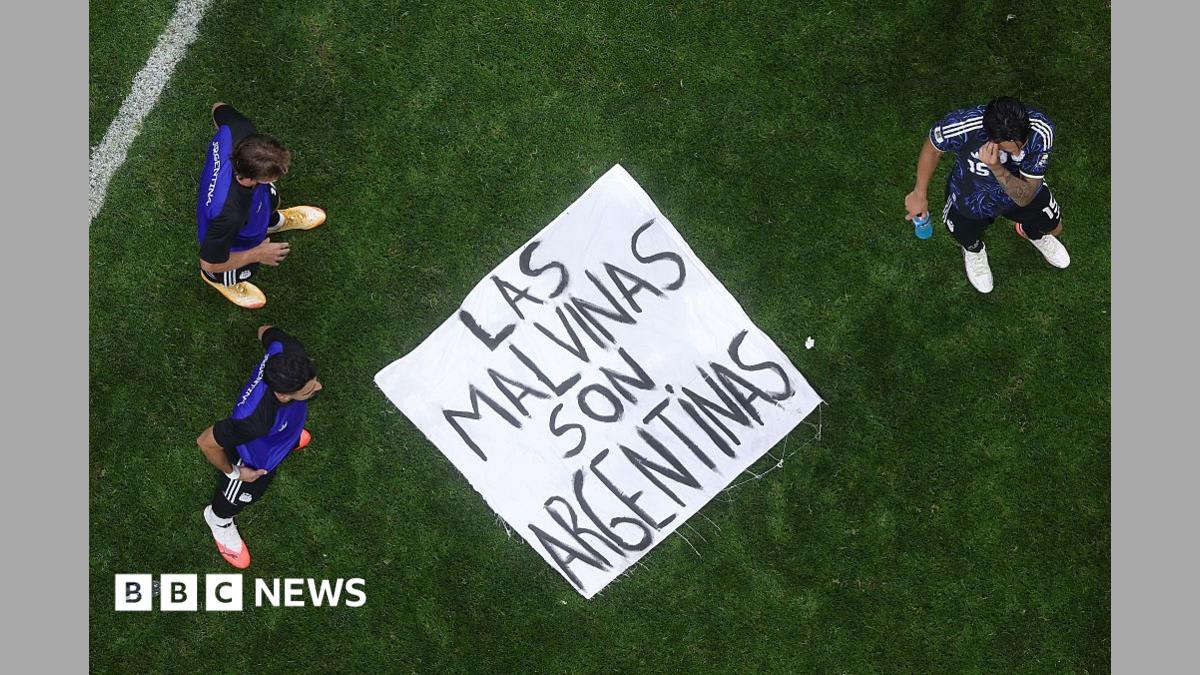
The White House has defended the Argentinian football team's right to free speech after they displayed a pro-Argentina banner regarding the Falkland Islands. This stance has ignited diplomatic friction with Downing Street, which is pushing for a FIFA investigation into the potential breach of political conduct rules.
Diplomatic Tensions Surface Over World Cup Banner
The recent controversy surrounding the Argentinian national football team’s display of a banner asserting territorial claims over the Falkland Islands has transcended the realm of sports, evolving into a delicate diplomatic impasse. By choosing to celebrate a victory against England with a message centered on the sovereignty of the South Atlantic archipelago, the players have inadvertently triggered a clash between the principle of free expression and the strict regulatory environment of international football governance.
The White House Stance on Free Expression
In a surprising turn of events, the White House has publicly defended the Argentinian team’s actions, framing the incident through the lens of free speech. Andrew Giuliani, serving as the head of the White House FIFA task force, articulated that the players possessed the inherent right to make such statements while on U.S. soil. This stance marks a clear departure from the expectations of traditional diplomatic decorum, positioning the U.S. administration as a proponent of individual expression even when that expression directly challenges the territorial integrity of a key ally.
Downing Street and the FIFA Investigation
Conversely, Downing Street has taken a firm stance against the display, backing calls for FIFA to launch a formal investigation. The UK government’s position is rooted in the belief that the banner constitutes a political provocation that violates established FIFA regulations prohibiting political statements during official competitions. The divergence between Washington’s emphasis on speech rights and London’s focus on regulatory compliance highlights a growing rift in how international bodies and allied nations should navigate the intersection of nationalism and global sport.
The Historical Weight of the Falklands
To understand the gravity of this incident, one must consider the historical context of the Falkland Islands, a British overseas territory. The sovereignty of these islands remains a sensitive and long-standing point of contention, characterized by historical conflict and deeply entrenched national sentiments. By bringing this geopolitical dispute into the World Cup arena, the Argentinian players have tapped into a legacy of national pride that rarely stays confined to the political sphere, forcing international organizations to mediate in disputes that have historical roots dating back decades.
Regulatory Implications for FIFA
FIFA now faces the arduous task of balancing these competing pressures. The organization’s rules are designed to keep the "beautiful game" free from the baggage of international politics, yet enforcing these rules in the face of varying interpretations of "free speech" presents a significant challenge. If FIFA chooses to issue disciplinary action, they risk accusations of censorship; if they choose to remain silent, they risk undermining their own statutes regarding political neutrality. The outcome of this investigation will likely set a significant precedent for how future political expressions are handled in global sporting events.
Looking Toward Future Trends
This incident serves as a bellwether for the future of international sports, where the lines between athlete activism and nationalistic propaganda are increasingly blurred. As global platforms become more accessible to athletes, the pressure on governing bodies like FIFA to define the boundaries of acceptable discourse will only increase. We are likely to see a trend where athletic success is increasingly leveraged for political signaling, necessitating a more robust and universally accepted framework for managing diplomatic fallout in the sporting world.