
Carbon credits are failing. 60 to 200 dollars is the current trading price for credits in California (Source: Law Gratis, 2026). These assets often represent nothing more than accounting tricks. Fraudsters sell phantom offsets to corporations desperate for green labels. Reality is a market built on hope and manipulated data.
Kenneth Newcombe and Tridip Goswami orchestrated a massive scheme using CQC Impact Investors (Source: Law Gratis, 2026). They manipulated data from cookstove projects in Africa to exaggerate emission reductions. This led to inflated credits sold to US corporations as offsets. US District Court for the Central District of California set a trial date for March 15, 2027 (Source: Carbon Pulse, 2026). This case highlights a systemic lack of verification.
3-nitrooxypropanol (3-NOP) reduces enteric methane by 25 to 30 percent in lactating cows (Source: Hristov, 2024). However, efficacy drops as dietary fiber increases. Net zero in dairy requires reductions above 50 percent (Source: Beauchemin, 2025). Relying on offsets to bridge this gap is a gamble. Many producers ignore the limit of these chemical additives.
Soil carbon sequestration lacks stability (Source: Dynarski et al., 2020). Carbon stored in soil can be released quickly, undermining the permanence of the credit. This volatility makes soil-based offsets unreliable for long-term climate goals. Many projects claim permanence without actual scientific proof. Investors are buying air under the guise of dirt.
"Carbon credits are commodities under Commodity Exchange Act."— Legal Theory, Law Gratis (2026)
Carbon Dioxide Removal (CDR) remains a nascent industry (Source: RMI, 2026). A significant gap exists between current deployment levels and mid-century needs. Most technologies only came into focus within the last ten years. Funding must be deployed with urgency to change the trajectory. Without a massive scale-up, these goals are fantasies.
Philippines government ordered a national carbon market policy (Source: Carbon Pulse, 2026). China released 11 draft offset methodologies for its CCER programme (Source: Carbon Pulse, 2026). These moves suggest a drive toward regulation. Yet, regulation cannot fix a foundation of fraudulent data. Governments are racing to regulate a ghost.
Field agents in Kibera witness the friction between corporate claims and reality. They see cookstoves that are never used while credits are sold in New York. Tension exists between the MRV systems and actual ground-level usage. This friction creates a bubble of phantom credits. Actual carbon reduction is often zero.
Peatlands offer a potential for high-integrity credits if managed correctly (Source: Project Drawdown, 2026). Indigenous and local communities must lead restoration and legal protection. Using credits as replacements for decarbonizing operations is a dangerous path. High-integrity markets require verifiable data, not promises. Many current peatland projects fail this test.
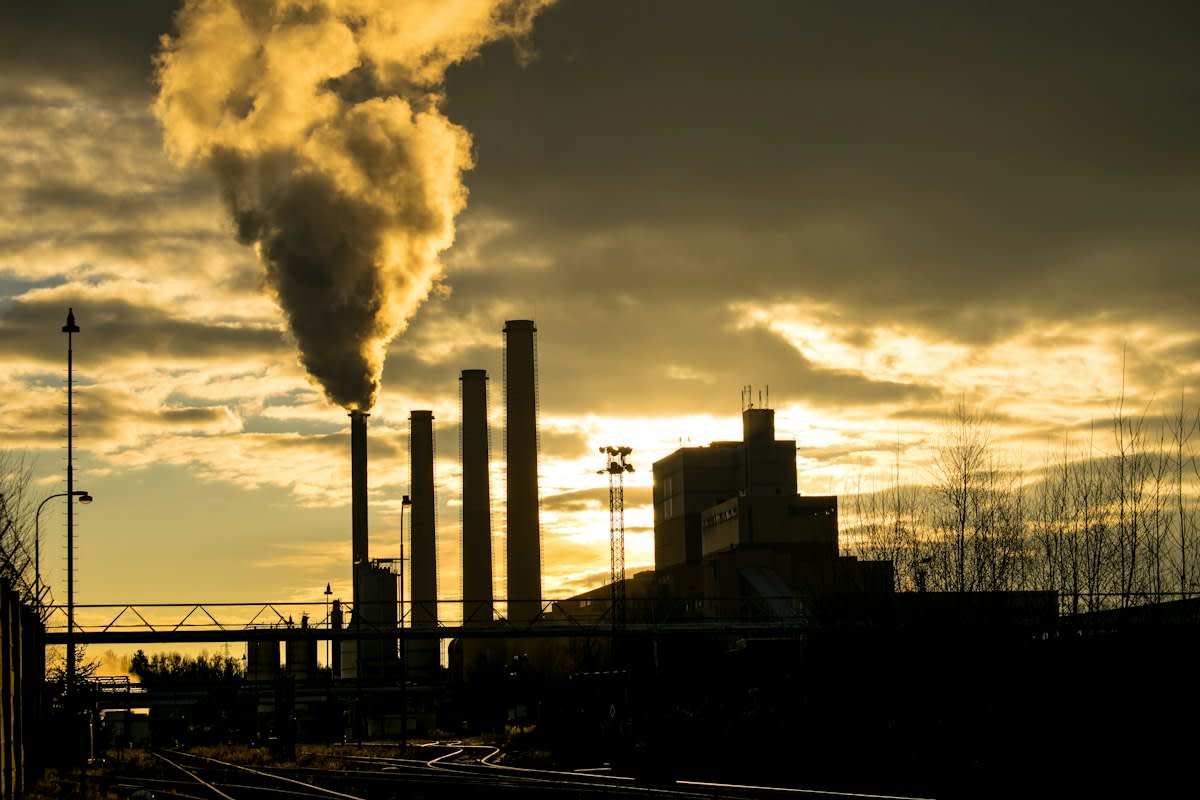
Money flows into these markets despite the sulfur-thick reality of industrial emissions. Investors treat these credits as commodities under the Commodity Exchange Act (Source: Law Gratis, 2026). This allows for fraud in account statements to be treated as commodities fraud. Banks holding these credits as collateral face sudden value loss. The financial risk is as high as the environmental risk.
| Metric | Value/Target | Constraint | Source |
|---|---|---|---|
| Methane Reduction (3-NOP) | 25-30% | Dietary Fiber | Hristov, 2024 |
| Dairy Net Zero Target | >50% | Requires Anaerobic Digestion | Beauchemin, 2025 |
| California Credit Price | $60-200 | Commodity Fraud Risk | Law Gratis, 2026 |
| CDR Deployment | Significant Gap | Nascent Technology | RMI, 2026 |
Fraud in the voluntary market is not an accident but a feature. CQC Impact Investors showed how easy it is to inflate numbers (Source: Law Gratis, 2026). When credits are sold via brokers, the distance between the forest and the boardroom grows. This distance hides the truth. Verification is often a checkbox exercise.
Methane reduction targets are often missed by a wide margin. Beauchemin et al. (2025) conclude that net zero requires near-elimination of feed-production emissions. This goal is nearly impossible with current tools. Offsets are used to hide this failure. The math simply does not add up.
Data from the FDA review in 2024 confirms the utility of Bovaer (Source: Hristov, 2024). Yet, the scale is too small to impact global warming. Corporate claims of carbon neutrality often rely on these small wins to mask large losses. It is a game of selective reporting. The public is led to believe the problem is solved.
Credits trading at $200 in California are often based on flawed CI (Carbon Intensity) claims (Source: Law Gratis, 2026). If a claim says CI 20 but the actual is 80, the credits are invalid. This creates a legal nightmare for the holders. Retirement of these credits becomes a cost rather than a benefit. The market is a minefield of liabilities.
Regulation from the EU leaders regarding MSR reform aims to curb price volatility (Source: Carbon Pulse, 2026). Japan is considering J-Credit methodology for water purification equipment (Source: Carbon Pulse, 2026). These efforts are fragmented. A global standard is missing. Without it, arbitrage and fraud will continue.
Failure Point: The Permanence Illusion
Soil carbon sequestration lacks stability (Source: Dynarski et al., 2020). Carbon can leak back into the atmosphere, making credits invalid. This creates a liability for banks holding them as collateral (Source: Law Gratis, 2026).
Carbon markets are currently a mirage. They provide a psychological comfort to polluters. Real decarbonization requires cutting emissions, not buying coins. The transition to a real economy will be painful. Until then, the carbon coin is a currency of deception.
Fact-Check & Accuracy Note
All data regarding the CQC fraud case is sourced from Law Gratis (2026) and Carbon Pulse (2026). Methane reduction data is attributed to Hristov (2024) and Beauchemin (2025).