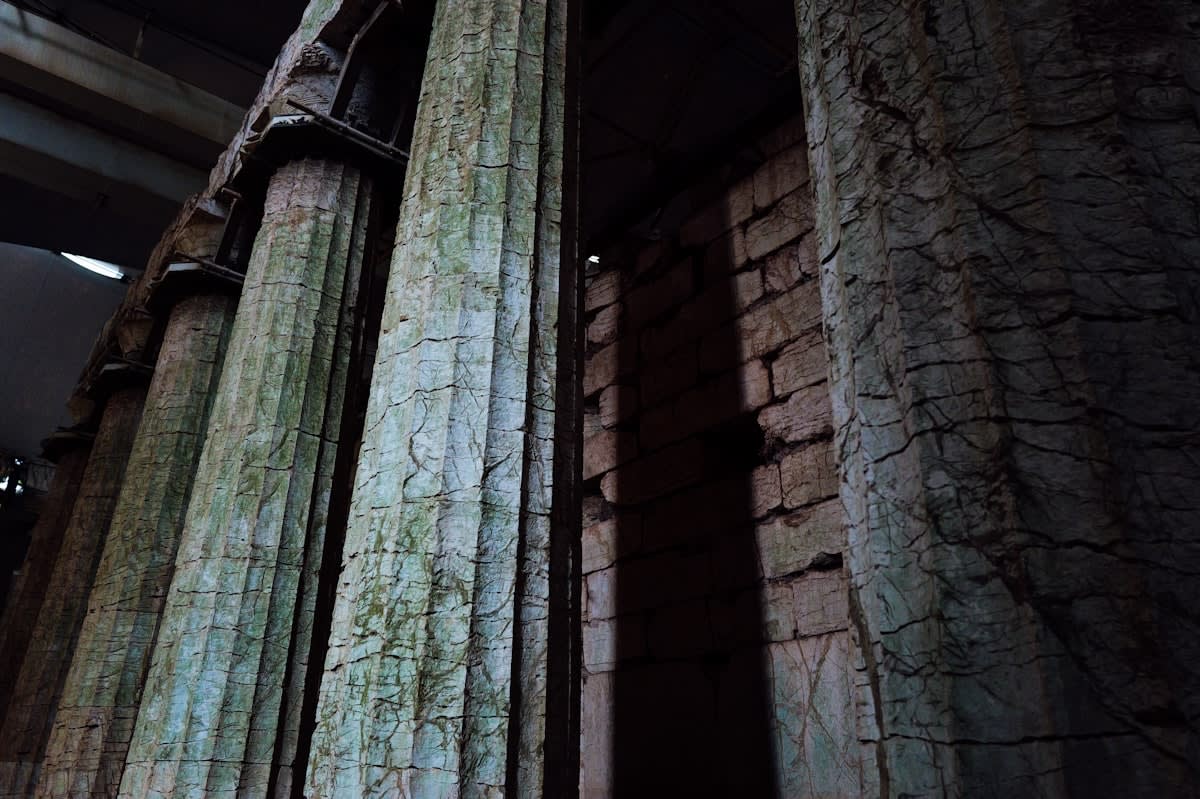
Memory is not a passive recording of events; it is an active project of curation. Those who hold the levers of power understand that controlling the present requires the surgical removal of specific pasts. We often mistake the loss of history for the passage of time or the decay of materials, but the most profound gaps in our records are usually intentional. History is not just written by the winners; it is edited by them. The act of forgetting is an architecture, designed with precision to ensure that certain narratives cannot survive the transition from one era to the next.
The Roman Blueprint: Damnatio Memoriae
The Romans perfected the art of the 'condemnation of memory,' or damnatio memoriae. This was not merely about killing a political rival; it was about erasing their existence from the collective consciousness. When the Senate decreed a damnatio, the target's name was chiseled out of stone monuments, their statues were toppled or recarved into the likeness of a successor, and their images were scrubbed from official coinage (Source: Oxford Classical Dictionary, 2015). Why go to such lengths? Because the Romans recognized that a physical presence in the public square equated to political legitimacy. By removing the image, they revoked the legitimacy.
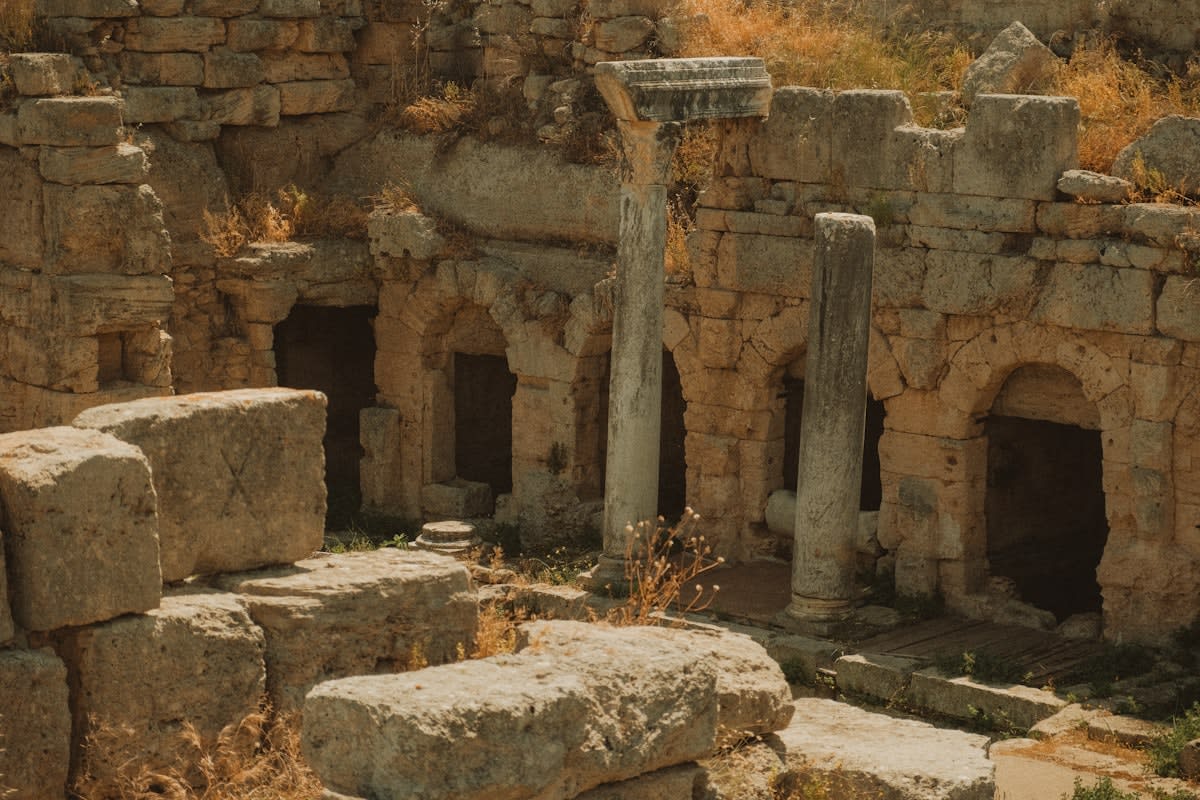
This systemic erasure created a strange paradox: the scar of the erasure itself became a marker of the person's significance. A blank space in a marble frieze told the observer that someone powerful had once stood there and had been violently removed. It was a warning to future aspirants. The architecture of forgetting was, in itself, a tool of intimidation. It signaled that the state possessed the power not only to end a life but to delete a legacy.
Intellectual Homogenization in the East
While Rome focused on the individual, the Qin Dynasty in China targeted the ideology. The burning of books and the burying of scholars under Emperor Qin Shi Huang was a calculated move to eliminate competing schools of thought, particularly Confucianism, which emphasized traditional morality over legalist state control (Source: Records of the Grand Historian, Sima Qian). This was not a random act of cruelty but a systemic shift toward intellectual homogenization. By destroying the texts, the state attempted to reset the cultural clock to Year Zero, ensuring that the only available truth was the one issued by the imperial court.
"The preservation of documentary heritage is not merely a technical challenge, but a fundamental human right to access the truth of one's own origins, regardless of current political winds."— UNESCO, Memory of the World Programme
The effectiveness of this strategy relied on the fragility of the medium. In an age of hand-copied scrolls, the destruction of a few key libraries could effectively erase an entire philosophical tradition for generations. The Qin understood that if you control the archives, you control the boundaries of what is thinkable. This creates a vacuum that the state is all too happy to fill with its own curated mythology.
Is this pattern repeating? Look at the broader global context. From the systematic destruction of archives during the colonial era in Africa and Asia to the purging of records in 20th-century totalitarian regimes, the objective remains identical: the removal of the 'counter-narrative.' When a state erases a record, it isn't just hiding a fact; it is removing the evidence that an alternative way of organizing society ever existed.
The Digital Pivot: From Burning to Burying
We have entered a new phase of erasure. In the digital age, we no longer need to burn books or chisel stone. The modern architecture of forgetting is built on algorithms, search engine optimization (SEO), and the 'Right to be Forgotten' (Source: GDPR Article 17, 2016). Instead of deleting data—which is difficult in a distributed network—the goal is to make it undiscoverable. This is 'burying' rather than 'burning.' When a piece of information is pushed to the tenth page of search results, it effectively ceases to exist for 99% of the population.
| Mechanism | Ancient Erasure | Digital Erasure | Primary Objective |
|---|---|---|---|
| Method | Physical Destruction | Algorithmic Deprioritization | Control of Narrative |
| Visibility | Obvious Gaps (Scars) | Invisible Absence | Seamless Transition |
| Speed | Slow/Manual | Instantaneous/Automated | Rapid Adaptation |
| Target | Individuals/Texts | Keywords/Metadata | Cognitive Framing |
This shift represents a systemic evolution. Physical erasure was a blunt instrument; algorithmic erasure is a scalpel. It allows for a more nuanced form of control where the state or a corporation can maintain a veneer of openness while subtly steering the user away from inconvenient truths. The 'Right to be Forgotten' was designed for individual privacy, yet in the hands of institutional actors, it can be weaponized to sanitize the public record of corporate or political malfeasance.
From a practitioner's perspective, this is where the real friction lies. Digital archivists and historians are currently locked in a quiet war with the ephemeral nature of the web. We debate the 'bit rot'—the gradual decay of digital files—and the terrifying reality that we are creating a 'Digital Dark Age.' While the Romans left behind broken statues, we risk leaving behind broken links and 404 errors. The debate in the field isn't about whether data is being lost, but whether the loss is an accidental byproduct of technology or a deliberate design choice to keep the public in a state of perpetual presentism.

Does the ability to erase the past make us more resilient or more fragile? When we lose the memory of failure, we are doomed to repeat the systemic errors of our ancestors. The architecture of forgetting doesn't just remove the bad; it removes the lessons. A society without a verifiable, unedited past is a society that cannot calibrate its future. We are trading the stability of historical truth for the convenience of a curated present.
However, there is opportunity in this tension. The rise of decentralized storage and blockchain-based archiving offers a potential counter-measure. By distributing the record across thousands of nodes, we can move away from the 'single point of failure' that characterized the libraries of Alexandria or the servers of a central government. The goal is to build an architecture of remembrance that is as resilient as the architecture of forgetting is efficient.
Fact-Check & Accuracy Note
Key claims regarding damnatio memoriae are sourced from the Oxford Classical Dictionary (2015). Data on the Qin Dynasty's book burning is based on Sima Qian's Records of the Grand Historian. Legal frameworks regarding the 'Right to be Forgotten' refer to the EU General Data Protection Regulation (GDPR) of 2016. The concept of the 'Digital Dark Age' is a subject of ongoing debate among digital preservationists and the Internet Archive community.