The Architecture of Collapse
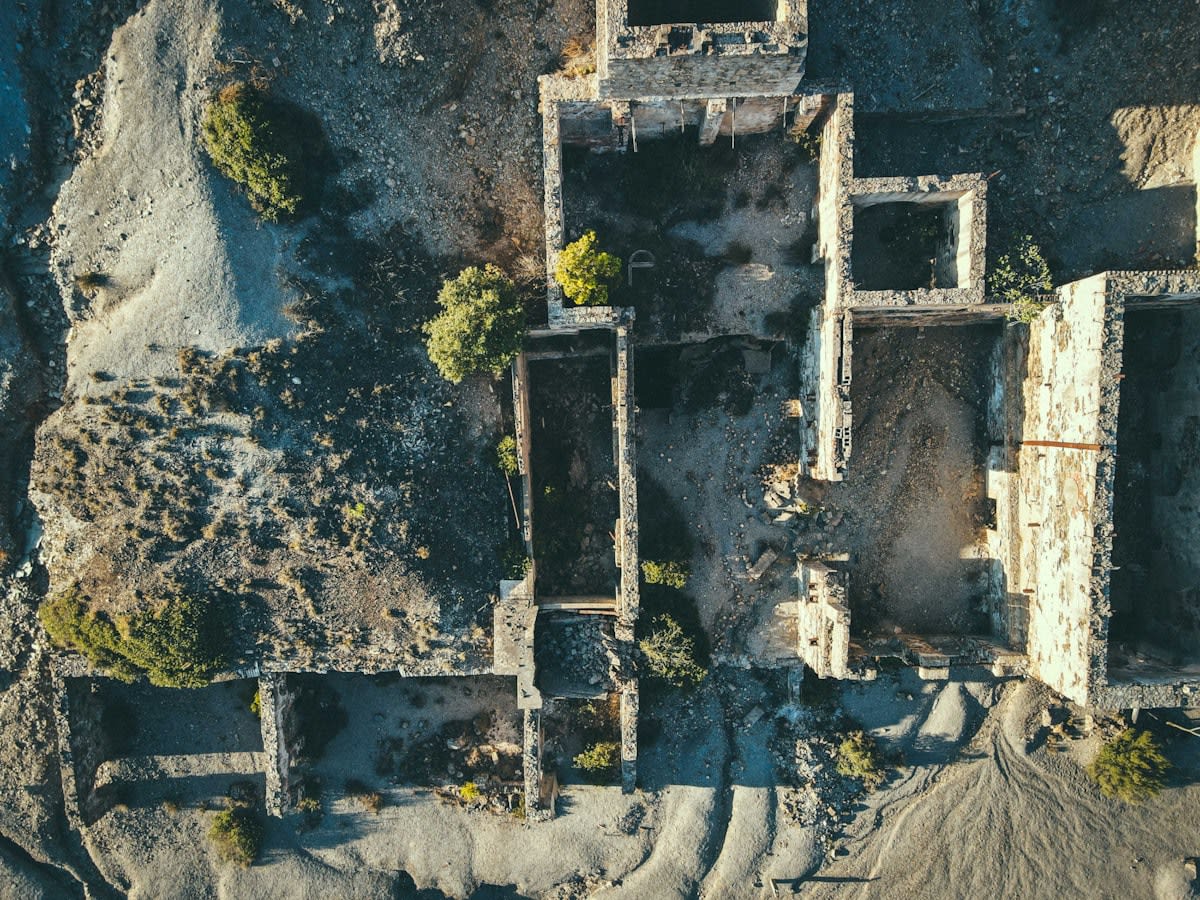
History rarely repeats, but it frequently rhymes in the most uncomfortable ways. Three millennia ago, the Mediterranean world experienced the first truly globalized economy, a network of kingdoms and city-states bound by trade, diplomacy, and a shared dependence on tin and copper. This era did not end with a single battle or a solitary conqueror. Instead, it succumbed to a systemic failure—a perfect storm of calamities that dismantled an entire way of life. When we look at the ruins of the Bronze Age, we are not looking at a distant curiosity, but at a mirror of our own hyper-connected global supply chains.
The catalyst was not a sudden apocalypse, but a slow-motion environmental slide. Archeologists point to severe climate shifts as the primary driver of migration and political collapse during this period (Source: Tempo, 2026). Specifically, the West African monsoon system had been shrinking for thousands of years, effectively transforming a green Sahara into a desert. This environmental degradation reduced rainfall across the Mediterranean, a trend that intensified when natural Atlantic climate cycles swung the region into decades-long dry periods (Source: Tempo, 2026). Why does this matter today? Because it demonstrates how a slow-burning systemic shift can create a fragility that a single, smaller shock can then shatter.
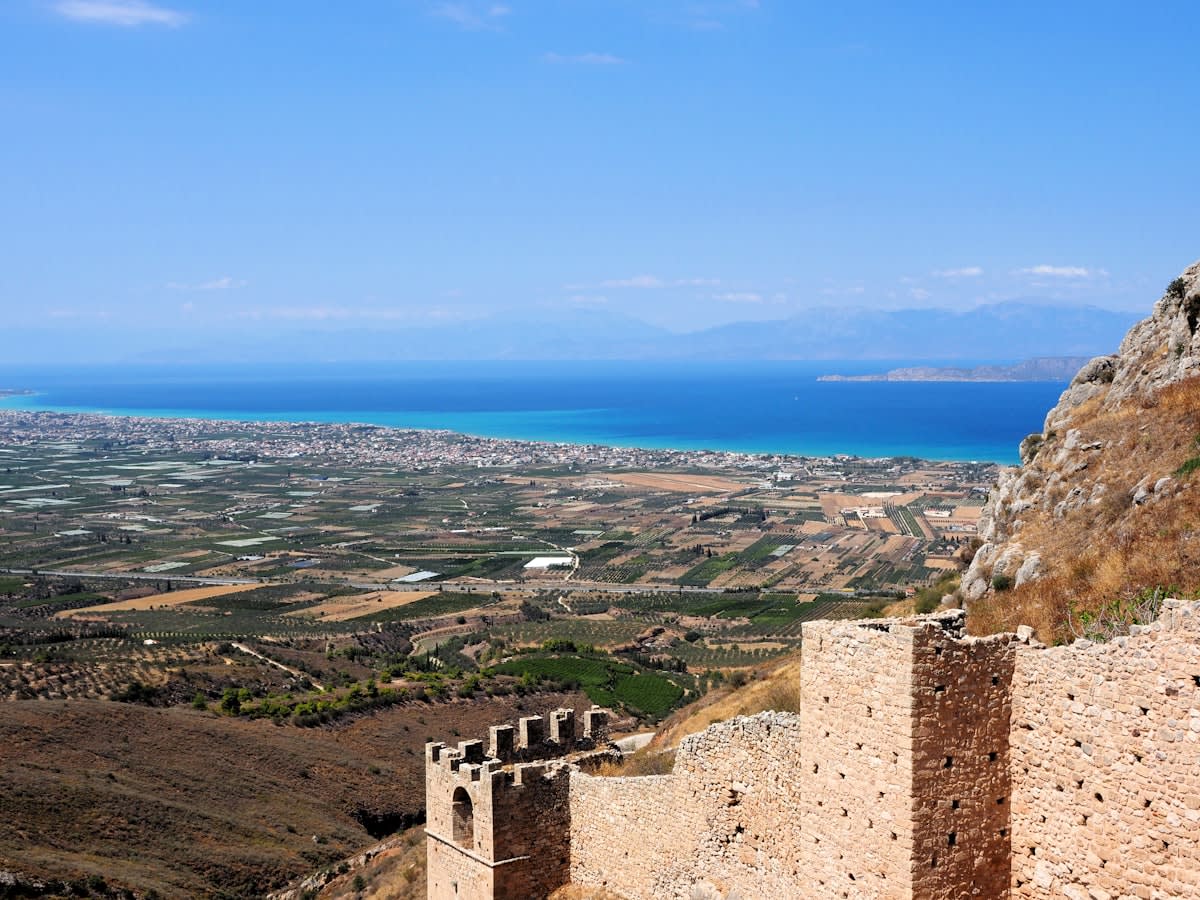
This climate-driven instability is not merely a historical footnote; it is the backdrop for narratives like The Odyssey, which serves as a post-Trojan War survival story set during this very collapse (Source: Tempo, 2026). The disintegration of these kingdoms shows that when the basic requirements for survival—water and food—become unstable, the sophisticated layers of trade and diplomacy vanish almost overnight. We often mistake our current technological complexity for strength, but as the Bronze Age teaches us, complexity without resilience is simply a larger target for failure.
Modern Interconnectivity: The New Fragility
Fast forward to the present, and we see a similar pattern of interdependence, though the medium has shifted from tin trade to digital packets and currency swaps. The danger is no longer just a shrinking monsoon, but a level of interconnectedness that allows a localized tremor to become a global earthquake. This is the central anxiety of modern central banking. Andrew Bailey, Governor of the Bank of England, has highlighted that the rising interconnectedness of markets since the financial crisis has fundamentally increased the risk of broad disruptions (Source: Business Insider, 2026).
"For the financial system, the most immediate concern is the potential impact of frontier AI on cyber risk. The rising interconnectedness of markets since the financial crisis has increased the risk of disruptions broadly, which is why — for example — stock investors in the US today are on edge about what's happening in Japan's currency markets."— Andrew Bailey, Governor at the Bank of England
Bailey's warning points to specific flashpoints that mirror the fragile dependencies of the Bronze Age. He identifies vulnerabilities in private credit and the boom in leveraged ETFs as potential triggers for a disruptive event (Source: Business Insider, 2026). In the Bronze Age, the 'leveraged ETF' was the over-reliance on a few distant sources of tin; today, it is the reliance on autonomous AI models that could facilitate sophisticated cyber attacks. Both systems are optimized for efficiency and growth, yet both ignore the catastrophic cost of a single point of failure.
Is it possible that we are building a digital version of the Bronze Age palace economy? These ancient systems were highly centralized and efficient until they weren't. Today, we see the same brittleness in our democratic structures. The creators of the series Babylon Berlin have noted the unsettling parallels between the chaotic hedonism and democratic brittleness of 1920s Germany and the pressures currently facing modern democracies from the US to South Korea (Source: The Guardian, 2026). When the underlying system—whether it is a climate or a social contract—begins to fray, the most sophisticated structures are the first to fall.
| Systemic Driver | Bronze Age Manifestation | Modern Manifestation |
|---|---|---|
| Environmental/Tech Shock | Shrinking West African Monsoon (Source: Tempo, 2026) | Frontier AI Cyber Risks (Source: Business Insider, 2026) |
| Interdependency | Mediterranean Tin/Copper Trade Networks | Global Currency/Leveraged ETF Markets |
| Political Vulnerability | Collapse of Centralized Palace Economies | Pressure on Democratic Systems (Source: The Guardian, 2026) |
| Outcome | Migration and State Disintegration | Systemic Financial Instability/Cyber Collapse |
The transition from stability to collapse is rarely a straight line; it is a series of cascading failures. In the Bronze Age, drought led to crop failure, which led to migration, which led to political instability, which finally severed trade routes. In the modern era, an AI-driven cyber attack on a major financial hub could trigger a liquidity crisis in private credit, leading to a contagion effect across currency markets. The triggers change, but the mechanics of the cascade remain identical.
The Practitioner's Perspective: Efficiency vs. Resilience
In the war rooms of global logistics and risk management, the debate is no longer about preventing disruption—it is about surviving it. For decades, the industry mantra was 'Just-in-Time' (JIT), a philosophy designed to strip every ounce of waste from the supply chain to maximize profit. But practitioners are now arguing that JIT was actually a strategy for maximizing fragility. The internal debate has shifted toward 'Just-in-Case' (JIC), which prioritizes redundancy and regionalization over raw efficiency. The friction arises when shareholders demand the margins of JIT while the operational reality demands the safety of JIC.
On the ground, this looks like diversifying suppliers away from single-region dependencies and investing in 'dark warehouses' that can operate autonomously during a crisis. It is a move away from the 'globalized' ideal toward a 'modular' reality. Those who recognize the Bronze Age pattern are stoping their reliance on the 'perfect storm' of a stable climate and stable politics, instead building systems that can function even when the center fails to hold.

The Philosophy of the Event
How do we process the possibility of such catastrophic events? Philosopher Raphael Zagury-Orly suggests that we often try to accommodate historical events by confining them to a 'work of mourning,' effectively forgetting the lesson to avoid the pain of the event (Source: Times of Israel, 2026). By treating the Bronze Age collapse as a distant, singular catastrophe, we fail to see it as a recurring logic of systemic failure. We treat the 'event' as an anomaly rather than a symptom of the system's design.
The opportunity lies in changing our relationship with this fragility. Instead of fearing the collapse, we can use the warning signs—like the volatility in Japan's currency markets or the rise of autonomous AI threats—as prompts for adaptation (Source: Business Insider, 2026). Resilience is not the absence of failure, but the ability to fail gracefully. The kingdoms of the Bronze Age failed catastrophically because they were too rigid; the modern systems that survive will be those that are fluid and decentralized.
Ultimately, the lesson is that complexity is a debt that eventually comes due. Whether it is the environmental debt of a shrinking monsoon or the technological debt of an unchecked AI integration, the cost is always paid in stability. The only way to avoid the total collapse seen 3,000 years ago is to intentionally build in the redundancies that efficiency experts spent the last century trying to eliminate.
Fact-Check & Accuracy Note
Key claims regarding the Bronze Age climate shifts are sourced from Tempo (2026). Financial risks related to AI and market interconnectedness are attributed to the Bank of England's Governor Andrew Bailey via Business Insider (2026). Political parallels regarding democratic brittleness are sourced from The Guardian (2026), and philosophical perspectives on historical events are attributed to Raphael Zagury-Orly via The Times of Israel (2026). There is ongoing academic debate regarding the exact weight of climate vs. political factors in the Bronze Age collapse.