Supreme Court paves way for IT assessments of two businessmen sons of former CJI Y.K. Sabharwal
Source Entity
India Latest News: Top National Headlines Today & Breaking News | The Hindu
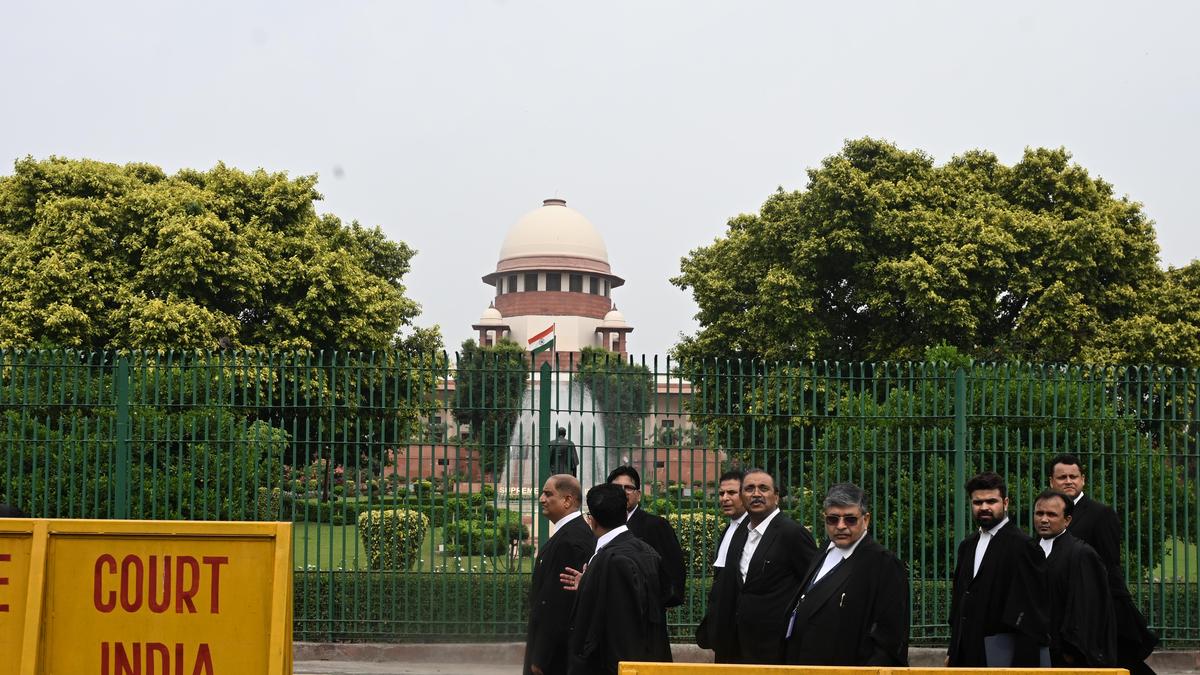
The Supreme Court has dismissed appeals by the sons of former CJI Y.K. Sabharwal, allowing income tax authorities to proceed with reassessments for 2008-2010. The case centers on share transactions used to fund a high-value property purchase in Delhi.
Supreme Court Greenlights Tax Probe into Former CJI's Family
The Supreme Court of India has delivered a significant verdict, dismissing four appeals filed by Chetan and Nitin Sabharwal, the sons of the 36th Chief Justice of India, Y.K. Sabharwal. By upholding the income tax reassessment notices for the assessment years 2008-09 and 2009-10, the Bench consisting of Justices J.B. Pardiwala and K. Vinod Chandran has effectively cleared the path for the Income Tax Department to scrutinize financial transactions that have remained under a legal cloud for over a decade.
The Core of the Legal Dispute
At the heart of the matter lies a contentious property purchase on Delhi’s prestigious Sikandra Road in 2010. The Income Tax Department’s investigation focuses on the source of funds utilized for this acquisition, specifically questioning the nature of share transactions that facilitated the transaction. The court's decision confirms that the notice issued by the tax authorities on March 31, 2015, was based on a valid “reason to believe” that income had escaped assessment, a critical threshold for reopening closed tax files under the Income Tax Act.
Contextualizing the Judicial Scrutiny
Former Chief Justice Y.K. Sabharwal, who served from November 2005 to January 2007, presided over a significant tenure in the judiciary. While this case involves his sons in their capacity as businessmen, the involvement of a family member of a former head of the judiciary brings heightened public and legal scrutiny. The Supreme Court's refusal to interfere with the tax department's mandate reinforces the principle that no individual, regardless of their background or familial connections, is exempt from the standard rigors of financial auditing and tax compliance.
Procedural Validity and Tax Law
This ruling underscores the judiciary’s stance on the powers of the tax department to reopen assessments when credible information suggests tax evasion or undisclosed income. By validating the 2015 notice, the court has emphasized that the procedural requirements for reassessment—namely the existence of a 'reason to believe'—were satisfied. This sets a precedent for the tax authorities to pursue long-pending investigations into high-value real estate transactions that appear disproportionate to disclosed sources of wealth.
Broader Implications and Future Trends
The resolution of this procedural hurdle signals a shift toward greater accountability in high-profile tax litigation. As the Income Tax Department moves forward with the assessments for 2008-09 and 2009-10, the outcome will likely serve as a benchmark for how the courts handle similar cases involving legacy financial disputes. Furthermore, this verdict reflects the broader trend of the Indian judiciary upholding the statutory authority of investigative agencies to ensure transparency in significant capital transactions within the real estate sector.
Conclusion
In summary, the Supreme Court's dismissal of the Sabharwal brothers' appeals is a definitive move that allows the law to take its course. By confirming the validity of the tax notices, the court has reinforced the rule of law and the necessity of financial transparency, ensuring that the tax department can conduct its inquiry into the 2010 Sikandra Road property transaction without further judicial delay.
Verification Required?