'Keep it short': Nia Patel recalls being silenced at grandmother's memorial
Source Entity
TOI LIFESTYLE DESK
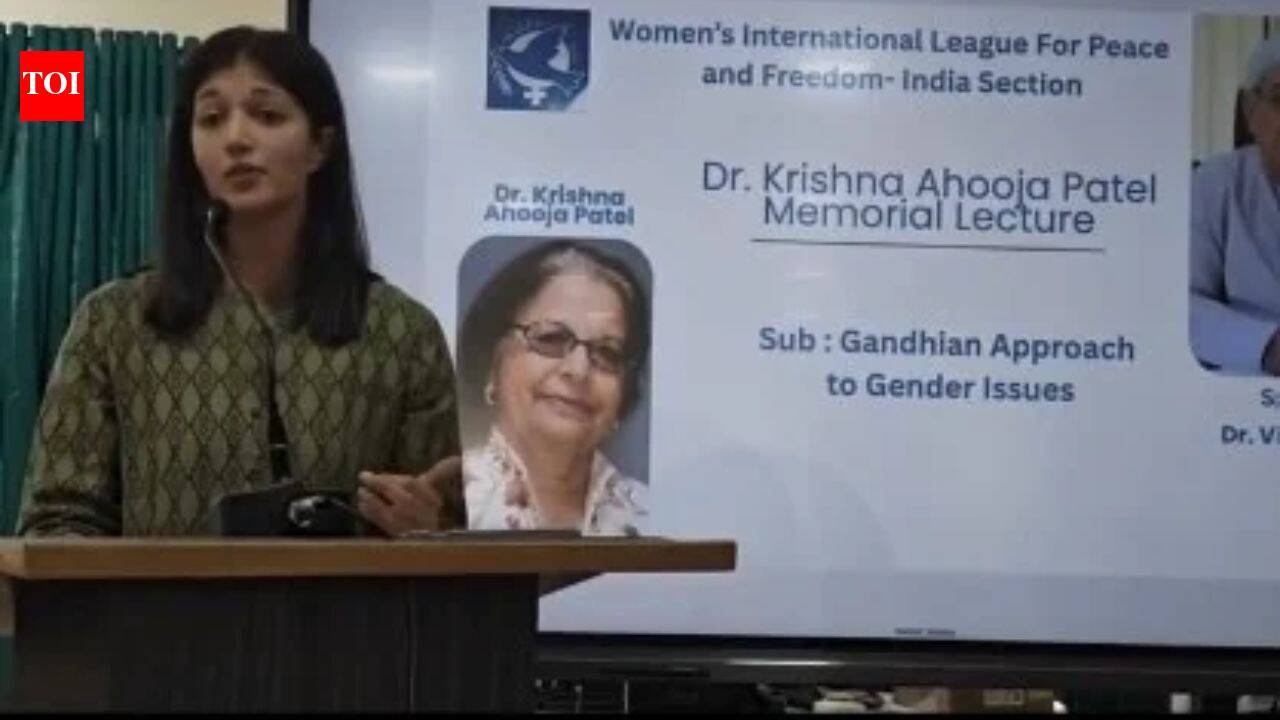
Nia Patel was silenced while advocating for women's rights at the memorial of her grandmother, Krishna Ahooja-Patel. This incident highlights the ongoing struggle for gender equality and the disconnect between institutional rhetoric and practice.
The Paradox of Memorialization: Silencing at a Legacy Event
The recent incident involving Nia Patel at the memorial of her grandmother, Krishna Ahooja-Patel, serves as a poignant microcosm of the broader struggle for gender equity. While honoring a woman who was a titan of peace activism and a Nobel Peace Prize nominee, Patel found herself being told to "keep it short" when she attempted to discuss the critical issue of women's rights. This moment of suppression within a space dedicated to a champion of justice highlights a pervasive irony: even in environments meant to celebrate female leadership, the actual voices of women are often curtailed when they challenge the status quo or address systemic gender issues.
The Legacy of Krishna Ahooja-Patel
To understand the gravity of this interruption, one must first recognize the stature of Krishna Ahooja-Patel. As a globally respected peace activist and a fierce advocate for women’s rights, her life’s work was dedicated to dismantling the very structures that keep women’s voices on the periphery. Her nomination for the Nobel Peace Prize underscores the international recognition of her contributions to human rights. By silencing her granddaughter—who sought to carry forward this mantle—organizers inadvertently undermined the very values that Ahooja-Patel spent her lifetime championing, proving that the struggle for gender justice remains incomplete.
The Gap Between Rhetoric and Reality
This incident in Ahmedabad is not merely a localized social faux pas; it is symptomatic of a deeper, institutionalized disconnect. Many organizations and societal bodies profess a formal commitment to gender justice and equality, yet these commitments often fail to translate into the actual practice of inclusive dialogue. When a platform meant for tribute becomes a site of censorship, it reveals that the discomfort surrounding women’s empowerment is not just a historical relic, but a contemporary reality that manifests even in the most progressive spaces.
Implications for Future Advocacy
Nia Patel’s experience underscores the persistent challenges women face regarding respect and recognition. When women are instructed to limit their discourse on gender issues, it signals a desire to sanitize the conversation, stripping away the necessary urgency that drives social change. For activists and future generations, this event serves as a stark reminder that advocacy must be vigilant about the spaces it occupies. It is not enough to hold events in the name of equality; the participants must also be granted the agency to define the parameters of that equality without fear of interruption.
A Call for Institutional Reflection
Moving forward, the incident necessitates a rigorous self-examination by institutions that claim to support gender justice. If a memorial for a legendary activist cannot tolerate a speech on women's rights, then the commitment to those rights is superficial at best. True progress requires a willingness to listen to uncomfortable truths and to allow those who represent the legacy of activists like Ahooja-Patel to speak without restriction. The silencing of Nia Patel is a call to action for those who wish to bridge the gap between abstract institutional values and concrete, respectful, and inclusive daily practice.