
On July 17, 2026, the return of 27 historical objects from Italy to Mexico was framed as a ceremony of restoration. These items, ranging from terracotta statues to fossilized fish, were recovered by the Carabinieri Tutela del Patrimonio Culturale, an elite unit colloquially known as the art hit squad. While the official narrative emphasizes the restoration of identity to the Mexican people, the transaction reveals a deeper structural realignment in international relations. The act of returning stolen heritage is no longer a mere ethical correction; it is a calculated diplomatic gesture used to grease the wheels of bilateral cooperation.
Why does a collection with a collective value of only several tens of thousands of euros command such high-level diplomatic attention? The answer lies in the asymmetry of value between market price and sovereign prestige. For the Carabinieri TPC, the recovery of these objects through six separate investigations serves as a demonstration of Italian state capability and moral leadership. For Mexico, the return of these unique artifacts provides a tangible victory in the narrative of decolonization, transforming a modest set of clay figurines into symbols of national resilience.

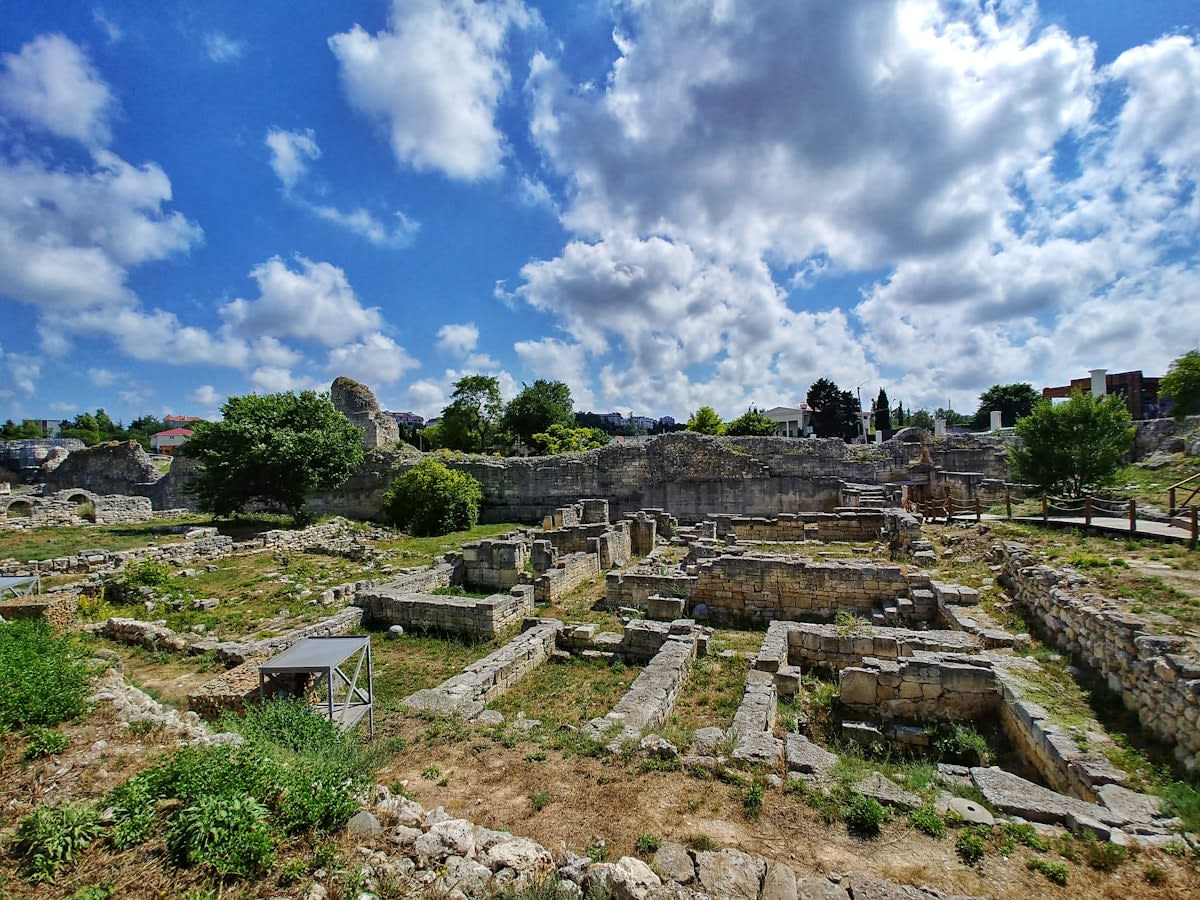
This transition from curation to diplomacy is not without its darker counterparts. While Italy uses repatriation to build bridges, other actors use archaeology to build walls. In the West Bank, the Israel Antiquities Authority has been identified as a central player in utilizing archaeology as an instrument of colonization. By framing land claims through the lens of historical discovery, the process of excavation becomes a process of occupation. The physical act of digging into the earth is used to manufacture a historical legitimacy that justifies current territorial expansions.
Consider the international research project into the origins of the Dead Sea Scrolls. This effort involves a sprawling network of institutions, including the University of Groningen, the universities of Pisa and Naples, KU Leuven, and the University of Southern Denmark, alongside Egyptian museums in Berlin and Turin. On the surface, this is a scholarly pursuit of antiquity. Beneath the surface, the central role of the Israel Antiquities Authority ensures that the academic output supports a specific geopolitical narrative, turning papyri and pottery into deeds of ownership.
"The return to the Mexican people of precious and unique artefacts, which were previously believed to have been lost, restores a sense of identity to the places from which they had been unlawfully taken."— Carabinieri Tutela del Patrimonio Culturale
The weaponization of culture extends beyond the soil and into the realm of economic sovereignty. In Ghana, the launch of the Ghana Creative Economy Initiative, curated by Dorina Amina Abubakar, signals an attempt to formalize cultural output as a state asset. This move mirrors a broader struggle for control over national resources. When a state decides that its creative and historical output is a strategic asset, it begins to view foreign ownership of that output not as a legal arrangement, but as an infringement on sovereignty.
This tension is vividly illustrated in the conflict surrounding the Black Volta gold project. Ghanaian billionaire Ibrahim Mahama and his company, Engineers and Planners, have been accused of industrial espionage to seize control of this $250 million project from international investors. While gold is a mineral and not a sculpture, the underlying logic is identical to that of cultural repatriation: the drive to put ancestral wealth back into local hands. The fight over Black Volta is a test case for whether a nation can reclaim its physical wealth without alienating the foreign capital it still requires for growth.
| Repatriation Model | Primary Driver | Diplomatic Objective | Example Context |
|---|---|---|---|
| Restorative | Moral Rectification | Bilateral Goodwill | Italy to Mexico |
| Assertive | Territorial Claim | Legitimacy of Occupation | Israel in West Bank |
| Sovereign | Resource Nationalism | Economic Autonomy | Ghana's Mineral/Creative Assets |
Could the drive for repatriation be fueled by something more fundamental than politics? Recent research suggests that cultural engagement may have a direct impact on human biology. A study indicates that visiting museums and engaging with cinema can slow biological aging, providing benefits comparable to frequent physical exercise. If cultural engagement is a health-promoting behavior, then the systemic removal of a people's heritage is not just a historical theft, but a biological deprivation. This adds a new, scientific layer to the demands for repatriation: the right to cultural heritage as a right to health.
This intersection of health, history, and power creates a volatile environment for traditional museums. The old argument that Western institutions are the best stewards of global heritage is collapsing under the weight of these new priorities. When a state can argue that its citizens are biologically disadvantaged by the absence of their artifacts, the legal arguments for retention become obsolete. The museum is no longer a sanctuary; it is a warehouse of contested assets.
The broader economic context of this shift is evident in the changing dynamics across Africa. With nine of the world's 20 fastest-growing economies currently located in Africa, the continent is moving away from a relationship of aid toward one of commercial partnership. As these nations gain economic leverage, their demands for the return of cultural assets become more assertive. They no longer ask for their history back as a favor; they demand it as a prerequisite for a partnership of equals.
The strategy employed by the United States in its second Trump administration—shifting from aid to trade—further empowers this trend. By treating African nations as capable commercial partners rather than aid recipients, the US acknowledges a shift in power. This economic autonomy provides the financial and political capital necessary for these nations to pursue aggressive repatriation campaigns and the development of their own creative economies, such as the initiatives seen in Accra.
Does this mean the era of the universal museum is dead? Not necessarily, but its function has changed. Museums are becoming diplomatic clearinghouses. The Carabinieri TPC's success in recovering 27 objects for Mexico is a blueprint for how states can use law enforcement to achieve diplomatic wins. The process of investigation, recovery, and ceremonial return is a choreographed performance of power that benefits both the returning state and the receiving state.
However, the danger remains that culture will be used exclusively as a tool for exclusion. When archaeology is used to justify land grabs, as seen in the West Bank, the pursuit of heritage becomes a weapon of erasure. The same tools used to restore identity in Mexico are used to overwrite identity elsewhere. The divide is not between those who keep art and those who return it, but between those who use heritage to liberate and those who use it to dominate.
The ultimate outcome of this high-stakes game is a world where cultural assets are treated with the same strategic intensity as oil or semiconductor chips. The $250 million fight over the Black Volta gold project and the fight over a terracotta head are two sides of the same coin. Both are struggles for the control of the symbols and substances that define a nation's worth. In this new landscape, the most successful states will be those that can effectively navigate the tension between international law and sovereign desire.
Strategic Insight
The shift from 'stewardship' to 'sovereignty' means that the legal ownership of an object is now less important than the political utility of its return.
We are witnessing the birth of a new form of diplomacy where the currency is not the dollar, but the artifact. The ability to recover, return, or claim a piece of the past is the most effective way to signal power in the present. As biological evidence links cultural access to physical health and economic growth links sovereignty to resource control, the stakes of repatriation will only continue to rise.