
We assume that faster tools create smarter teams. This is a lie. Modern logic dictates that if you optimize the part, the whole improves automatically. But the data suggests we are merely accelerating in isolation. Why does a tool that makes a person faster fail to make a company better? The answer lies in the loss of a collective language—a forgotten way of coordinating that transcends the digital interface.
The evidence is stark. A longitudinal study by the non-profit Workstyle Revolution in partnership with King's College London reveals a jarring discrepancy in how technology impacts work. Workplace technology boosts individual productivity by 13.5%, yet team productivity climbs by only 8.9% (Source: HR Magazine, 2026). This delta proves that our current logic of adoption is flawed. We are upgrading the engine but ignoring the transmission.
"Individual productivity is driven by how one person works, while organisational productivity depends on how effectively people, processes and information are connected."— Hannah Soye, Chief People and Culture Officer at Haiilo
Soye argues that leaders must look beyond simple adoption. The focus must move to how work is designed (Source: HR Magazine, 2026). It is a hard turn away from the obsession with software licenses and toward the study of human connection. We have spent a decade buying tools. We forgot to build the social grammar required to use them together.
The Chemical Logic of Cognition
Logic is not just a mental exercise. It is biological. Our ability to maintain cognitive performance as we age depends on chemical triggers that modern, sterile environments often overlook. Consider the simple act of drinking coffee. It is not just a morning ritual; it is a cognitive preservative.
A long-term US study found a significant link between caffeinated coffee and a lower risk of dementia (Source: ScienceDaily, 2026). The numbers are telling. For those who rarely drank coffee, 330 cases of dementia per 100,000 people per year were recorded. For those consuming two to three cups daily, that number dropped to 141 cases per 100,000 (Source: ScienceDaily, 2026). Tea showed similar benefits. Logic, in this sense, is a byproduct of chemistry.

There is a ceiling to this benefit. Consuming more than three cups a day provided no additional advantages (Source: ScienceDaily, 2026). This mirrors the productivity gap in the workplace. More is not better. Precision is better. The logic of 'more' is a mechanical failure of the modern mind.
Teaching Machines the Language of Desire
Can a machine understand why a human learns? Standard Large Language Models (LLMs) often struggle with the 'why' of human motivation. They see the output, not the drive. To fix this, researchers are attempting to encode Self-Determination Theory (SDT) into the very fabric of AI estimation.
The FIA-LLM framework is a dual-stream attempt to solve this. By grounding learning-state surrogates in SDT, the system produces a structured diagnostic explanation of a learner's state (Source: Nature, 2026). It does not just predict the next item a student will achieve; it labels the dimension of motivation driving that achievement.
The results are precise. On frozen human expert test sets, FIA-LLM reduced the macro-average RMSE by 8.6% compared to the strongest baseline (Source: Nature, 2026). It also improved the macro-average AUC by 1.2 percentage points (Source: Nature, 2026). We are finally teaching machines to speak the forgotten tongue of human motivation.
In the trenches of AI development, this creates a sharp divide. Pure statisticians argue that SDT is an unnecessary layer of human psychology that complicates the model. They prefer raw data. But those of us who have watched these models fail in real-world classrooms know that without a motivational framework, the AI is just guessing. The friction is between those who want a calculator and those who want a mentor.
The Molecular Grammar of Life
The deepest forgotten tongues are not spoken; they are encoded in proteins. In the gut, bacteria like Bifidobacterium bifidum operate on a logic of preference that governs infant health. They do not seek general nutrients. They seek specific N-glycopeptides.
Recent research into the PNGaseA enzyme in infant-derived Bifidobacterium bifidum has revealed the structural basis for this preference (Source: Nature Communications, 2026). The enzyme's ability to remove GalNAc from mucin glycopeptides is a highly specific biological operation. This is not random. It is a precise molecular playbook for survival.
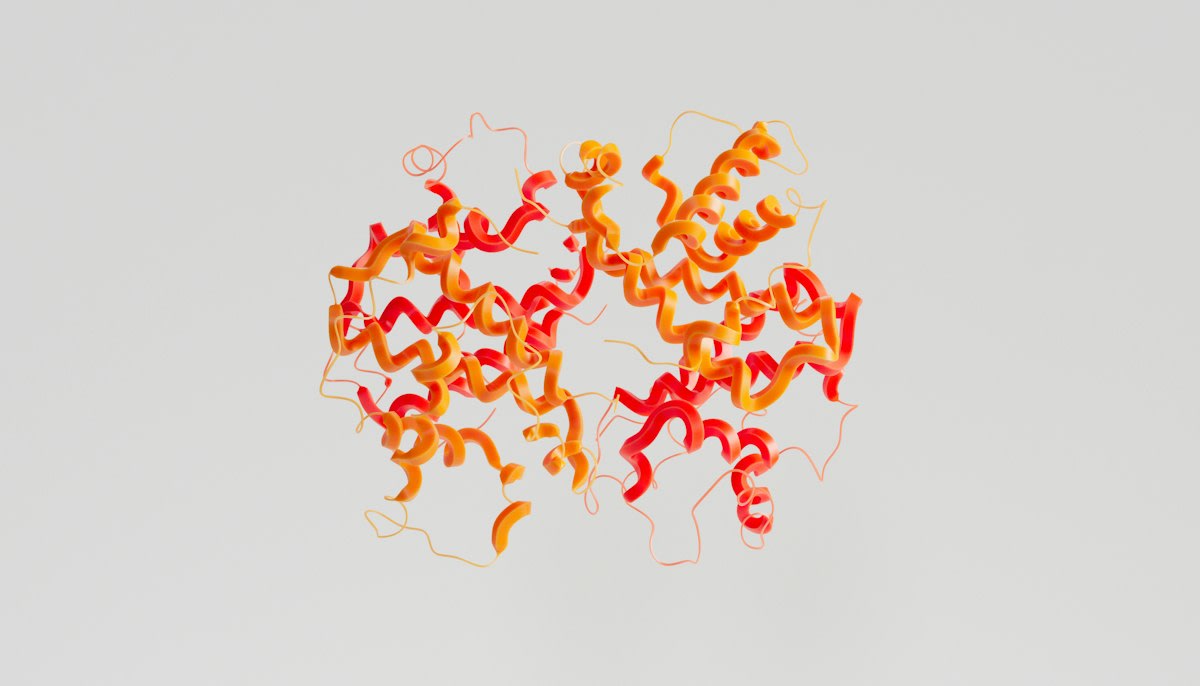
Some researchers predict that certain GH36 enzymes act as alpha-GalNAc'ase to break down blood group A structures, though the exact specificity remains a point of investigation (Source: Nature Communications, 2026). This level of specificity is the antithesis of modern, broad-stroke logic. It is a reminder that nature does not optimize for the average; it optimizes for the exact.
Fact-Check & Accuracy Note
The data regarding workplace productivity comes from a longitudinal study involving King's College London and Workstyle Revolution, presented in November 2026. The coffee-dementia link is based on US population data reported by ScienceDaily. The FIA-LLM findings are peer-reviewed in Nature, and the Bifidobacterium research is published in Nature Communications. Academic debate continues regarding the specific enzyme activities of GH36 in gut bacteria.
What do these disparate threads—productivity gaps, coffee, AI motivation, and gut bacteria—tell us? They reveal that the logic of the individual is brittle. Whether it is a worker in a digital office or a bacterium in an infant's gut, the real power comes from the specific, the connected, and the biological. We are not resetting logic; we are remembering that logic was never purely digital to begin with.