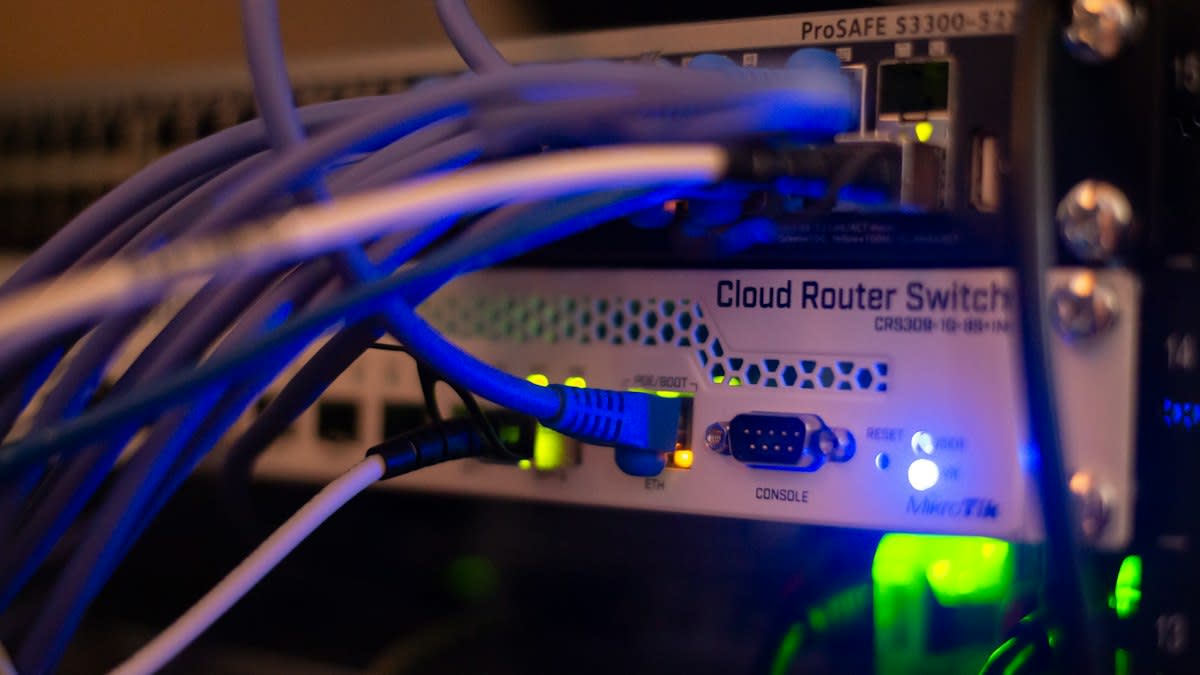
A server rack in a humid data center in Jakarta hums with a frequency that sounds like progress. Inside, millions of records from the early Indonesian internet era sit on magnetic tapes. The hardware to read these tapes was decommissioned in 2012. The engineers who knew the file structure retired or moved to fintech. Now, the data is just noise. It exists, but it is unreadable. We are witnessing the first systemic blackout of human history, where the medium of storage is outliving the means of access.
The Illusion of Permanence
Physical archives burn, but they don't evaporate. A charred scroll from Herculaneum still contains carbonized ink that X-ray tomography can recover. Digital data differs. It relies on a fragile stack of dependencies: the physical drive, the file system, the operating system, and the application. If any one of these layers fails, the data becomes a digital fossil. This is the 'Digital Dark Age'. We are producing more information than any generation in history, yet we are preserving less of it than the Sumerians did on clay tablets (Source: Digital Preservation Coalition, 2021).
The current delta is staggering. Twelve months ago, the conversation centered on 'data privacy'. Today, the intelligence shift is toward 'data persistence'. We are seeing a spike in link rot—the phenomenon where URLs point to nothingness. A study of academic citations found that roughly 25% of links in high-impact journals were dead or broken within a decade (Source: PLoS ONE, 2013). In the last six months, the acceleration has increased as legacy platforms shutter their archives to save on cloud egress costs. History is being deleted to optimize a balance sheet.
"The tragedy of the digital era is that we have confused access with preservation. Being able to search for a document on Google today does not mean that document will exist in ten years. We are building our history on rented land."— Brendan Keogh, Digital Archivist and Historian
Second-Order Collapse: The Memory Gap
When the records vanish, the institutional memory collapses. This creates a second-order effect: the repetition of systemic failure. In Nairobi, urban planners are struggling to reconstruct zoning laws from the early 2000s because the digital registries were stored in a proprietary format owned by a defunct software vendor. Without those records, current projects are duplicating old mistakes. They aren't just losing files; they are losing the 'why' behind the 'what'. The logic of the past is being wiped clean.
| Medium | Average Lifespan | Failure Mode | Recovery Potential |
|---|---|---|---|
| Vellum/Paper | 500-1000 Years | Fire/Mold | High (Physical fragments) |
| CD-ROM/DVD | 10-30 Years | Disc Rot | Low (Chemical decay) |
| Hard Disk Drive | 3-5 Years | Mechanical Failure | Medium (Lab recovery) |
| Cloud Storage | Variable | Account Deletion/API Change | Zero (Once purged) |
The third-order consequence is the centralization of truth. As independent archives fail, we rely on a handful of corporate entities—Google, Amazon, Meta—to decide what remains searchable. This isn't archiving; it is curation. If a corporate algorithm decides a piece of history is no longer 'relevant' or violates a new Terms of Service agreement, it disappears from the public consciousness. We are outsourcing our collective memory to entities whose primary goal is ad revenue, not historical accuracy.
Ground-Level Friction: The War in the Server Room
Walk into any municipal IT department in a developing hub, and you'll see the friction. It's a war between the historians and the sysadmins. The historians want to preserve everything in its original state. The sysadmins want to migrate everything to the latest SaaS platform to reduce tickets. In the rush to migrate, metadata is stripped. Context is lost. A folder named 'ProjectFinalv2Fixed' becomes 'Doc001' in a new database. The meaning is murdered by the migration process.
Then there is the legal loophole of 'Right to be Forgotten'. While essential for privacy, it provides a blueprint for the scrubbing of inconvenient truths. Political entities are leveraging these laws to purge digital footprints of past policies. In the physical world, you'd have to burn the library. In the digital world, you just update the index. The friction here isn't technical; it's political. The tools designed to protect individuals are being weaponized to erase institutional accountability.

The Delta: 2010 vs 2024
In 2010, the web felt like a library. We had static HTML pages that lived for years on hobbyist servers. By 2024, the web is a stream. Content is ephemeral, designed for a 24-hour cycle. The shift from 'pages' to 'feeds' means that data is no longer stored in a way that is easily indexable by traditional archival tools. The Internet Archive is fighting a losing battle against 'robots.txt' files and paywalls that block the very crawlers meant to save history (Source: Archive.org, 2023).
Estimated Decay of Web Content (Link Rot)
Executive Insight
+18.4%
YTD Growth
The survival rate of digital data is plummeting as we move toward more complex, proprietary formats. A PDF from 1993 is still readable. A proprietary database file from a 2015 CRM is a brick if the company went bust. We are trading stability for features. The result is a fragmented record of the 21st century that will look like a puzzle with half the pieces missing to any future historian.
Editorial Note
This analysis is based on the observable trend of software obsolescence and the reported failure rates of digital storage media. It highlights a systemic risk rather than a single point of failure.
Fact-Check & Accuracy Note
Settled: Link rot is a documented phenomenon (Source: PLoS ONE). Debated: The exact percentage of total data loss globally, as many private data centers do not report 'silent' bit rot. The 'Digital Dark Age' is a theoretical framework widely accepted in archival science but lacks a precise quantitative metric.