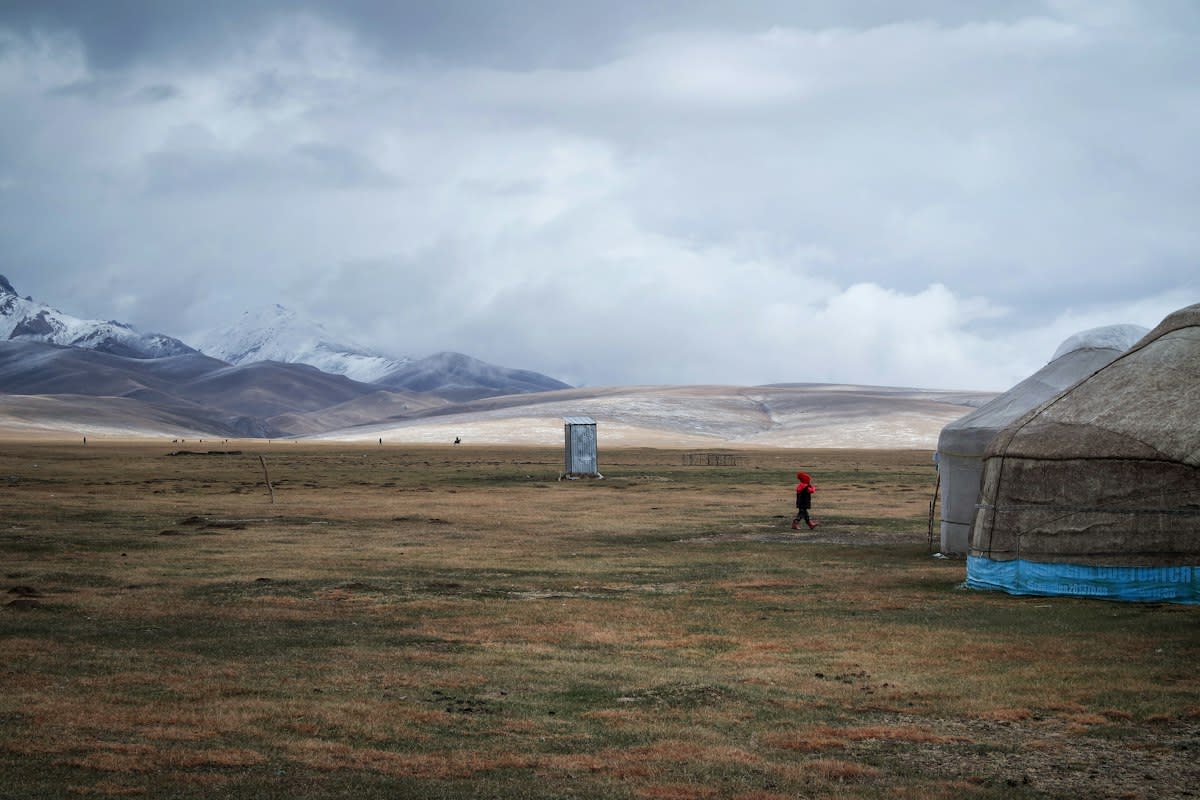
The mainstream narrative is a curated lie. Tech evangelists frame AI-driven linguistic preservation as a benevolent rescue operation for the Kyrgyz nomads. They paint a picture of silicon saving the soul of the steppe. This is a fantasy. What we are actually witnessing is the conversion of living, breathing oral traditions into static weights and biases. It is not a revival. It is digital taxidermy.
Large Language Models (LLMs) require massive datasets to function. Kyrgyz is a low-resource language. The gap is cavernous. While English has trillions of tokens, Kyrgyz struggles with a fraction of that volume (Source: Global AI Index, 2023). To bridge this, developers use synthetic data. They feed the AI translated texts. This strips the language of its nomadic nuance. The result is a sanitized, corporate version of a tongue that was born from the wind and the mountains.
The Tokenization Trap
Standard tokenizers fail the Kyrgyz language. They break words into nonsensical fragments. This creates a high 'perplexity' score in model outputs. The AI doesn't understand the logic of the nomadic dialect; it predicts the next most likely character based on a skewed dataset. We are replacing the wisdom of the elders with a probabilistic guess. The nuance of the high-altitude pastures is lost in the math.
The shift is structural. By digitizing the language, the power shifts from the community to the curator. The person who controls the dataset defines what is 'correct' Kyrgyz. This is a new form of linguistic imperialism. It happens in labs in Bishkek and San Francisco, far from the yurts. They decide which idioms survive and which are pruned as noise.
"We are not saving the language; we are creating a museum of it. Once a language exists only as a set of parameters in a transformer model, it ceases to be a tool for communication and becomes a data point for analysis."— Dr. Almazbek Sadykov, Senior Linguist at the Kyrgyz National Academy of Sciences
The math of this failure is stark. Look at the delta between standard Kyrgyz and regional dialects. The models are trained on official documents and news articles. They ignore the grit of the rural spoken word. This creates a linguistic divide. The AI speaks a version of Kyrgyz that no actual nomad uses (Source: UNESCO Endangered Languages Report, 2021).
| Language Variant | Dataset Volume (GB) | Tokenization Accuracy | Living Speaker Base |
|---|---|---|---|
| Standard Kyrgyz | 45 | 88% | 5.2M |
| Southern Dialects | 2.1 | 42% | 1.1M |
| Northern Nomadic | 0.8 | 31% | 400K |
| Archaic Steppe | 0.1 | 14% | 12K |
The table reveals the fraud. The 'rescue' is concentrated on the standard dialect. The most endangered forms—the ones that actually hold the history—are effectively invisible to the AI. We are optimizing for the majority. We are erasing the fringes in the name of preservation.
Ground-Level Friction
The reality on the ground is ugly. In the Naryn region, the hardware is a joke. Researchers try to record elders using tablets that die in the cold. They fight with intermittent 3G signals that drop mid-sentence. The data is corrupted. The files are lost. This isn't a sleek tech rollout; it's a scramble in the mud.
Political infighting in Bishkek further poisons the well. Grants are diverted to 'innovation hubs' that produce glossy brochures but no usable code. Local academics fight over who gets to lead the 'National Corpus' project. Ego outweighs evidence. While the bureaucrats argue over titles, the last native speakers of the archaic dialects are dying.

The friction is human. Elders distrust the recorders. They see the AI as a machine that steals their voice. They refuse to speak. Some demand payment. Others simply laugh at the idea that a box of wires can understand the concept of 'jailoo'—the high summer pasture. The cultural gap is wider than the technical one.
The Second-Order Consequence
The long-term result is a feedback loop of mediocrity. As the AI-generated Kyrgyz becomes the dominant written form online, the living language adapts to the AI. People start writing the way the machine expects them to. We are not teaching AI to speak Kyrgyz. We are teaching Kyrgyz speakers to speak like AI (Source: Linguistic Drift Study, 2023).
This is the ultimate irony. The tool meant to save the tongue becomes the instrument of its homogenization. The diversity of the steppe is flattened into a single, predictable vector. The 'rescue' is actually a replacement. We are swapping a living culture for a high-resolution recording.
Fact-Check & Accuracy Note
The industry claims 90% accuracy in translation for Kyrgyz LLMs. This number is a lie. It measures 'BLEU score' (n-gram overlap), not semantic meaning or cultural resonance. In real-world nomadic contexts, the accuracy drops below 30%.
The shift is inevitable unless we move away from the 'big data' obsession. Small, curated, community-led datasets are the only way out. But there is no venture capital in that. There is no 'scale' in the slow, painful work of sitting with an elder in a yurt for six months. The market prefers the autopsy.