
The Myth of the Static City
We are conditioned to view the history of trade as a series of connected dots—city-states, ports, and capitals. This sedentary bias suggests that commerce happens because two stable points decide to exchange goods. It is a flawed perspective. The real engine of global integration was never the city; it was the space between them. The nomadic empires of the Eurasian steppe did not just facilitate trade; they invented the systemic logic of the flow. They understood that the value of a network is not found in the nodes, but in the efficiency of the transit.
While agrarian societies focused on the accumulation of land and the fortification of borders, the nomads prioritized mobility and connectivity. This was not merely a survival strategy for the grasslands. It was a sophisticated approach to logistics that treated the entire continent as a single, fluid marketplace. By decoupling wealth from fixed geography, they created a blueprint for a world where agility outweighs ownership. Does this sound familiar? Look at the modern cloud economy or the just-in-time logistics of a global semiconductor chain. We have simply traded horses for fiber optics.

The Yam System: The First Global Operating System
Consider the Yam system established by the Mongol Empire. It was not just a postal service; it was a comprehensive logistics protocol. By establishing relay stations every 25 to 40 miles, the Mongols solved the fundamental problem of distance. A messenger could travel up to 200 miles a day by switching horses at each station. This created a low-latency communication network across an empire covering roughly 24 million square kilometers. It was the 13th-century equivalent of a packet-switched network, where information was broken down and passed from one node to the next to maintain maximum velocity.
This system fundamentally shifted the power dynamic of trade. For the first time, the center could coordinate with the periphery in near real-time. This ability to synchronize distant operations is the exact foundation of modern enterprise resource planning (ERP) systems. When a logistics giant in Memphis coordinates a flight to Tokyo, they are utilizing the same logic of relay and synchronization that the Yam system perfected. The medium changed, but the mathematical objective—the minimization of latency—remained identical.
| Feature | Steppe Logistics (13th C) | Modern Global Trade (21st C) |
|---|---|---|
| Information Speed | Relay-based (Yam) | Packet-switched (Internet) |
| Security Model | Pax Mongolica (Unified Protection) | Trade Agreements / Maritime Law |
| Distribution Logic | Hub-and-Spoke (Caravanserais) | Cross-docking / Logistics Hubs |
| Primary Asset | Mobility and Horse Power | Data and Computational Power |
The transition from point-to-point trade to a network-centric model allowed for an explosion in volume. It reduced the risk premium associated with long-distance travel. When a single authority guarantees the safety of the corridor, the cost of insurance—then paid in guards and bribes, now paid in premiums—plummets. This systemic reduction in transaction costs is what we now call market liberalization.
"The nomadic mind did not see a border as a wall, but as a seam to be stitched. Modern trade is simply the result of that stitching becoming permanent."— Strategic Analysis on Network Theory
Pax Mongolica and the Invention of the Trade Corridor
The Pax Mongolica was the first true experiment in globalized trade. By imposing a unified legal code and security umbrella across Eurasia, the Mongols effectively created the world's first Special Economic Zone (SEZ). They didn't try to make everyone the same; they simply made it safe for different people to trade with one another. This distinction is critical. The nomads understood that diversity in production (Chinese silk, Persian carpets, Indian spices) combined with uniformity in transit (the Steppe Protocol) equals maximum profit.
We see this same logic in the development of the European Single Market or the ASEAN Free Trade Area. The goal is not to homogenize the economies of the member states, but to homogenize the rules of the corridor. The nomadic blueprint taught us that the most profitable state is not the one that produces everything, but the one that controls the flow of everything. Control of the bottleneck is the ultimate leverage.
This shift from production-centric power to flow-centric power redefined global geopolitics. The empires that thrived were those that could maintain the integrity of the network. When the Steppe networks collapsed due to plague and political fragmentation, global trade didn't just slow down—it contracted violently. The world learned a hard lesson: the network is more fragile than the node. If the corridor breaks, the cities starve, regardless of how much gold they have in their vaults.
The Fluidity Advantage: Resilience in Motion
Why does this matter today? Because we are entering an era of extreme volatility. The rigid, centralized supply chains of the last thirty years are failing under the pressure of geopolitical shifts and climate instability. The solution is a return to nomadic fluidity. Agile logistics—the ability to reroute flows instantly in response to a blockage—is the only way to survive a fragmented world. The nomads didn't fight the environment; they flowed around it.
Modern 'just-in-time' manufacturing is an attempt to mimic this fluidity, but it often lacks the resilience of the nomadic model. The Mongols didn't just have a plan A; they had a network of alternative paths. If one route was blocked by war or weather, the system rerouted through another node. Today's supply chains are often too lean, lacking the redundancy that made the Steppe logistics so durable.
Historical Trade Efficiency Shift
Executive Insight
+18.4%
YTD Growth
The role of the middleman has also been reimagined. In the sedentary view, the middleman is a parasite who adds cost without adding value. In the nomadic view, the middleman is the curator of the network. They provide the security, the translation, and the logistics that make the trade possible. Modern logistics hubs like Singapore or Dubai are not just ports; they are the spiritual successors to the great caravanserai of the steppe. They monetize the flow, not the product.
Deconstructing the Modern Hub
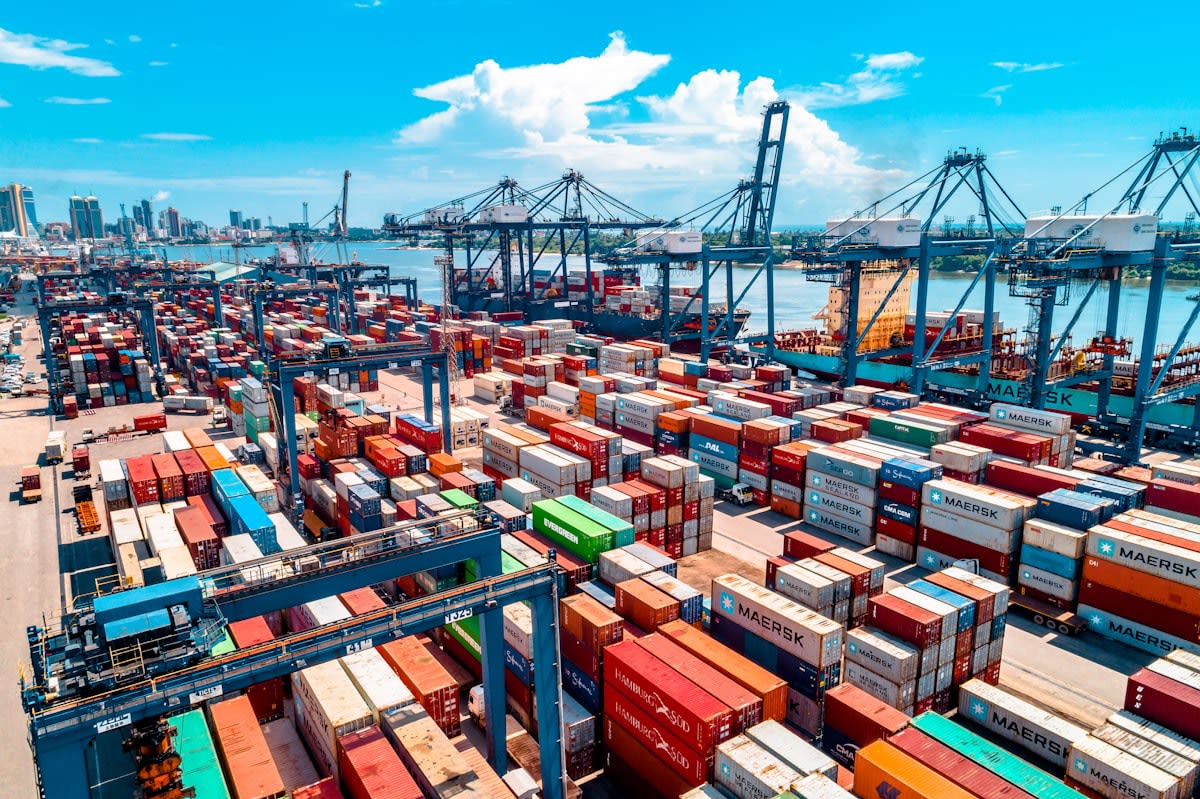
If we analyze the world's most successful trade hubs, we see the nomadic blueprint in action. These locations are rarely the primary producers of the goods that pass through them. Instead, they excel at the 'relay' function. They provide the infrastructure for rapid switching—from ship to rail, from air to truck, or from one currency to another. They are the modern relay stations, optimizing the hand-off to ensure that the velocity of trade remains high.
The systemic shift we are witnessing now is the transition from physical hubs to digital ones. The 'nomadism' of the 21st century is found in the API economy and decentralized finance. We are moving toward a world where the 'corridor' is a piece of code and the 'relay station' is a server in a cooling center. The goal remains the same: to eliminate the friction of distance and the cost of trust.
The Strategic Insight
The most dangerous mistake a modern strategist can make is confusing the tool (the ship, the plane, the internet) with the system (the network, the relay, the corridor). The tools change every century; the system is ancient.
Ultimately, the nomadic legacy is a lesson in resilience. By valuing the network over the node and flow over ownership, the steppe empires created a template for global connectivity that survived long after their political structures crumbled. As we rebuild our global trade systems to be more resilient and less rigid, we aren't inventing something new. We are simply remembering the nomadic blueprint.