OpenBSD Stories: Strange Medieval Devices
Source Entity
Hacker News
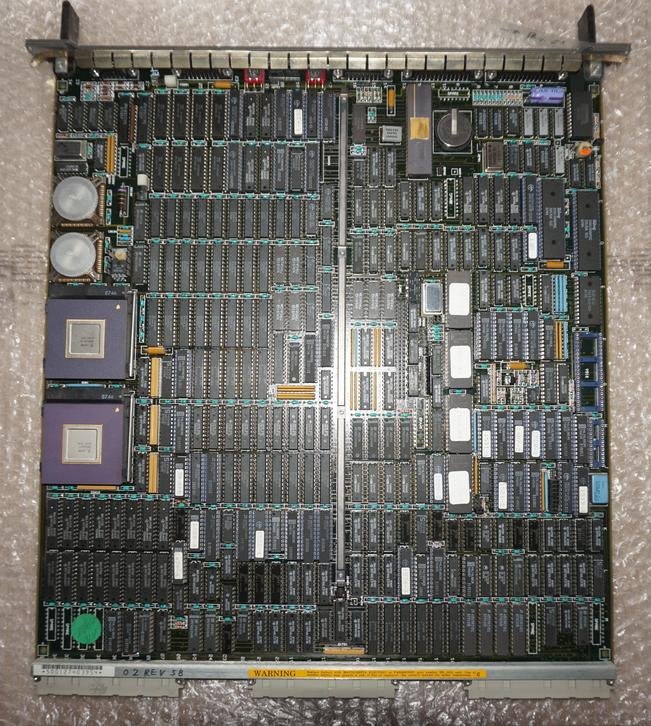
The Storage Module Device (SMD) interface served as the primary high-capacity storage solution for computing systems throughout the 1970s and 1980s. Despite the emergence of competitors like SCSI and ESDI, SMD technology remained the industry standard for high-performance storage until its eventual decline.
The Legacy of SMD: Storage in the Early Computing Era
In the formative years of high-performance computing, storage solutions were vastly different from the solid-state drives (SSDs) and cloud storage we rely on today. The Storage Module Device (SMD) interface emerged as the dominant technology for high-capacity storage during the late 1970s and 1980s. Before the industry reached a consensus, these devices were the backbone of data-heavy operations in enterprise and research environments.
Standardization and Technical Evolution
The development of the SMD interface was a protracted process, reflecting the complexity of hardware standardization in the early digital age. While the technology was in use for years prior, it was not officially normalized as ANSI X3.91M-1982 until 1982, following five years of rigorous development. A subsequent revision in 1987 helped maintain the relevance of the interface as storage demands began to scale, with documentation of these standards now preserved in archives like Bitsavers.
The Competitive Landscape of the 1980s
During the 1980s, the storage market became increasingly crowded with competing protocols. Technologies such as ESDI (Enhanced Small Disk Interface), standardized in 1984, and the now-ubiquitous SCSI (Small Computer System Interface), standardized in 1986, were introduced to address the limitations of existing hardware. Despite these newcomers, SMD remained the preferred choice for applications requiring the highest possible storage capacity, keeping it at the forefront of the industry for a significant period.
Engineering Constraints and Physical Design
The physical architecture of SMD drives was characterized by massive, power-hungry components. These drives utilized large platters, starting at 11 inches and eventually moving toward 8 inches. The operational standard for these disks was a rotational speed of 3600 rpm, equating to 60 rotations per second. This mechanical requirement necessitated a significant amount of power, making the physical management of these drives a distinct challenge for data center administrators of the era.
Deviations and Industry Innovation
While the 3600 rpm speed was the industry norm, manufacturers occasionally pushed the boundaries of these specifications to gain a performance edge. For instance, Fujitsu notably deviated from these standards by developing drives that spun at 3961 rpm. These variations illustrate the relentless drive for performance optimization that characterized the era, as engineers sought to squeeze every bit of speed and capacity out of magnetic storage technology before the eventual shift toward more modern, efficient interfaces.