
The Ghost in the Machine
We are obsessed with the manual. From the rigid Standard Operating Procedures (SOPs) of a Fortune 500 logistics hub to the meticulous documentation of a software API, the modern world operates on the belief that if a skill can be performed, it can be written down. This is the great delusion of the information age. Michael Polanyi, the chemist and philosopher, shattered this illusion in 1958 when he proposed a simple, irritating truth: we know more than we can tell (Source: Personal Knowledge, 1958). This is the Polanyi Paradox. It suggests that the most critical components of expertise—the 'feel' for a material, the timing of a negotiation, the intuition of a surgeon—are precisely the parts that vanish the moment we try to codify them.
Why does this matter now? Because we have spent the last three decades attempting to digitize the human experience. We treated knowledge as a commodity that could be extracted, stored in a database, and redistributed. But there is a fundamental difference between information and knowledge. Information is a set of instructions; knowledge is the ability to execute those instructions in a chaotic, unpredictable environment. When a master craftsman adjusts their grip on a tool based on the subtle vibration of the machine, they aren't following a checklist. They are accessing a reservoir of tacit knowledge that exists below the threshold of conscious language.
"The tacit dimension is the foundation of all our knowledge. We cannot describe the process of recognizing a face or the way we balance on a bicycle, yet we perform these tasks with a precision that defies formal description."— Michael Polanyi, Philosopher and Chemist
This paradox creates a systemic friction in every high-stakes industry. Organizations crave scalability, and scalability requires codification. If you can turn a master's intuition into a training manual, you can hire ten juniors to do the work for a fraction of the cost. However, the 'magic'—the 5% of the skill that prevents a catastrophic failure or creates a masterpiece—is almost always the part that resists the manual. The result is a dangerous gap where companies mistake the map for the territory, believing that a well-documented process is the same thing as actual competence.
The Global Geography of Intuition
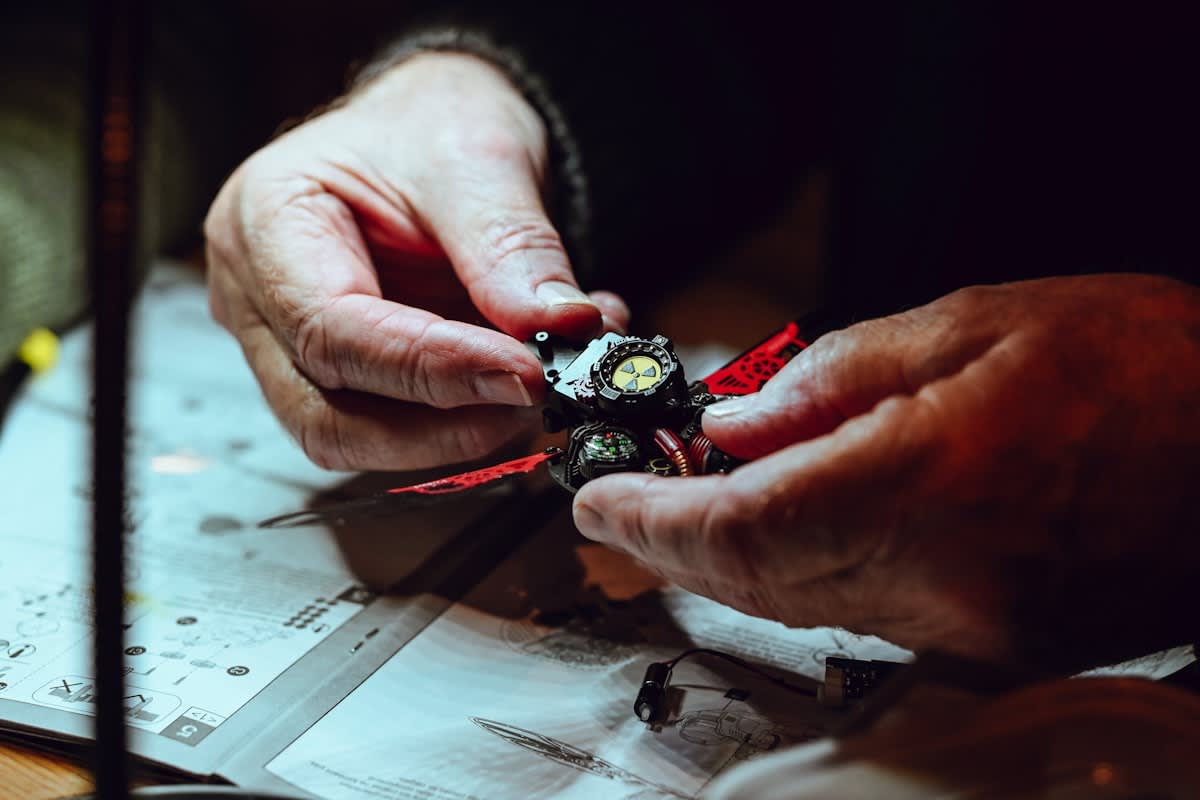
Look at the Japanese concept of Takumi. These are the master artisans—from sushi chefs to automotive engineers—who spend decades refining a craft. A Takumi doesn't just follow a blueprint; they possess a sensory relationship with their medium. In the automotive sector, for instance, certain master technicians can diagnose a transmission fault simply by the specific frequency of a vibration that a digital sensor might overlook as noise. This isn't mysticism; it is the Polanyi Paradox in action. The skill is real, it is repeatable, and it is profoundly valuable, yet the Takumi often struggles to explain exactly how they 'know' the fault exists.
Similarly, in the high-pressure corridors of global diplomacy, the most effective negotiators operate on a layer of tacit social cues. They sense the shift in a room's tension or the hesitation in a counterpart's voice—signals that are never recorded in the official minutes of the meeting. A junior diplomat can read every textbook on international relations, but they cannot 'read' a room until they have spent a decade in the field. This experiential layer is the true currency of power in international affairs, and it is entirely uncodifiable.
This global pattern reveals a systemic truth: the more complex the environment, the more we rely on tacit knowledge. Simple tasks are easily codified. Complex tasks—those involving human emotion, physical nuance, or systemic instability—require the 'gut feeling' that Polanyi described. The tragedy of modern corporate culture is the attempt to optimize these nuances out of existence in favor of KPIs and dashboards.
| Characteristic | Explicit Knowledge (The Map) | Tacit Knowledge (The Territory) |
|---|---|---|
| Nature | Codified, formal, written | Personal, context-specific, intuitive |
| Transfer Method | Reading, listening, manuals | Observation, practice, mentorship |
| Scalability | High (instant replication) | Low (requires time and proximity) |
| Value Driver | Efficiency and Consistency | Innovation and Rare Expertise |
| Risk | Rigidity and Obsolescence | Dependency on Individual Experts |
The transition from the map to the territory is where most organizational failures occur. When a company loses a veteran employee who 'just knew' how to keep the legacy system running, they discover that the 200-page manual left behind is useless. The manual contains the explicit knowledge, but the tacit knowledge—the understanding of the system's quirks and the specific order of operations required during a crisis—walked out the door with the employee.
The AI Collision Course
Enter the era of Large Language Models (LLMs). The current gold rush in AI is essentially a massive, global bet that the Polanyi Paradox can be brute-forced. By ingesting trillions of tokens of explicit text, AI attempts to simulate the patterns of tacit knowledge. It can write a poem in the style of Rilke or code a function in Python, but does it 'know' the weight of the words or the elegance of the logic? No. It is performing a high-dimensional statistical mimicry of the explicit outputs of tacit processes.
The friction point arrives when we ask AI to perform tasks that require real-world grounding. An AI can describe the steps to perform a complex surgery, but it cannot feel the resistance of the tissue. It can analyze a legal brief, but it cannot sense the judge's mood. This is why 'prompt engineering' has become such a focal point. Prompting is not actually a technical skill; it is a proxy for the user's own tacit knowledge. The person who gets the best result from an AI is usually the one who already possesses the tacit expertise to recognize what a 'correct' answer looks like.
We are seeing a shift in the labor market where the value of 'knowing the answer' is plummeting, while the value of 'knowing if the answer is right' is skyrocketing. The latter is a purely tacit skill. It requires a level of judgment and taste that cannot be derived from a dataset. As the cost of generating explicit content drops to zero, the premium on the uncodifiable—the human 'eye' for quality—becomes the only sustainable competitive advantage.
From my time in the trenches of organizational design, I have seen this play out in a hundred boardrooms. There is always a clash between the 'Process Architect' and the 'Veteran Practitioner.' The Architect wants a flowchart; the Veteran says, 'It depends.' The Architect sees this as a lack of discipline or a refusal to share knowledge. The Veteran knows that the 'it depends' is where the actual value lives. The debate isn't about efficiency—it's a fundamental misunderstanding of how human excellence actually works. The Architect is trying to capture the ghost in a net made of logic, and they are perpetually surprised when the ghost slips through.
Cultivating the Uncodifiable
If the most valuable skills are those we cannot explain, how do we acquire them? You cannot download tacit knowledge. You cannot learn it via a Zoom webinar or a certification course. Tacit knowledge is acquired through immersion, apprenticeship, and a willingness to fail in the presence of a master. It is a slow process of pattern recognition that happens in the subconscious. It requires the 'long game' in a world that demands instant results.
- Prioritize mentorship over manuals: The 'shadowing' method is the only way to transfer tacit cues.
- Embrace the 'It Depends' phase: Recognize that ambiguity is often a sign of high-level expertise, not a lack of clarity.
- Value 'Taste' as a Metric: In a world of AI-generated mediocrity, the ability to curate and judge becomes the primary value driver.
- Encourage Deliberate Practice: Tacit skills are built through the feedback loop of action and correction, not passive consumption.
The future belongs to those who stop trying to turn themselves into algorithms. The competitive edge is no longer about how much information you can process—the machines have won that war. The edge is now about the things that cannot be scaled: the nuanced judgment, the intuitive leap, and the ability to navigate the grey areas where the manuals end. The Polanyi Paradox isn't a limitation of human intelligence; it is our greatest protection against obsolescence.
Fact-Check & Accuracy Note
The key claims regarding the Polanyi Paradox are sourced from Michael Polanyi's seminal work, 'Personal Knowledge' (1958). The distinction between tacit and explicit knowledge is further supported by the SECI model of knowledge creation developed by Ikujiro Nonaka and Hirotaka Takeuchi (1995). While the application to AI is a subject of ongoing debate among cognitive scientists and computer scientists, the fundamental tension between codification and intuition remains a cornerstone of knowledge management theory.