The Illusion of Permanence
Around 1200 BCE, the Eastern Mediterranean was the pinnacle of human organization. The great powers—Egypt under the Ramesside pharaohs, the Hittites in Anatolia, and the Mycenaean palatial states of Greece—didn't just coexist; they were woven together in a sophisticated web of diplomacy, marriage alliances, and trade. This was the first true era of globalization, where a king in Hattusa could correspond with a pharaoh in Pi-Ramesses as a peer. To an observer at the time, the system seemed indestructible. The sheer scale of their monumental architecture and the rigidity of their bureaucracies created a facade of eternal stability that blinded them to the cracks forming in the foundation.
But stability is often a mask for fragility. The very connectivity that fueled their wealth became their greatest liability. These empires relied on a highly specialized, just-in-time supply chain for bronze production, which required copper from Cyprus and tin from as far away as Afghanistan or Cornwall. When the network functioned, the efficiency was staggering. However, this interdependence meant that a disruption in one remote node could trigger a cascade of failures across the entire system. They had optimized for efficiency at the expense of redundancy, a mistake that mirrors the lean supply chains of the twenty-first century.
Why did the system snap? Most textbooks point to the Sea Peoples—mysterious marauders who swept across the coastlines—as the primary cause. This is a simplistic narrative. The Sea Peoples were not the cause of the collapse; they were a symptom of it. They were the displaced populations, the refugees of a failing system, who attacked because the centralized states could no longer provide security or food. When you strip away the mythology, the collapse was a systemic 'perfect storm' involving seismic activity, prolonged drought, and internal peasant revolts, all acting upon a network that had become too rigid to adapt.
"Complexity is a luxury that systems can only afford during periods of abundance. Once the calories stop flowing, the bureaucracy becomes a parasite that accelerates the crash."— Strategic Analysis of Systemic Failure
Consider the tin trade. Bronze is an alloy; without tin, you have no weapons, no agricultural tools, and no prestige goods. The LBA powers didn't control the tin sources; they merely managed the trade routes. When those routes were severed—perhaps by local unrest in Central Asia or piracy in the Mediterranean—the entire military-industrial complex of the Mycenaeans and Hittites evaporated. They didn't have a Plan B. Their specialization had robbed them of the ability to innovate on the fly. They were locked into a technological paradigm that required a global peace they could no longer enforce.
The collapse was not a single event but a series of dominoes falling over several decades. First, the periphery crumbled. Small trading posts vanished. Then, the palace economies, which acted as central hubs for redistribution, found their warehouses empty. Once the central authority could no longer feed the populace or pay the mercenaries, the social contract dissolved. The result was a rapid descent into a dark age that lasted nearly 400 years, erasing literacy in Greece and obliterating the Hittite Empire entirely.
The Architecture of Fragility
To understand the modern parallel, we must stop looking at the events and start looking at the architecture. The Bronze Age superpowers operated on a 'Hub-and-Spoke' model. Everything flowed through the palace. This created immense efficiency but zero resilience. If the hub was destroyed or the spokes were cut, the entire region died. Modern globalism operates on a similar, albeit digital, hub-and-spoke model. We rely on a handful of semiconductor fabs in Taiwan or energy pipelines from specific geopolitical flashpoints. We have traded robustness for a marginal increase in quarterly margins.
| Dimension | Bronze Age System (c. 1200 BCE) | Modern Global System (2024 CE) |
|---|---|---|
| Critical Dependency | Tin/Copper (Bronze Production) | Semiconductors/Rare Earths |
| Connectivity Model | Palace-to-Palace Diplomacy | Digital/Financial Interdependence |
| Failure Trigger | Trade Route Severance/Drought | Cyber-Attack/Geopolitical Blockade |
| Recovery Mechanism | Iron Age Decentralization | Distributed Ledgers/Localism |
| Social Structure | Rigid Hierarchical Bureaucracy | Algorithmic/Corporate Governance |
The table above illustrates a terrifying symmetry. The LBA powers believed their trade networks were a source of strength; in reality, they were a transmission belt for contagion. When the Hittite economy faltered, it didn't just affect Anatolia; it shifted the balance of power in Egypt and disrupted the Aegean. Similarly, a liquidity crisis in one major financial hub today can freeze credit markets globally within milliseconds. The speed has increased, but the underlying vulnerability—the lack of local autonomy—remains identical.
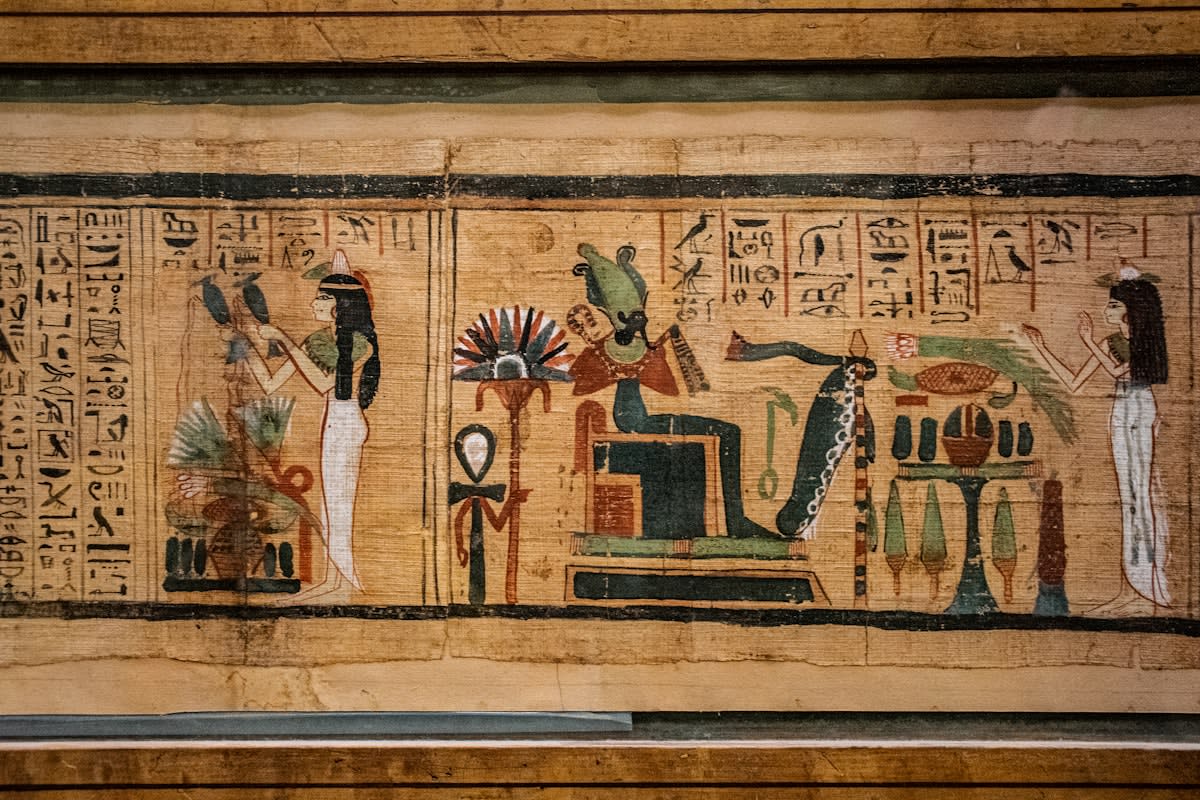
Why did Egypt survive when others vanished? The Ramesside state was the outlier. While it was part of the network, Egypt possessed a critical advantage: the Nile. They had a domestic source of food and a slightly more insulated economy. They were less dependent on the 'international' system for their basic survival. Egypt didn't survive because it was stronger; it survived because it was less integrated. It maintained a level of strategic autonomy that the Mycenaeans had completely traded away for the sake of luxury imports.
The lesson here is not to isolate, but to diversify. The Egyptian model suggests that the path to resilience lies in maintaining core competencies locally while engaging with the global network for growth. The Mycenaeans, by contrast, became so specialized in the 'international' game that they forgot how to sustain themselves. When the trade stopped, they didn't just lose their jewelry; they lost their ability to govern. They had outsourced their survival to a system they didn't control.
The Opportunity in the Reset
We often view the Bronze Age Collapse as a tragedy. From a strategic perspective, it was a necessary correction. The collapse broke the stranglehold of the palace elites and paved the way for the Iron Age. Iron was more difficult to smelt than bronze, but it was available everywhere. It democratized power. The shift from bronze to iron wasn't just a metallurgical upgrade; it was a sociopolitical revolution. It allowed for the rise of smaller, more flexible city-states and the eventual birth of Classical Greece.
This suggests that the 'end' of a hyper-connected system is not the end of civilization, but the beginning of a more resilient one. The transition is painful—marked by a loss of complexity and a drop in living standards—but the outcome is a system that is less prone to total failure. The Iron Age succeeded because it replaced a fragile, centralized network with a robust, distributed one. It shifted the focus from global efficiency to local sufficiency.
How do we apply this today? The goal should not be to dismantle global trade, but to build 'redundant nodes.' If a region relies on a single source for 90% of its energy or 80% of its chips, it is living in a Bronze Age delusion. True strategic resilience requires the intentional creation of inefficiency. We must invest in local production, diverse energy sources, and decentralized data architectures, even if they are more expensive in the short term.
The Ramesside Warning is clear: the more complex a system becomes, the more it tends toward a catastrophic reset unless it incorporates modularity. A modular system can lose a limb without dying. A hyper-integrated system, like the LBA superpowers, loses a finger and suffers a heart attack. The shift we need is a move toward 'anti-fragility,' where we don't just withstand shocks but actually improve because of them.
Ultimately, the fall of the Bronze Age tells us that the most dangerous state for a civilization is the feeling of absolute security. When the Ramesside pharaohs looked at their borders, they saw an empire. When the Hittites looked at their treaties, they saw a world order. Neither saw the systemic fragility that made their world a house of cards. Our challenge is to look at our own digital and financial empires and ask: what is our tin? And what happens when the ships stop coming?