The Illusion of Moral Restitution
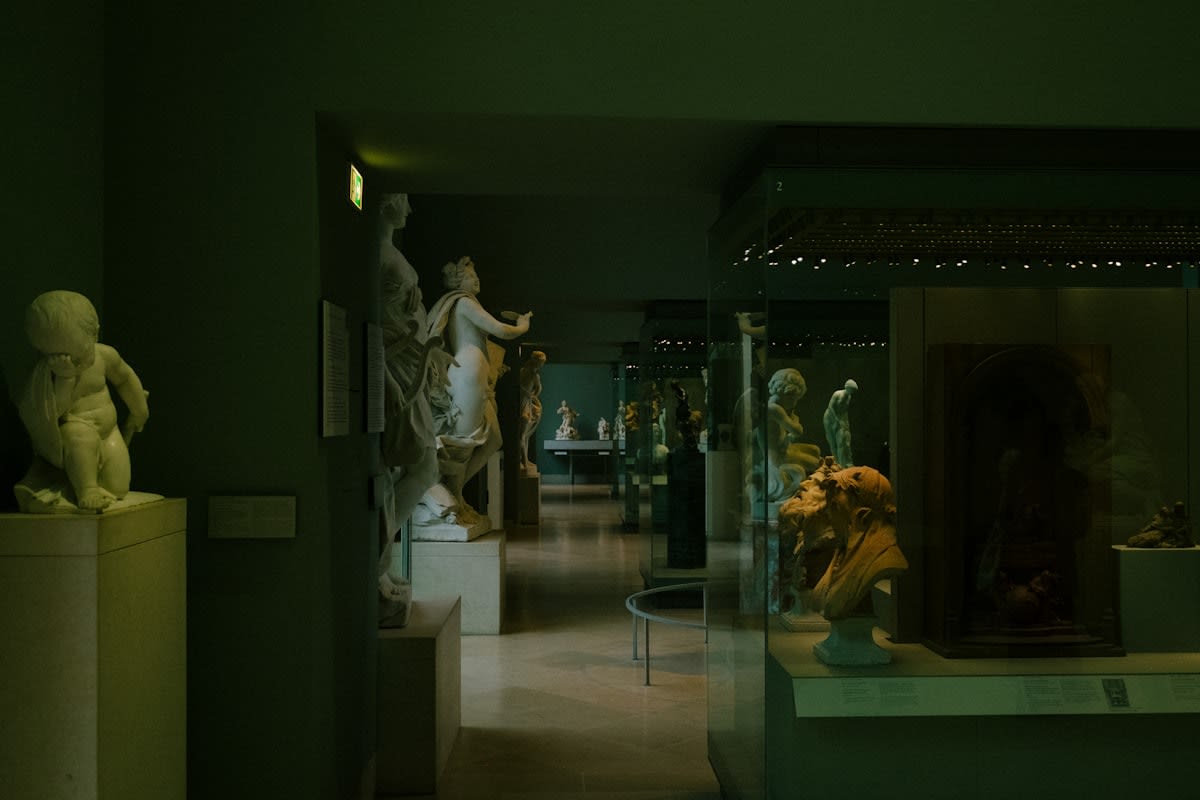
When Italy returned 27 historical objects to Mexico on July 17, 2026, the official narrative focused on the restoration of identity. The items, ranging from terracotta statues to fossilized fish, were recovered through six separate investigations led by the Carabinieri Tutela del Patrimonio Culturale (TPC). On the surface, this looks like a victory for ethics and a correction of colonial-era theft. However, the involvement of the TPC—essentially an art hit squad—signals that this is not a gesture of goodwill but an exercise in law enforcement and state sovereignty. By framing the recovery as a criminal investigation, Italy transforms a potential diplomatic liability into a demonstration of its superior investigative capacity and its willingness to act as a global steward of law.
The financial valuation of these objects, described as several tens of thousands of euros, is almost irrelevant to the transaction. In the world of high-stakes diplomacy, the monetary value of a clay figurine is a rounding error. What matters is the symbolic capital generated by the act of return. For Mexico, the return validates its national heritage and provides a tangible win for its government. For Italy, the process reinforces its image as a sophisticated legal entity capable of navigating the complex web of international art provenance. The exchange is a calibrated trade: physical objects for diplomatic goodwill.
"The return to the Mexican people of precious and unique artefacts, which were previously believed to have been lost, restores a sense of identity to the places from which they had been unlawfully taken."— Carabinieri Tutela del Patrimonio Culturale (TPC)
Why does the state insist on these public ceremonies at embassies? Because the visibility of the return is the actual product. The act of handing over an object is a performance of power. It suggests that the returning nation has the authority to decide when the 'right' time for restitution is, effectively maintaining a position of seniority in the relationship. The objects are merely the props in a larger play about who holds the keys to history.
This calculated use of culture as a diplomatic tool becomes even more apparent when contrasted with the blunt instruments of hard power used in other regions.
The Weaponization of National Memory
While some nations use the return of art to build bridges, others use the curation of art to build walls. The internal struggle within the United States over the Smithsonian Institution illustrates this perfectly. On July 4, 2026, the White House’s Domestic Policy Council released a 162-page report claiming the National Museum of American History failed to tell the nation's story. The administration accused the museum of adhering to a radical, activist ideology, suggesting that the institution's leaders were not patriotic enough. This is not a debate about art history; it is a struggle for the control of national memory.
When a government attempts to exert influence over a museum, it is attempting to standardize the emotional response of its citizens. The administration's demand that American history be presented as overwhelmingly positive is an attempt to use the museum as a tool for state-building. By erasing nuance and complexity, the state seeks to transform the museum from a place of inquiry into a temple of patriotism. If the Smithsonian is forced to align with a specific political vision, the artifacts it houses cease to be historical evidence and become propaganda tools.
This domestic pressure mirrors the external geopolitical pressures seen in the South China Sea. Just as the US administration seeks to curate a specific version of American history, China uses media and narrative to dismiss the Philippines' legal claims. Recent animations and videos from China Daily, which depicted Filipinos in a derogatory manner, serve the same purpose as the White House report: the erasure of the opponent's legitimacy. Whether through a 162-page policy report or a racist cartoon, the goal is the same—the imposition of a dominant narrative that renders the other side's perspective irrelevant.
Narrative Sovereignty
The struggle for the Smithsonian is a microcosm of a global trend where museums are no longer viewed as neutral repositories of knowledge but as strategic assets in a war of narratives.
The tension between academic nuance and state-mandated patriotism creates a volatile environment for cultural institutions. When the state decides that historical accuracy is secondary to national pride, the museum becomes a battlefield.
The Diplomatic Offset
There is a cynical symmetry in how states balance hard power and soft power. In July 2026, the United States conducted seven consecutive nights of airstrikes in southern Iran, targeting energy infrastructure and bridges. These strikes, which cut off water to 20,000 people, represent the most aggressive form of state interaction. When a nation is engaged in such high-friction military conflict, the value of soft power—like the repatriation of art—increases exponentially. It provides a necessary offset, allowing a state to maintain a veneer of civilization and international cooperation while simultaneously executing destructive military campaigns.
Consider the contrast between the surgical precision of the Carabinieri returning a terracotta head to Mexico and the indiscriminate nature of airstrikes in the Strait of Hormuz. One action builds a bridge; the other destroys one. States that master both are the most effective actors on the global stage. They can punish an adversary with military force while simultaneously courting a partner with the return of a stolen artifact. This duality prevents the state from being pigeonholed as either a pure aggressor or a passive diplomat.
| Mechanism | Objective | Example (July 2026) | Geopolitical Outcome |
|---|---|---|---|
| Hard Power | Coercion/Destruction | US Airstrikes in Iran | Immediate tactical gain / Long-term instability |
| Soft Power | Legitimacy/Influence | Italy-Mexico Repatriation | Diplomatic goodwill / Narrative control |
| Narrative Power | Cognitive Dominance | Smithsonian Policy Report | Internal state alignment / Ideological purity |
The fragility of this balance is evident in the US-China relationship. Donald Trump's accusations of election interference and the acquisition of voter data by Beijing create a climate of distrust that no amount of cultural exchange can easily fix. When the core of the relationship is based on mutual suspicion and accusations of meddling, the 'soft' tools of diplomacy become mere ornaments. They cannot replace the need for a stable security architecture, but they can provide the necessary distractions to keep communication channels open.
This strategic use of culture extends beyond the return of ancient objects and into the promotion of contemporary practitioners as symbols of regional unity.
Regionalism and the New Cultural Bloc
The 61st La Biennale di Venezia provides a compelling example of how art is used to project regional strength. The Republic of Sierra Leone Pavilion, titled Worlds of Today, brought together artists from across the ECOWAS region, including Nigerian artist Móyòsóré Martins. By inviting practitioners from outside its own borders, Sierra Leone positioned itself not just as a nation, but as a hub for West African contemporary thought. This is a calculated move toward regionalism, using the prestige of the Venice Biennale to signal a unified cultural front.
For artists like Martins, the process is personal—a spiritual transmission shaped by migration and a connection to home. But for the state, the artist is a diplomatic asset. When a Nigerian artist exhibits in a Sierra Leonean pavilion, the narrative shifts from individual creativity to collective regional identity. This mirrors the way the ECOWAS bloc operates politically; it is an attempt to create a consolidated voice in a world dominated by superpowers. The art is the evidence of this unity, a visual proof that the region can curate its own identity without Western mediation.
The move toward regional cultural blocs is a response to the failure of globalist institutions. When the world splits into competing spheres of influence—the US, China, and regional unions like ECOWAS—culture becomes the primary way to define the boundaries of those spheres. Repatriation, in this context, is the first step in reclaiming the narrative. By bringing objects home, nations are not just recovering art; they are recovering the right to define themselves.
Ultimately, the movement of art across borders is a mirror of the movement of power. Whether it is the Carabinieri recovering terracotta or the White House rewriting museum mandates, the objective is the same: the consolidation of authority over the past to secure a dominant position in the future.