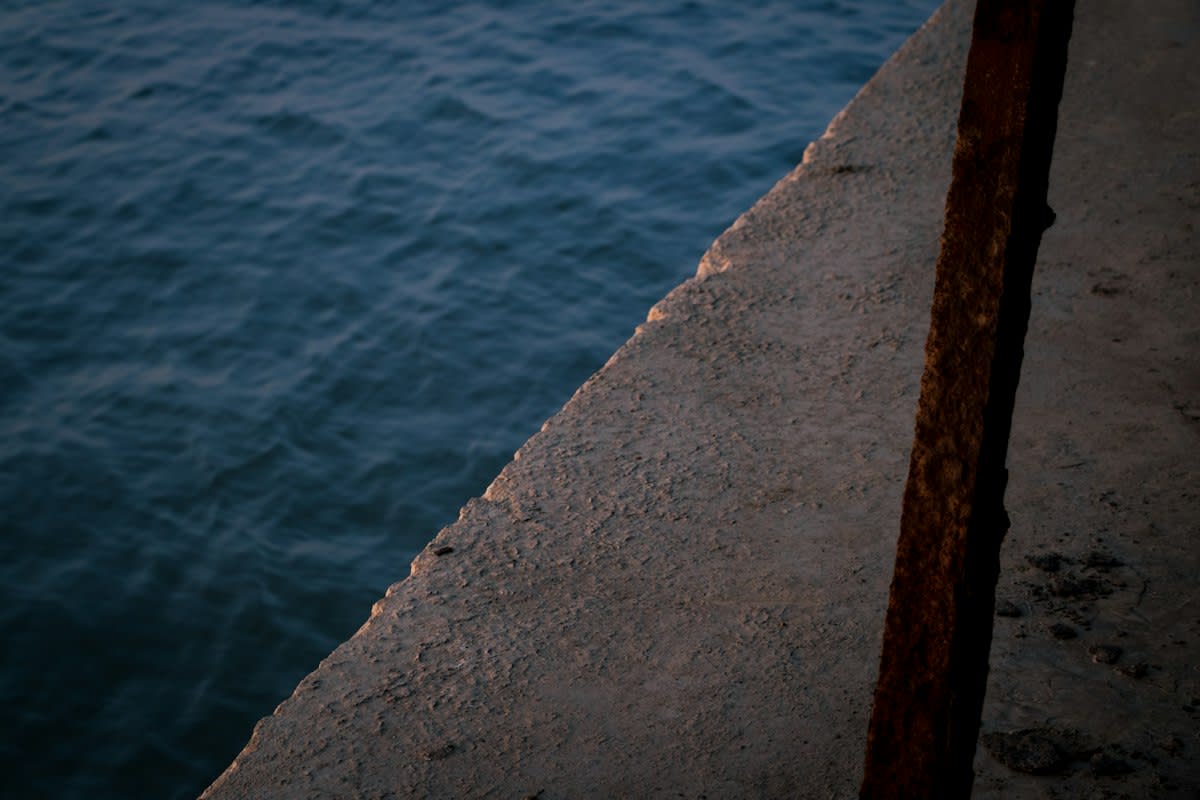
We have been lied to about the nature of strength. For a century, the prevailing engineering dogma suggested that the most resilient structure was the one that refused to move. We built massive concrete seawalls, rigid power grids, and impenetrable firewalls, operating under the assumption that if we could simply out-muscle the environment, we could achieve permanence. But this fortress mentality is a fallacy. When you build a system that cannot bend, you don't eliminate failure; you simply ensure that when failure eventually arrives, it is catastrophic.
Look at the physical world. In the realm of wearable technology, the early obsession with silicon-based electronics—the gold standard of rigid computing—led to a predictable cycle of mechanical failure. These devices were prone to breaking because they could not accommodate the repeated bending and stretching of the human body (Source: Communications Materials, 2026). The solution wasn't to make the silicon stronger, but to abandon rigidity entirely in favor of soft materials and stretchable electronic circuits. The shift from rigid conductors to conductive polymeric systems proves a fundamental truth: longevity is a product of flexibility, not hardness.
The Fallacy of the Hardened Shell
This tension between rigidity and resilience is most evident in climate adaptation. For years, the default response to rising tides was the construction of hard infrastructure, such as seawalls. While these provide immediate protection, they often create a false sense of security while disrupting the natural equilibrium of the coast. Modern strategy is shifting. We are seeing a move toward a combination of built approaches and nature-based solutions, such as the restoration of wetlands, seagrass, and managed foredunes (Source: California's Climate Change Assessment, 2022). These biological buffers don't fight the water; they absorb it.
Why does this matter for the broader systemic view? Because hard infrastructure is binary: it either holds or it breaks. Nature-based systems, conversely, operate on a gradient of degradation. They can be damaged, eroded, and stressed without suffering a total systemic collapse. By building for permanence, we create a single point of failure. By building for adaptation, we distribute the risk.
"WUI wildfire resilience depends on reducing flammable materials on and around structures... A combination of natural and built approaches is increasingly used and evaluated side by side."— California's Climate Change Assessment, 2022
The same logic applies to our energy grids. There is a recurring internal debate among utility practitioners regarding the 'undergrounding' of power lines to protect them from storms. The intuitive response is to put everything underground to ensure permanence. However, the Edison Electric Institute found that total conversion is rarely the most viable solution. Instead, targeted or selective undergrounding—focusing on the worst-performing feeders or those affecting the highest number of customers—is the more effective strategy (Source: Edison Electric Institute, 2014). The goal is not to make the entire grid indestructible, but to make the most critical nodes resilient.
This is where the practitioner's friction lies. In the boardroom, executives want a 'permanent' fix because it looks better on a balance sheet and satisfies political demands for absolute safety. But on the ground, engineers know that total hardening is an expensive illusion. They argue for modularity and selective reinforcement, knowing that an over-engineered system is often too rigid to be repaired quickly when it inevitably fails. The internal conflict is a battle between the desire for a static guarantee and the reality of a dynamic environment.
| Domain | Permanence Approach (Rigid) | Resilience Approach (Adaptive) | Failure Mode |
|---|---|---|---|
| Coastal Defense | Concrete Seawalls | Wetland/Dune Restoration | Catastrophic Breach vs. Gradual Erosion |
| Energy Grids | Total Undergrounding | Targeted Hardening/Selective Feeders | Systemic Rigidity vs. Modular Recovery |
| Electronics | Silicon-based Rigid Boards | Conductive Polymeric Systems | Mechanical Fracture vs. Elastic Deformation |
| Cybersecurity | Perimeter Hardening | Detection & Recovery Velocity | Total Breach vs. Contained Intrusion |
Digital Fragility and the Recovery Paradox
The obsession with permanence has migrated from concrete to code. In Operational Technology (OT) and SCADA systems, the traditional approach was to harden the perimeter—build a bigger wall around the controllers and assume the interior was safe. But frontier AI models are now capable of rapidly finding weaknesses and exploiting trusted pathways (Source: Booz Allen, 2026). When the perimeter is the only line of defense, a single breach leads to total operational collapse.
The new paradigm shifts the metric of success. Readiness is no longer measured by whether an organization can block every intrusion, but by whether it can stop, slow, and recover from one (Source: Booz Allen, 2026). This is a fundamental admission that permanence is impossible. The focus moves from 'preventing' to 'constraining' lateral movement and prioritizing vulnerabilities by reachable consequence rather than simple severity scores. It is the digital equivalent of the managed foredune: accept that the water will get in, but ensure it doesn't destroy the house.
Is this not the same pattern we see in biological systems? The Pendular Regulation Model suggests that biological systems maintain structural integrity not by remaining static, but by minimizing surprise across time (Source: Frontiers in Psychology, 2026). Systems that rigidly stabilize their priors—essentially building a mental or biological wall—actually reduce their ability to handle uncertainty. Adaptive systems, however, tolerate bounded uncertainty while preserving integrative coherence. They oscillate. They bend. They recover.
When we apply this to infrastructure, the conclusion is clear. The most 'permanent' structures are the most fragile because they lack the capacity for oscillatory tolerance. They cannot update their state in response to new data without breaking. Whether it is a power pole subjected to a hurricane (Source: Structure and Infrastructure Engineering, 2016) or a psychological state under stress, the inability to adapt is the primary driver of failure.
Fact-Check & Accuracy Note
Key claims regarding targeted undergrounding are sourced from the Edison Electric Institute (2014). Climate adaptation strategies are based on California's Climate Change Assessment (2022). The shift in OT security is attributed to Booz Allen's 2026 white paper. The Pendular Regulation Model is derived from research published in Frontiers in Psychology (2026). Ongoing debates continue regarding the precise balance between hard and nature-based infrastructure in high-density urban environments.
Designing for the Aftermath
If we stop building for permanence, what do we build for? We build for recovery velocity. In every domain—from the 2-inch flexible fiberglass insulation used in systemic HVAC renovations (Source: QACPS, 2026) to the stretchable antennas in wearable tech—the goal is to create a system that can absorb a shock and return to a functional state without requiring a total rebuild. This requires a shift in how we value infrastructure. We must stop valuing the 'unbreakable' and start valuing the 'quickly repairable'.
This transition is not without its challenges. It requires a cultural shift in governance and insurance. Most insurance models are based on the prevention of loss, not the speed of recovery. Most government contracts reward the contractor who promises a structure will last 100 years, even if that promise is a mathematical impossibility in a changing climate. To move forward, we must incentivize the design of systems that fail safely.
Ultimately, the history of infrastructure is a history of the struggle between the static and the dynamic. Those who attempt to freeze the world in place through rigid engineering are always defeated by the fluidity of nature and the ingenuity of attackers. The future belongs to the flexible, the modular, and the adaptive. The fastest way to ensure your infrastructure fails is to pretend that it can be permanent.