Taking the Chipko legacy forward: How mature trees are getting a second life
Source Entity
Akriti Kanodia
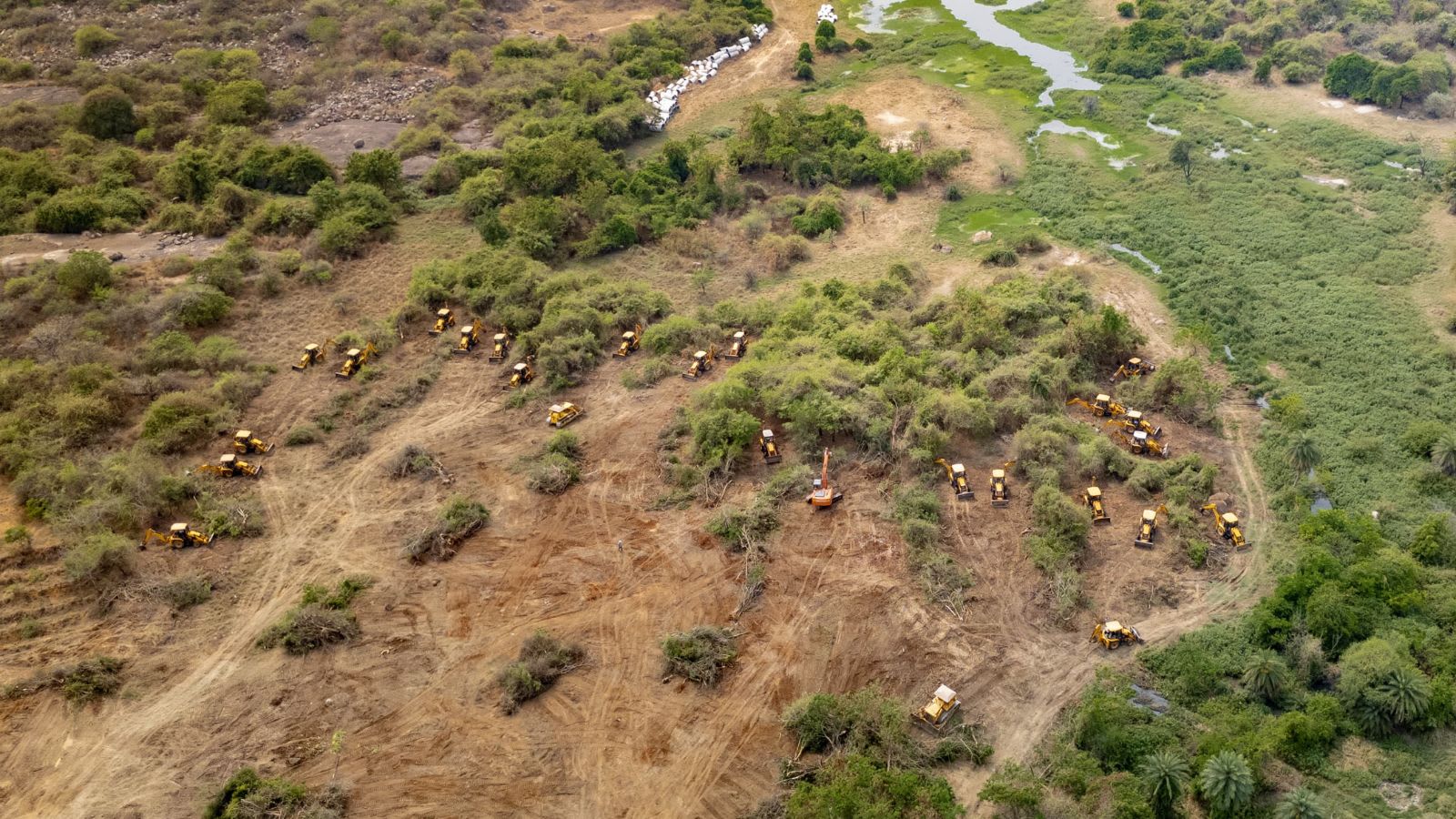
The legacy of the Chipko Movement has evolved from literal tree-hugging to modern arboriculture techniques like tree transplantation. Conservationists are now prioritizing the relocation of mature trees over planting saplings to combat the carbon loss caused by development projects.
The Evolution of Conservation: Beyond the Chipko Legacy
The Chipko Movement, initiated in April 1973 by Chandi Prasad Bhatt in Gopeshwar, Uttarakhand, remains a seminal moment in environmental history. By physically embracing trees to prevent their felling, local villagers established a powerful precedent for grassroots activism. Decades later, the spirit of this movement has shifted from defensive protest to proactive preservation, as the modern environmental crisis demands more than just protecting existing stands—it requires the active salvation of mature specimens threatened by infrastructure development.
The Fallacy of Compensatory Afforestation
For years, the standard regulatory response to the removal of mature trees has been compensatory afforestation—the requirement to plant a specific number of saplings. However, this policy ignores the biological reality that a sapling cannot replicate the ecological services of a mature tree. Mature trees act as vital carbon sinks, providing cooling, habitat, and air filtration that take decades, if not centuries, to establish. Relying on saplings creates a 'carbon debt' that remains unpaid for the duration of the tree's maturation period.
Scientific Advancements in Tree Transplantation
The paradigm shift currently underway is moving toward 'tree relocation.' Instead of accepting the destruction of ancient flora as an inevitable cost of progress, conservationists and some developers are exploring the logistics of moving mature trees to new sites. This approach recognizes that a tree is not merely a static object but a complex biological system that can be uprooted, transported, and successfully replanted if handled with the appropriate scientific rigor.
Case Study: The Zaheerabad Banyan
The necessity for this shift became apparent to developers like Ashwin Rao in 2015. When a nearly 100-year-old banyan tree in Zaheerabad faced removal for development, the traditional path would have been to clear the land and promise new saplings. Instead, the situation prompted a critical re-evaluation of whether the tree could be given a second life. This reflects a broader, growing awareness in the private sector regarding the intrinsic value of heritage trees that cannot be monetized or replaced by nursery-grown stock.
Future Trends in Urban Planning
As urbanization continues to accelerate, the future of sustainable development will likely rely on integrating arboriculture into civil engineering. We are moving toward a model where 'tree-transplantation-first' policies could become a standard requirement for permits. This evolution ensures that the hard-won lessons of the 1973 Chipko Movement are not relegated to history books but are instead adapted to modern technological capabilities to ensure that our urban environments remain ecologically viable.