‘Game boards’ carved on rocks in Kasaragod hint at age-old yen for leisure
Source Entity
India Latest News: Top National Headlines Today & Breaking News | The Hindu
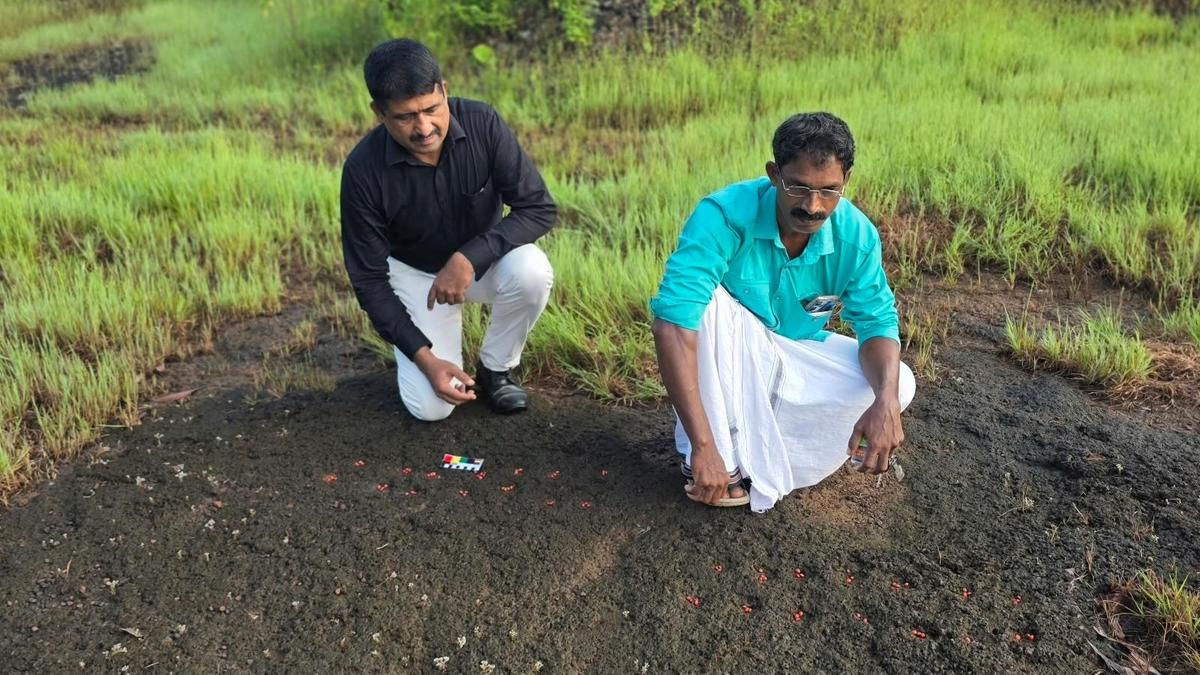
Archaeologists have discovered six ancient rock-carved game boards in Kasaragod, Kerala, resembling traditional pits like Manjadippala. While these findings suggest early human recreational culture, experts call for scientific dating to confirm their true age and historical origin.
Ancient Leisure: Uncovering Kasaragod’s Rock-Carved Game Boards
The recent identification of six rock-carved game boards in the Kasaragod district of Kerala offers a fascinating glimpse into the social fabric of early human settlements. Discovered at sites such as Madikkai Umichi, Banam, and Cheemeni Ariyittapara, these carvings—which bear a striking resemblance to the traditional 14-pit Manjadippala or Kadippala boards—suggest that recreational activities were deeply embedded in the daily lives of ancient populations in this region.
Geographical Context and Site Significance
What makes these findings particularly compelling is their strategic location. All six identified boards are situated in close proximity to natural water reservoirs, locally referred to as Pallam. In the context of ancient history, such water bodies were the lifeblood of human settlements, serving as gathering points for communities. The placement of these game boards suggests that these reservoirs were not merely functional sites for hydration and agriculture, but also hubs of social interaction and leisure.
Cultural and Cognitive Implications
According to Nandakumar Koroth, head of the Department of History at Nehru Arts and Science College, the existence of these boards implies more than just a penchant for play. It indicates that the inhabitants possessed a sophisticated understanding of counting and numerical relationships, skills essential to the complex rules of traditional pit games. This discovery provides a material link to the intellectual history of the region, suggesting that early inhabitants had the cognitive capacity and the necessary downtime to engage in structured, competitive play.
The Necessity of Scientific Validation
Despite the excitement surrounding these carvings, the archaeological community remains cautious. While the form of these boards mimics traditional games, questions regarding their precise antiquity remain unanswered. Because rock carvings are notoriously difficult to date without intrusive methods, there is a degree of skepticism regarding whether these sites date back thousands of years or represent a later cultural evolution. Further studies, including stratigraphic analysis and advanced scientific dating techniques, are required to establish a definitive timeline.
Challenges in Archaeological Interpretation
Historical archaeology often faces the challenge of distinguishing between ancient artifacts and later imitations. The similarity to contemporary Manjadippala boards is both an asset and a point of contention. Researchers must determine if these carvings were part of a long-standing cultural tradition or if they represent a more recent adaptation of leisure activities. Until further research is conducted, the 'age-old yen for leisure' remains a compelling hypothesis rather than a confirmed historical fact.
Future Trends in Regional Archaeology
This discovery marks a significant step forward for the archaeology of Kasaragod. By highlighting the importance of 'low-stakes' historical remnants like game boards, the study encourages a broader focus on the social lives of common people rather than just monumental architecture. Future research will likely involve mapping these sites more extensively to see if similar patterns emerge across the district, potentially revealing a widespread cultural phenomenon that defined how ancient communities in Kerala balanced labor with leisure.
Verification Required?