Should children be involved in political campaigning?
Source Entity
India Latest News: Top National Headlines Today & Breaking News | The Hindu
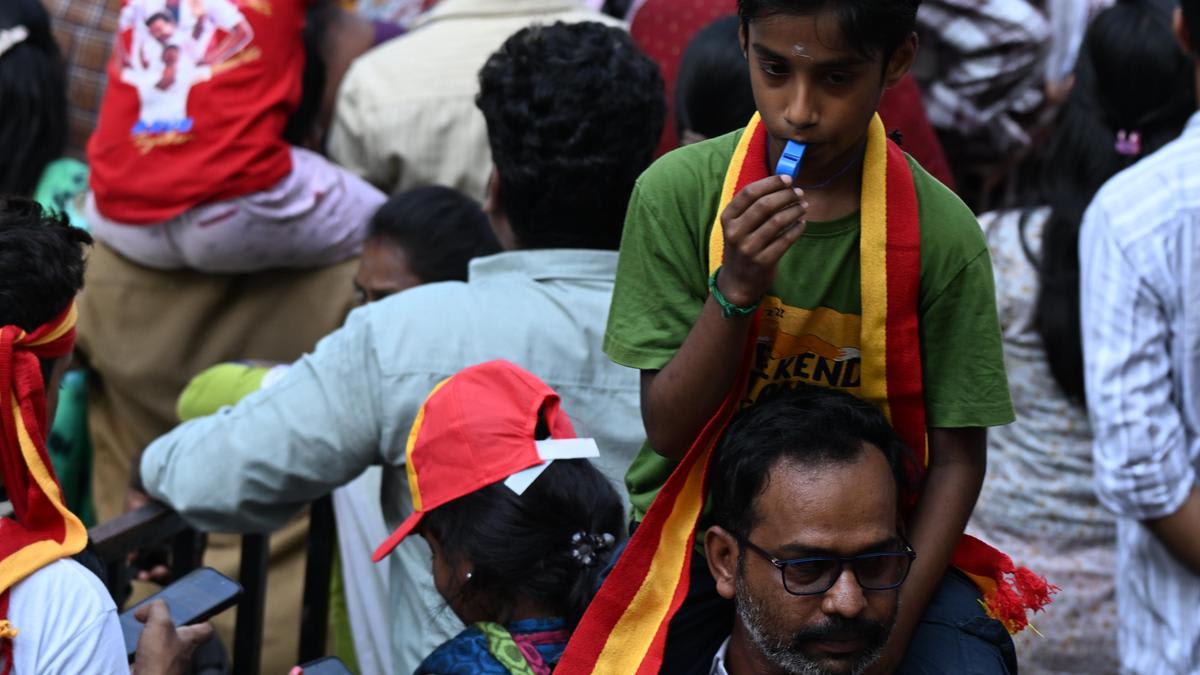
The Madras High Court recently addressed the ethical implications of involving children in political campaigning following the victory of the Tamilaga Vettri Kazhagam. While dismissing a petition against Chief Minister Joseph C. Vijay, the court urged Parliament to consider legislative reforms regarding child involvement in elections.
The Intersection of Childhood and Political Mobilization in Tamil Nadu
The recent electoral victory of the Tamilaga Vettri Kazhagam (TVK) in Tamil Nadu, led by the popular actor-turned-politician Joseph C. Vijay, has sparked a profound debate regarding the boundaries of political campaigning. The party’s success was notably driven by a surge of enthusiasm among the youth, with reports indicating that children played a pivotal role in influencing the voting behavior of their parents and grandparents. This phenomenon, while indicative of the party's mass appeal, has raised significant ethical questions about the mobilization of minors in the electoral process.
The Legal Challenge and Judicial Observations
A legal challenge initiated by a candidate from the Dravida Munnetra Kazhagam (DMK) brought this issue to the forefront of the judiciary. The petitioner argued that Mr. Vijay’s direct appeals to children to persuade their families to cast their ballots for the TVK constituted an inappropriate use of minors in political activities. While the Madras High Court ultimately dismissed the petition, the ruling provided a critical platform for addressing the broader implications of this trend. Justice D. Bharatha Chakravarthy’s remarks serve as a stern reminder that the electoral arena must be governed by clear ethical standards.
Parliamentary Responsibility and Legislative Reform
Central to the court’s commentary was the suggestion that Parliament should evaluate whether the involvement of children in political campaigns should serve as a valid ground for disqualifying candidates or setting aside election results. By delegating this consideration to the legislature, the court underscored the necessity of a formal, codified framework. As it stands, the lack of explicit legislation regarding the participation of children in political discourse creates a gray area that political parties may continue to exploit, potentially compromising the integrity of democratic processes.
The Socio-Political Impact on Voter Behavior
The influence of children on the voting patterns of their elders, as observed in the recent Tamil Nadu elections, highlights a shifting dynamic in political communication. In many households, children acted as conduits for the TVK's campaign messaging, effectively expanding the party’s reach into homes that might otherwise have been untouched by traditional campaign tactics. This demonstrates the power of emotional branding and cultural icons in mobilizing the electorate, yet it also invites scrutiny regarding the susceptibility of young minds to political indoctrination.
Looking Toward Future Electoral Ethics
As political parties increasingly turn to digital platforms and influencer-led campaigning, the potential for involving minors will likely grow. The case of the TVK victory serves as a bellwether for future elections in India. If the legislature chooses to act upon the Madras High Court’s suggestions, it could lead to stricter regulations on how candidates interact with minors during campaign seasons. Ultimately, the balance between political enthusiasm and the protection of children from premature political exposure remains a critical challenge for the evolving Indian democracy.
Verification Required?