‘Look what happened to govt schools, telecom’: Gurugram power staff on strike
Source Entity
Abhimanyu Hazarika
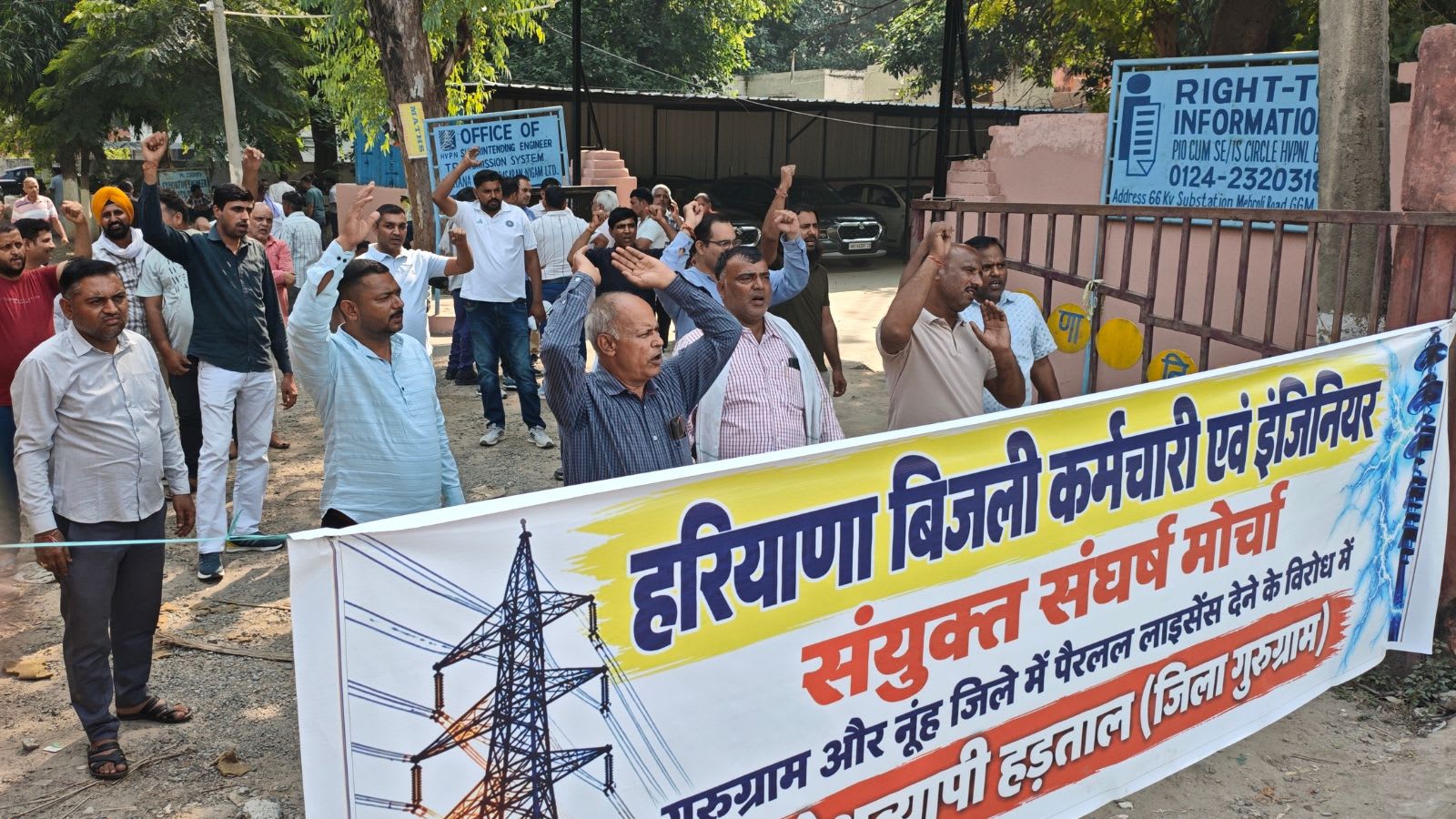
A strike by DHBVN workers against the privatization of electricity distribution has caused widespread power and water outages across Gurugram, Faridabad, and Nuh. The disruption has halted industrial production and left thousands of residents without essential services.
Power Crisis Grips Haryana: The Impact of the DHBVN Strike
Starting late Wednesday night, the districts of Gurugram, Faridabad, and Nuh were plunged into darkness as employees of the Dakshin Haryana Bijli Vitran Nigam (DHBVN) launched a massive strike. The industrial and residential hubs, often considered the growth engines of Haryana, faced immediate consequences as power feeders were taken out of service, leading to over 3,000 complaints within the first 12 hours alone. This action, triggered by the government's decision to grant a private electricity distribution license, has paralyzed daily life and economic activity across the region.
The Human and Economic Toll
The impact of the strike has been multifaceted, affecting both domestic life and the industrial sector. Residents in Old Gurgaon reported being among the worst hit, with many struggling as inverters failed and the lack of electricity disrupted water pumping, leaving households with dry taps. The situation escalated to the point where frustrated citizens took to the streets to voice their anger, highlighting the critical dependence of urban infrastructure on consistent power supply.
Beyond domestic inconvenience, the industrial sector has faced severe repercussions. Nearly 1,800 manufacturing units in the region have reported significant production delays, with factory machinery standing idle. Industrialists have expressed deep concern over potential financial losses amounting to crores, noting that repeated attempts to reach DHBVN officials for resolution have been largely unsuccessful, leaving the business community in a state of uncertainty.
Roots of the Conflict: Privatization Concerns
The core of the conflict lies in the employees' fierce opposition to the government's move toward privatizing electricity distribution. Power engineers and department staff are demanding that the cabinet explicitly rule out the issuance of parallel licenses to private entities. They view the entry of private discoms as a threat to their job security and the current operational structure of the state-run utility. This ideological and professional clash has brought the state's power infrastructure to a standstill.
Government Stance and Future Implications
While the government has characterized the strike as unnecessary, it has simultaneously promised a legal battle regarding the licensing issue. The stalemate poses a significant challenge for the Haryana administration, which must balance its policy objectives of privatization with the immediate need to restore essential services to millions of citizens. The inability of helplines to provide relief during the crisis has further eroded public trust, underscoring the fragility of the existing grievance redressal mechanisms.
Conclusion
The ongoing strike serves as a stark reminder of the complexities involved in reforming public utility sectors. As the standoff between DHBVN employees and the government continues, the immediate priority remains the restoration of power to thousands of homes and factories. Moving forward, the resolution of this conflict will likely hinge on whether the state can negotiate a middle ground that addresses the concerns of the workforce while ensuring the long-term reliability and efficiency of Haryana's power distribution network.
Multiple Citing Sources