
The Great Temporal Rupture
For the vast majority of human history, the concept of 'leisure' simply did not exist. People didn't 'have free time' because their lives weren't partitioned into work and non-work. A farmer in the 17th-century Loire Valley or a weaver in the Edo period of Japan didn't clock out; they followed the rhythms of the sun, the seasons, and the immediate demands of the task at hand. Work was integrated into the fabric of existence. When the task was done, the activity stopped. This was task-oriented time, a fluid state where boredom was a rare guest, usually signifying a lack of resources rather than a failure of productivity.
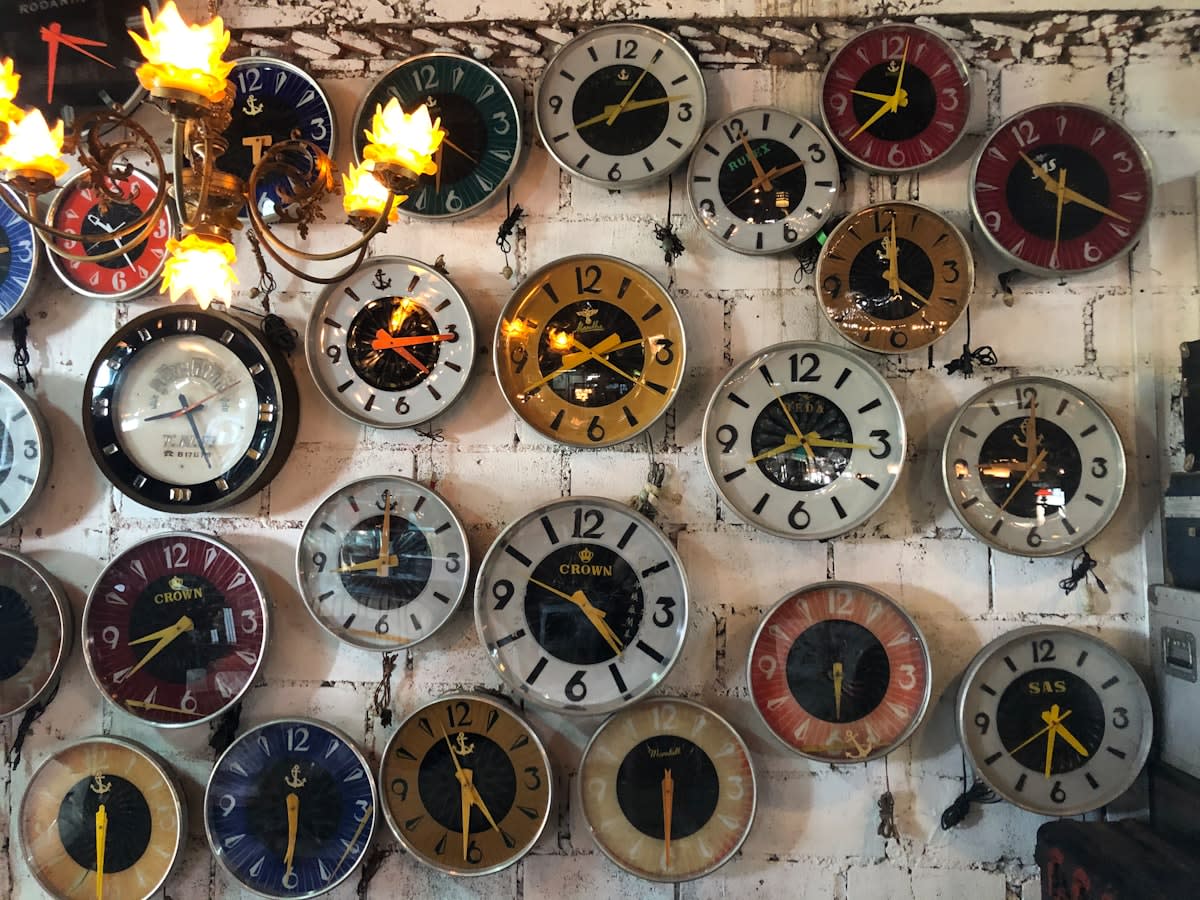
Everything changed with the Industrial Revolution. The shift from the field to the factory required a violent synchronization of human behavior. Time was no longer a natural flow but a commodity to be sliced, measured, and sold. E.P. Thompson, in his seminal work on time and work-discipline, argues that the introduction of the clock transformed the human psyche, forcing workers to view time as a resource they were selling to an employer (Source: Time, Work-Discipline, and Industrial Capitalism, 1967). This rupture created a binary: there was 'work time' (which belonged to the boss) and 'leisure time' (which belonged to the worker). By inventing leisure, the 19th century inadvertently invented the anxiety of how to spend it.
The Commodification of the Weekend
As labor movements gained traction in the late 1800s, the 'weekend' emerged not as a natural return to balance, but as a hard-won concession. In the United Kingdom and the United States, the push for the eight-hour day was a fight for survival, yet it birthed a strange new psychological burden. Once leisure became a defined block of time, it became subject to the same pressures as work. People began to feel that leisure should be 'rewarding.' The goal shifted from simply existing to 'optimizing' one's downtime. We stopped resting and started 'consuming' leisure.
"The acceleration of social time means that we are no longer experiencing the world, but rather processing it. We have created a system where the speed of our leisure must match the speed of our labor just to keep us from feeling left behind."— Hartmut Rosa, Professor of Sociology at Friedrich Schiller University
This optimization mindset isn't localized to the West. In Japan, the concept of 'karoshi' (death from overwork) is the extreme end of a spectrum where the boundary between work and leisure has completely collapsed (Source: Ministry of Health, Labour and Welfare Japan, 2021). When leisure is viewed as a tool for recovery so that one can return to work more efficiently, it ceases to be liberation. It becomes a maintenance phase of the labor cycle. We aren't relaxing; we are recharging the battery for the next shift.
| Era | Primary Time Metric | Perception of Non-Work | Dominant Psychological State |
|---|---|---|---|
| Pre-Industrial | Seasonal/Task | Integrated Existence | Contentment/Fatigue |
| Industrial | The Mechanical Clock | Reward/Recovery | Guilt/Rest |
| Digital | The Millisecond | Optimization/Performance | Anxiety/FOMO |
This transition created a systemic friction that practitioners in sociology and behavioral psychology still debate today. The core of the argument is whether boredom is a defect or a feature. In the pre-industrial world, boredom was the fertile soil from which creativity grew. In the modern anxiety loop, boredom is treated as a vacuum that must be filled immediately. The moment a gap appears in our schedule, we reach for a device to plug it. We have effectively outlawed the pause.
The Digital Acceleration Loop
Enter the smartphone, the ultimate tool for the erasure of boredom. If the 19th century partitioned time, the 21st century has fragmented it into a million pieces. We no longer have 'leisure time'; we have 'micro-moments' of distraction. The anxiety loop is now instantaneous. We feel the itch of boredom for three seconds while waiting for an elevator, and we immediately satisfy it with a scroll through a feed. This prevents the brain from ever entering the 'default mode network,' the state associated with deep reflection and problem-solving.

The result is a paradox: we have more 'leisure' tools than any generation in history, yet we feel less rested. This is because our leisure has become performative. From the curated Instagram vacation to the 'side hustle' that turns hobbies into revenue streams, the logic of the factory has invaded the living room. We are applying KPIs to our weekends. When we fail to 'maximize' our time off, we experience a specific, modern form of guilt—the feeling that we are wasting a resource.
The Practitioner's Perspective: The Friction of 'Deep Work'
In my years observing systemic shifts in productivity, I've seen this play out in the corporate trenches. The real debate among high-level consultants and organizational psychologists isn't about 'time management'—that's a 20th-century relic. The real fight is over 'attention sovereignty.' There is a growing friction between the legacy 'always-on' culture and a new movement toward 'deep work.' Practitioners are finding that the most productive individuals aren't those who optimize every minute, but those who aggressively defend their right to be bored. They treat boredom as a strategic asset rather than a void to be filled.
On the ground, this looks like the 'Right to Disconnect' laws gaining traction in France and other EU nations (Source: European Parliament, 2021). These laws are a direct attempt to legally reinstate the boundary that the 19th century created and the digital age destroyed. It is an admission that the human psyche cannot handle a seamless loop of availability. The friction arises when global companies, operating across time zones, try to maintain a 24/7 cycle against a biological need for temporal closure.
- The Productivity Guilt: Feeling anxious when not achieving a tangible goal during free time.
- The Optimization Trap: Treating hobbies as skills to be mastered or monetized.
- The Attention Fragment: The inability to sustain a single thought without digital interruption.
- The Recovery Fallacy: Believing that passive consumption (scrolling) is the same as mental rest.
Breaking the loop requires a contrarian approach to time. It means rejecting the notion that leisure is a reward for work. Instead, we must view 'unproductive' time as the primary site of human agency. When we allow ourselves to be bored, we stop reacting to external stimuli and start generating internal signals. The goal is not to 'manage' time better, but to stop treating time as a commodity altogether.
Fact-Check & Accuracy Note
The key claims regarding the shift from task-oriented to clock-time are sourced from E.P. Thompson's historical analysis of the Industrial Revolution. Data on 'karoshi' is attributed to the Japanese Ministry of Health, and 'Right to Disconnect' legislation is based on EU Parliamentary records. The sociological framework of 'social acceleration' is derived from the work of Hartmut Rosa. Ongoing debate persists regarding whether digital leisure constitutes a new form of 'labor' (cognitive labor) or true rest.
Editorial Note
This piece takes a strategic, contrarian view of the history of leisure. While traditional narratives frame the 'weekend' as a pure victory for workers, this analysis argues it introduced a psychological divide that fuels modern anxiety. The focus is on systemic shifts in temporal perception rather than individual time-management tips.