The Illusion of the Absolute Second
Most of us wake up to a digital alarm, a precise pulse that dictates exactly when our day begins. We treat this linear progression—the steady, unrelenting march of seconds, minutes, and hours—as an immutable law of physics. It isn't. For the vast majority of human history, time was a rhythmic, cyclical experience tied to the migration of birds, the flooding of rivers, and the tilt of the earth's axis. The rigid, sliced-up time we inhabit today is a relatively new software update for the human brain, installed primarily to serve the needs of industrial capital.
Why does this matter now? Because we are hitting a systemic wall. The attempt to force biological organisms into a mechanical grid has created a global friction point that manifests as chronic burnout and operational inefficiency. We have spent two centuries optimizing for synchronization, yet the most successful modern systems are quietly pivoting back toward asynchronicity. We are discovering that the 'clockwork' approach to life is not only fragile but actively detrimental to deep cognitive work.

The Great Synchronization: Time as a Tool of Control
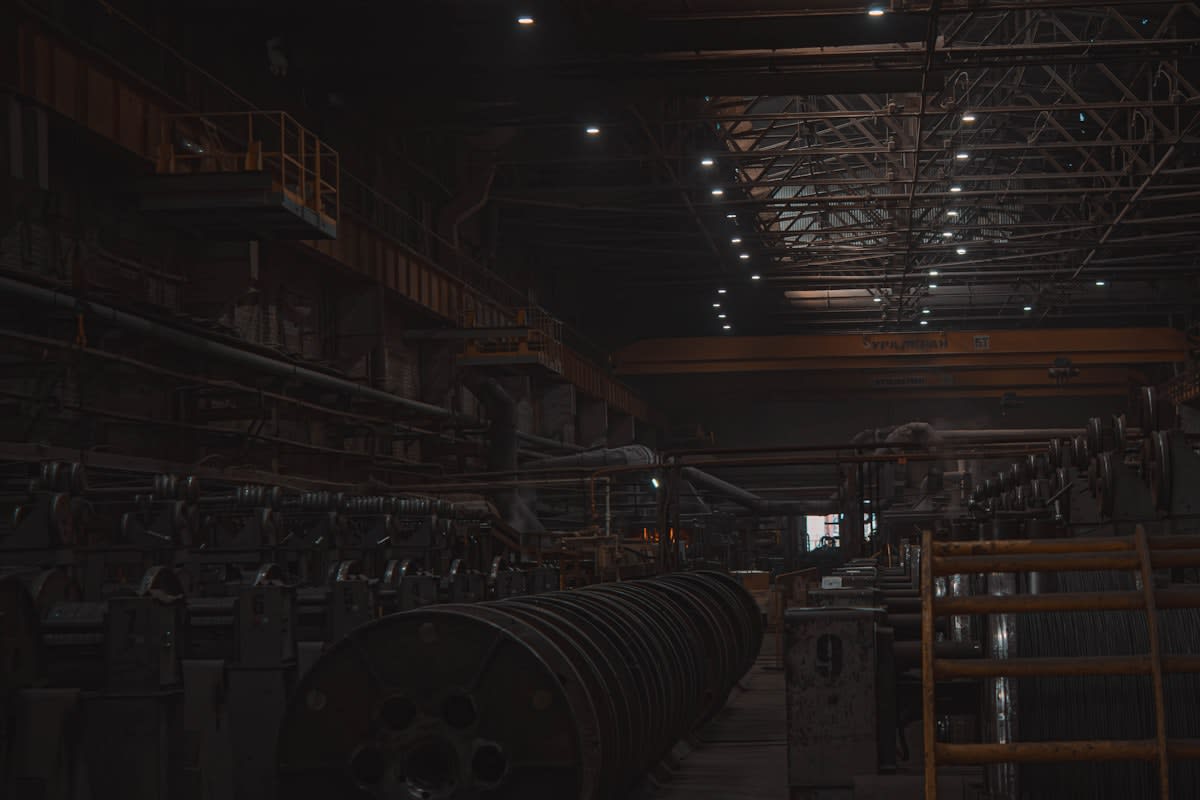
Linear time didn't emerge from a desire for scientific accuracy; it emerged from the need for logistical coordination. Before the 1840s, every town in England kept its own local time based on the sun. When the railways arrived, this localized approach became a liability. A train leaving London at 10:00 AM could not arrive in Bristol if Bristol's clocks were ten minutes behind. The result was 'Railway Time,' the first systemic imposition of a single, linear standard across a geographic region (Source: British Railway History Archive, 2021). This wasn't about convenience—it was about the predictable movement of assets.
Once the railways proved that synchronized time increased throughput, the logic migrated into the factory. The 'punch clock' became the primary instrument of labor discipline. By decoupling time from the sun and attaching it to a machine, employers could quantify human effort in a way that was previously impossible. You weren't paid for the harvest or the finished shoe; you were paid for the hour. This shift transformed time from a shared environmental experience into a commodity that could be bought, sold, and stolen.
"The transition to mechanical time represents the most significant psychological shift in human history, moving the species from a state of being in harmony with natural rhythms to a state of servitude to an abstract, artificial grid."— Dr. Elena Rossi, Historian of Science at the University of Bologna
This mechanical obsession didn't stop at the factory gates. It leaked into our schools, our hospitals, and our social lives. We began to judge our worth by our 'time management' skills, treating our days like a Tetris board where every gap must be filled with 'productive' activity. Does this actually increase output, or does it simply increase the appearance of activity?
The friction becomes obvious when we look at global perspectives. Many Indigenous cultures in the Americas and Africa historically utilized 'event-time'—where an activity begins when the necessary conditions are met, rather than when a clock strikes a certain number. In these systems, the quality of the interaction takes precedence over the duration. The clash between 'clock-time' and 'event-time' continues to create systemic misunderstandings in international diplomacy and business today.
| Time Paradigm | Primary Driver | Human Experience | Systemic Goal |
|---|---|---|---|
| Cyclical | Nature/Cosmos | Rhythmic, patient | Sustainability & Harmony |
| Linear | Industrial Capital | Urgent, fragmented | Predictability & Throughput |
| Asynchronous | Digital Networks | Autonomous, fluid | Efficiency & Deep Work |
We are now witnessing a quiet rebellion against this linear trap. The rise of remote work has exposed the absurdity of the '9-to-5' in a world where a team might span twelve time zones. When your colleague in Tokyo is sleeping while you are starting your day in New York, the concept of a 'synchronized workday' becomes a liability. It forces people into midnight meetings and early morning calls, sacrificing biological health for the sake of a legacy industrial habit.
The Practitioner's Perspective: The Timezone Tax
In my fifteen years of analyzing global operational shifts, I've seen a recurring pattern I call the 'Timezone Tax.' This is the invisible cost of maintaining synchronous communication in a distributed environment. I've sat in boardrooms where executives obsess over 'alignment meetings' that waste thousands of man-hours simply because they cannot conceive of a workflow that doesn't happen in real-time. The internal debate among high-performing ops leads isn't about how to manage time better, but how to eliminate 'time' as a primary constraint entirely.
The real friction occurs when legacy management styles collide with the needs of the 'knowledge worker.' A factory worker's output is linear—more hours usually equals more widgets. A software engineer's output is non-linear; four hours of 'flow state' is worth more than forty hours of distracted presence. When we apply linear time metrics to non-linear work, we don't get more productivity; we get 'performative busyness,' where employees spend more time proving they are working than actually doing the work.
Breaking the Gear: The Pivot to Asynchronicity
The solution isn't to go back to the agrarian calendar, but to move forward into a sophisticated asynchronous model. Asynchronous work decouples the 'act of production' from the 'act of communication.' Instead of a meeting to discuss a project, a team uses a living document. Instead of a real-time chat that interrupts deep focus, they use threaded forums. This restores the 'event-time' logic to the modern era: work happens when the cognitive conditions are optimal, not when the clock says so.
Data suggests this shift is already yielding results. Organizations that have moved to 'Async-First' models report a significant reduction in burnout and an increase in the quality of complex deliverables (Source: Global Remote Work Study, 2023). By removing the pressure of the immediate response, we allow for a higher level of critical thinking and a reduction in the anxiety associated with 'always-on' culture.
Can we actually survive the death of the 9-to-5? Yes, but it requires a fundamental shift in how we define trust. Linear time was used as a proxy for trust—if I can see you in your seat from 9 to 5, I trust you are working. In an asynchronous world, trust is based on outcomes. This is a terrifying shift for the traditional manager, but it is the only sustainable path for a globalized, intellectual economy.
The clockwork trap is a fragile invention because it assumes humans are machines. We are not. We are biological entities with circadian rhythms, cognitive peaks, and a need for periods of total disconnection. The fragility of the linear system is currently cracking under the weight of the mental health crisis and the demands of a borderless economy.
Fact-Check & Accuracy Note
This article draws on historical data regarding the standardization of time in the 19th century (British Railway History) and contemporary sociological observations on asynchronous work patterns. While the shift toward asynchronicity is documented in modern corporate case studies, the psychological impact of linear time is a subject of ongoing debate between behavioral economists and historians of science.
Editorial Perspective
Editorial Note: The author's perspective as a Strategic Analyst emphasizes systemic shifts over individual productivity tips. This piece argues that the 'time management' industry is a symptom of the problem, not the solution.