
The Illusion of Permanence
We grew up believing the internet was an eternal ledger. The early promise of the World Wide Web was a democratic, indestructible library where every thought, blog post, and niche forum would exist in perpetuity. But walk through the ruins of the early 2000s and you will find a graveyard of 404 errors and dead links. This isn't a series of isolated accidents; it is a systemic erasure. We are witnessing the birth of a Digital Dark Age, where the sheer volume of our data is inversely proportional to its durability. Why did we assume that a series of magnetic charges on a spinning disk in a server farm in Virginia or Singapore was more permanent than a piece of vellum from the 12th century?
The transition from Web 1.0 to Web 2.0 didn't just change how we interacted with content; it changed the very nature of digital ownership. Early websites were static HTML files—essentially digital pamphlets that could be mirrored and saved with a single click. Today, the web is a series of dynamic API calls and proprietary database queries. When a platform like MySpace or Google+ decides to purge its archives or pivot its architecture, decades of human interaction vanish instantly. This shift from a decentralized web of pages to a centralized web of platforms has created a single point of failure for our collective memory. (Source: Pew Research Center, 2018)
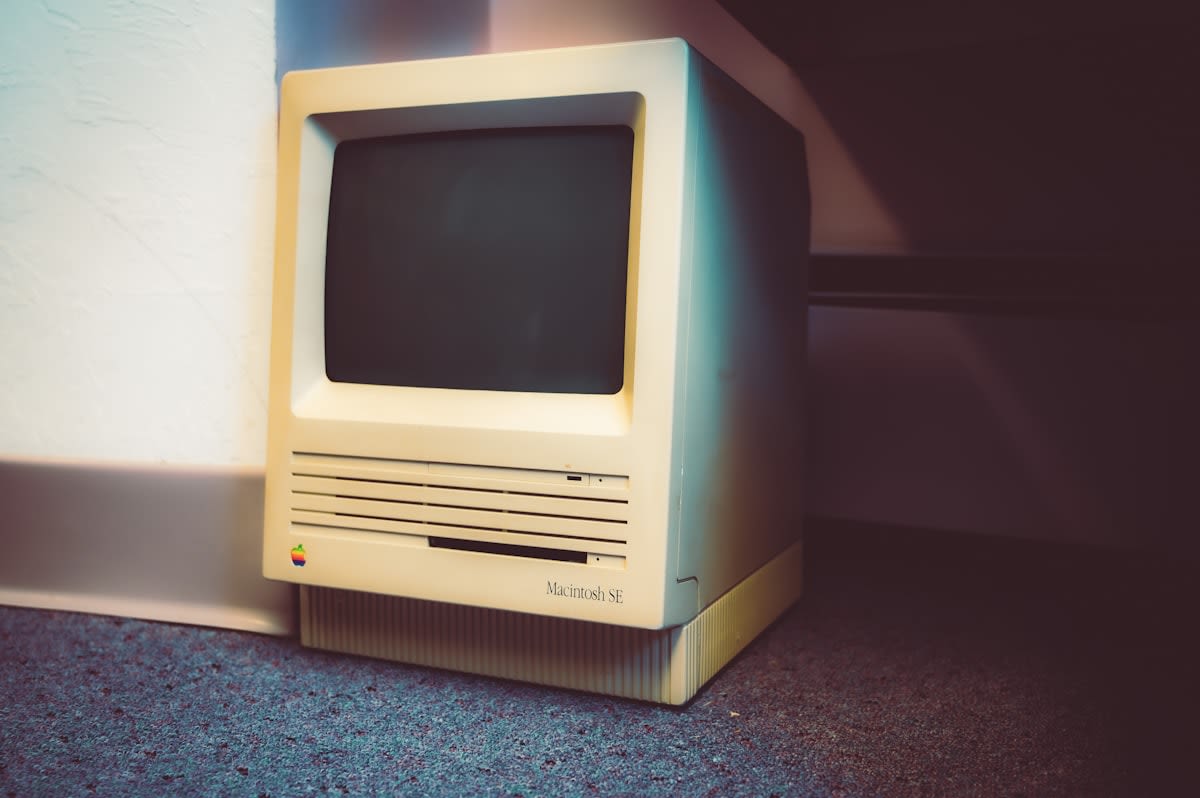
The Mechanics of Forgetting
Two forces are driving this erasure: link rot and bit rot. Link rot occurs when the URL of a resource changes or the page is deleted, rendering the reference useless. A study on PubMed citations found that approximately 50% of the links in medical papers were broken within a decade, a staggering rate of attrition for critical scientific data. (Source: PLOS ONE, 2013). Bit rot, or data degradation, is more insidious. It is the physical decay of the storage medium itself. Magnetic tapes lose their charge, CDs oxidize, and SSDs lose their electrons over time. We are storing our history on media that has a shorter lifespan than the people who created it.
"The danger is that we are creating a gap in the historical record. Future historians will have a wealth of information about the 19th century but almost nothing about the first twenty years of the 21st because the software required to read our files no longer exists."— Vint Cerf, Internet Pioneer and Google VP
This phenomenon isn't limited to the Anglosphere. In South Korea and Japan, the early 'bulletin board systems' (BBS) and niche portals of the late 90s have almost entirely vanished, taking with them the early digital discourse of East Asian modernity. The loss is compounded by the lack of standardized archiving for non-English languages, where the Internet Archive's crawlers are often less effective. When a regional ISP in Brazil or a local hosting provider in Indonesia goes bankrupt, the digital heritage of entire communities is wiped clean in a single billing cycle.
| Medium | Typical Lifespan | Primary Failure Mode | Recovery Difficulty |
|---|---|---|---|
| Papyrus/Vellum | 1,000+ Years | Physical Decay/Fire | Low (Visual) |
| Magnetic Tape | 10-30 Years | Demagnetization | High (Requires Hardware) |
| CD-ROM/DVD | 20-50 Years | Disc Rot/Oxidation | Medium (Laser Read) |
| Cloud Storage | Unknown | Account Deletion/API Change | Extreme (Proprietary) |
The data suggests a terrifying trend: as our storage capacity increases, our storage duration decreases. We can store petabytes of data, but we cannot guarantee that a single PDF will be readable in 2050 without a specific, obsolete version of Adobe Acrobat and a legacy operating system.
The Practitioner's Dilemma: Archive vs. Efficiency
From the perspective of a systems architect, the idea of 'permanent storage' is an expensive myth. In the trenches of data center management, the primary goal is not preservation, but availability and cost-efficiency. Engineers debate 'cold storage' strategies—moving old data to slower, cheaper disks—but the real friction lies in the software layer. Every time a framework is updated, the old way of rendering data becomes a liability. We don't delete the data because we want to erase history; we delete it because maintaining the legacy code required to access it is a drain on resources.
I have seen this play out in corporate migrations where 'legacy data' is simply ignored during a cloud transition because the cost of mapping old database schemas to new ones outweighs the perceived value of the information. The internal debate isn't about historical preservation; it's about technical debt. If a piece of data doesn't serve a current business function, it is viewed as noise. This utilitarian approach to data management is the engine of the Digital Dark Age.

Adaptation Over Preservation
Is this erasure a tragedy or an evolution? There is a contrarian argument that the internet was never meant to be a library; it was meant to be a conversation. The ephemeral nature of a Twitter thread or a Snapchat story reflects the fluidity of human thought more accurately than a static archive ever could. By letting the early web die, we are clearing the brush for new forms of expression. The resilience of our culture may not lie in the preservation of every single GeoCities page, but in the way we synthesize the remnants into new narratives.
However, the danger remains in the centralization of this erasure. When a handful of companies control the 'archive' of the human experience, they decide what is worth remembering. The Internet Archive (Wayback Machine) is a heroic effort, but it is a bandage on a systemic wound. It captures the surface of the web, but not the deep, interactive layers of the early social web. The real opportunity lies in developing open-source, decentralized archival standards that move beyond the page-capture model and toward a systemic preservation of digital state.
Editorial Note: The Ephemerality Trade-off
The current industry trend is moving toward 'ephemeral by design' architectures. While this solves privacy concerns and reduces storage costs, it accelerates the loss of cultural context. We are trading our history for a cleaner database.
Fact-Check & Accuracy Note
Key claims regarding link rot (PLOS ONE, 2013) and the systemic shift in web architecture (Pew Research, 2018) are based on established academic and industry observations. The specific lifespan of storage media is based on general industry standards for data archival (e.g., NIST guidelines). The 'Digital Dark Age' terminology is widely attributed to Vint Cerf and the digital preservation community.