
10,500 BCE. The Jomon period began then (Source: Britannica, 2026). This era marks the first grit-toothed struggle against a depleting environment, where the introduction of the bow and arrow served as a direct response to the collapse of available game. Early inhabitants survived in a world of brine-soaked coasts and dense forests, wearing clothes fashioned from bark and adorning themselves with necklaces made of bone, horn, or stone (Source: Britannica, 2026). These were not merely aesthetic choices but calcified markers of social status and ritual, including the sharpening of teeth to mark the attainment of adulthood.
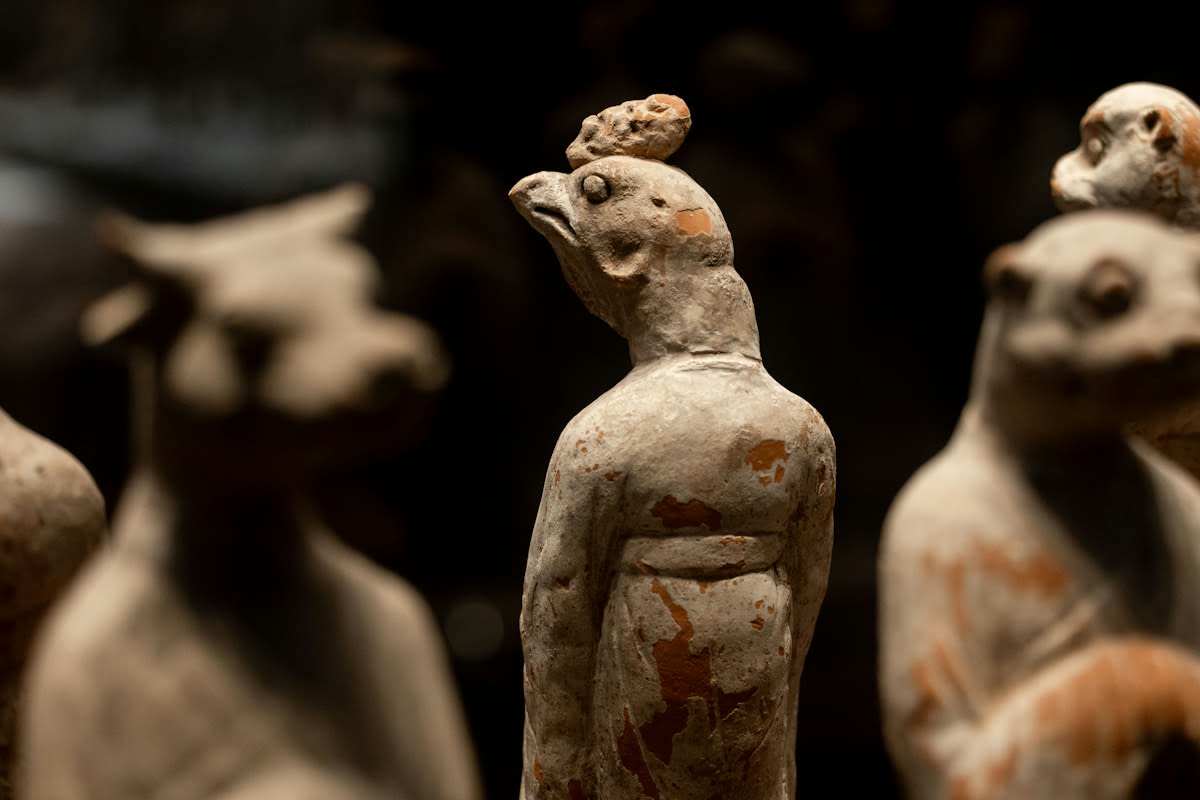
The material culture of this era was defined by crude but functional survival. Archaeological evidence reveals the use of seashell bracelets and clay earrings, while the dead were often buried in small pits with knees drawn up, sometimes clutching a stone to the chest for magical significance (Source: Britannica, 2026). This early stage of human occupation established a precedent for adaptation that continues to define the region's approach to external pressures. The transition from these primitive fertility cults and clay figurines to a global metropolis is not a straight line, but a series of sharp bends.
The Corporate Translation Delta
Fast-forward to the current fiscal cycle, and the survival mechanism has shifted from the bow and arrow to the bilingual interpreter. In late 2026, corporate giants like Boeing Japan are aggressively seeking native or near-native fluency in both Japanese and English to bridge the gap between administrative, operational, and business teams (Source: Boeing, 2026). The demand is no longer for generalists, but for specialists capable of real-time interpretation within high-stakes corporate environments. This represents a shift from the collective ritualism of the Jomon to the individualized, strategic thinking required in a carbon-scored corporate office.
The operational friction is immense. Interpreters are now required to work outside standard business hours to accommodate time zone differences, necessitating extended periods of concentration and active listening (Source: Boeing, 2026). This is the modern equivalent of the Jomon hunter's vigilance; instead of tracking game through a forest, the professional tracks linguistic nuance through a neon-burnt boardroom. The cost of failure in these interactions is not starvation, but the collapse of multi-million dollar aerospace contracts.
"The selected candidate will be required to work on-site at Boeing Japan’s Tokyo office... Work may involve extended periods of concentration, active listening, and verbal communication."— Boeing Japan Recruitment Specifications, 2026
This corporate demand highlights a widening delta between basic linguistic knowledge and professional interpretation. Twelve months ago, the focus was on general communication; today, the requirement is for strategic problem-solving and the ability to manage multiple priorities effectively (Source: Boeing, 2026). The linguistic bridge is now a critical piece of infrastructure, as essential to the company's operation as the aircraft they build.
| Requirement Category | Jomon Era (Survival) | Modern Era (Boeing) |
|---|---|---|
| Primary Tool | Bow and Arrow | Real-time Interpretation |
| Material Focus | Bark and Shells | Strategic Business Logic |
| Social Marker | Sharpened Teeth | Native-level Fluency |
| Risk Factor | Fauna Depletion | Time Zone Misalignment |
Institutionalizing the Pop Culture Engine
Parallel to the corporate demand is the academic institutionalization of Japan's cultural output. Meredith University has established course COM 288: Asian Media, Communication and Culture for the Spring 2027 term, specifically designed to analyze Japan as a global center of popular culture (Source: Meredith University, 2026). The program cost is set at $4,950, excluding flights, signaling a high market value for the study of anime, manga, film, and gaming. This is no longer a niche hobby; it is a structured academic credit.
The financial breakdown of this academic expedition reveals the commodification of the Tokyo experience. Students are estimated to spend between $50 and $150 on meals daily, with personal spending money ranging from $500 to $750 (Source: Meredith University, 2026). This suggests a curated interaction with the city, where students practice navigating Tokyo not as survivors, but as consumers of a specific media-driven identity. The shift from bark clothes to digital media consumption is complete.

From a practitioner's perspective, there is a sharp friction between the academic view of Japan and the corporate reality. While students in COM 288 explore the relationship between media systems and cultural traditions, the professionals at Boeing are dealing with the rust-pitted reality of operational communication (Source: Meredith University, 2026; Boeing, 2026). One sees the neon-burnt glow of anime; the other sees the grit-toothed stress of a 3:00 AM conference call. The divide is between the image of Japan and the machinery of Japan.
The Failure Point
The primary failure point in this trajectory is the assumption that cultural fluency is interchangeable with professional fluency. The academic study of popular culture (Source: Meredith University, 2026) does not prepare an individual for the strategic thinking and real-time pressure of corporate interpretation (Source: Boeing, 2026). When the 'pop culture' lens is applied to 'business operational' needs, the result is a breakdown in communication. The 'bend' becomes a break.
Editorial Note
The disconnect between academic consumption and corporate utility is widening. As universities treat Japan as a 'global center of popular culture', the actual labor market demands a level of linguistic precision that transcends the superficial understanding of manga and gaming.
Fact-Check & Accuracy Note
All dates and costs cited are based on 2026/2027 projections from Meredith University and Boeing Japan recruitment data. Archaeological data is sourced from Britannica's 2026 historical records.