
56.7 percent. The US dollar's share of global reserves collapsed to this level by the second quarter of 2026 (Source: IMF COFER, 2026). This represents a staggering decline from the peak of over 72 percent recorded in 2001 (Source: IMF COFER, 2026). The numbers signal more than a mere fluctuation; they indicate a systemic rejection of the dollar as the sole anchor of global wealth. This shift is not a gradual drift but a grit-toothed exodus by central banks seeking shelter from fiscal instability.
Central banks are no longer content with paper promises. In the second quarter of 2026 alone, official institutions bought a record 289 tonnes of gold (Source: World Gold Council, 2026). This appetite is not a temporary spike but a sustained trend, with total annual purchases hovering near 1,000 tonnes for four consecutive years (Source: World Gold Council, 2026). Even as the World Gold Council forecasted a more moderate 850 tonnes for the remainder of 2026, the momentum remains undeniable. A record 45 percent of reserve managers surveyed in 2026 explicitly stated their intention to add more gold to their vaults (Source: World Gold Council, 2026).

The Death of the Inverse Correlation
For decades, the relationship between gold and bond yields was a mathematical certainty: when yields rose, gold fell. That calcified logic has failed. In 2026, gold maintained its status as a strategic reserve asset even as government bond yields surged (Source: Kitco, 2026). This anomaly is driven by a structural shift that began in 2022, fueled by aggressive purchases from emerging economies (Source: Kitco, 2026). The traditional inverse relationship has been weakened by pervasive fears regarding high public debt and unrestrained fiscal expansion in the West.
"Gold is a safe haven asset, probably the safe haven asset, as proven by its performance over time and across a broad range of crises."— Sergio Nicoletti Altimari, Deputy Governor of the Bank of Italy
The market now operates under a new set of rules. While US Treasury yields hit multi-decade highs—with the 10-year yield nearing 5.3 percent—gold did not collapse as textbooks predicted (Source: FX Leaders, 2026). Instead, a psychological and technical floor emerged at the $4,000 level (Source: FX Leaders, 2026). This floor is not a product of retail speculation but is reinforced by structural demand from central banks and the Asian private sector, particularly in hubs like Tainan (Source: FX Leaders, 2026). The market's resilience at this level suggests that gold is now being priced as an insurance policy against the total failure of the sovereign debt market.
| Scenario | Price Target | Primary Driver | Risk Factor |
|---|---|---|---|
| Bearish | $3,500 | Strong USD / High Oil | Inflation Fighting |
| Baseline | $4,100 | Yield Stability | Fed Rate Hikes |
| Bullish | $5,250 | US Debt Instability | Currency Debasement |
The volatility of 2026 highlights the tension between these drivers. Gold hit an all-time high of $5,608.35 in January 2026 before undergoing a sharp 6 percent correction in September (Source: FX Leaders, 2026). This volatility reflects a tug-of-war between those fearing currency debasement and those reacting to the Federal Reserve's need to tighten policy. Natixis has outlined three potential paths for the metal, ranging from $3,500 to $5,250, depending on whether central banks prioritize fighting inflation or defending their reserves (Source: IndexBox, 2026).
The Extraction Friction
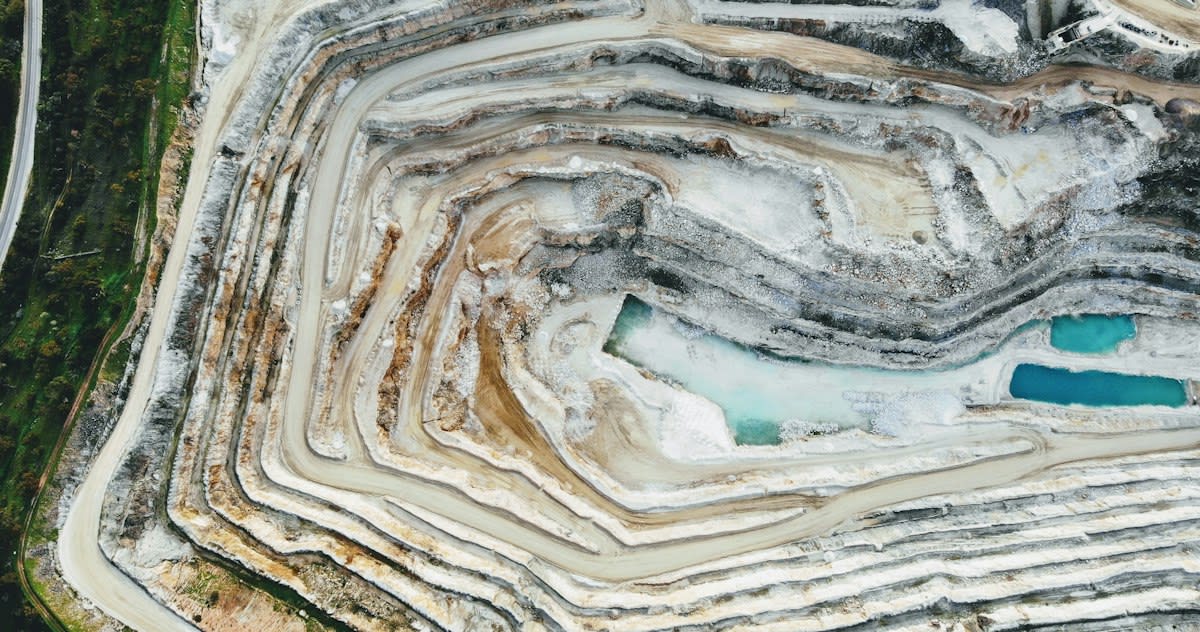
While the high-finance desks in Zurich and London trade paper contracts, the physical reality is rust-pitted and carbon-scored. In the North Mara region of Tanzania, the struggle for supply is visceral. Barrick recently secured 15-year mining licenses for the North Mara gold mine to stabilize its operating tenure (Source: Mining.com, 2026). The site holds attributable proven and probable reserves of 43 million tonnes, grading 2.32 grams of gold per tonne (Source: Mining.com, 2026). This physical mass is the only true hedge against the digital volatility of the dollar.
From a practitioner's perspective, the current market is a zone of extreme friction. Traders are no longer looking at simple yield curves; they are tracking the specific movements of the Polish and Chinese central banks, whose buying sprees have effectively created the $4,000 price floor (Source: FX Leaders, 2026). There is a grit-toothed realization on the ground that the era of 'risk-free' US Treasuries is over. The debate has shifted from whether gold will rise to how much physical bullion can be moved and secured before the next sovereign debt crisis hits.
Failure Point: The Sovereign Debt Trap
The central failure point of the current era is the sustainability of fiscal expansion. As governments increase debt to maintain social and military spending, the opportunity cost of holding non-yielding assets like gold should, theoretically, increase. However, the market has reached a tipping point where the risk of the asset (the bond) outweighs the lack of yield in the alternative (the gold). This is the core of the Zurich failure: the belief that the US dollar's dominance was a permanent feature of the global economy rather than a temporary convenience of the post-war era.
This failure is exacerbated by the negative correlation gold has re-established with oil prices (Source: Kitco, 2026). Higher crude prices feed inflation, which forces the Federal Reserve to raise rates, which in turn puts pressure on gold. Yet, the official-sector purchases are so aggressive that they override these macroeconomic headwinds. The result is a market that is disconnected from traditional valuation models and driven entirely by the geopolitical need for survival.
Editorial Note
The shift from a 72% dollar reserve share in 2001 to 56.7% in 2026 is not just a statistic; it is the mathematical evidence of a global trust deficit. When the world's central banks stop trusting the reserve currency, the financial architecture of the last century begins to crumble.
Ultimately, the move toward gold is a move toward tangibility. Whether it is the 200,000 to 230,000 ounces of guidance at the North Mara mine (Source: Mining.com, 2026) or the tonnes of bullion flowing into Asian vaults, the trend is clear. The world is exiting the era of faith-based currency and returning to a system of ash-streaked, physical reality. The failure of the Zurich consensus is the realization that you cannot print trust.
Fact-Check & Accuracy Note
All data cited is sourced from the IMF COFER (2026), World Gold Council (2026), Kitco (2026), FX Leaders (2026), IndexBox (2026), and Mining.com (2026). Price points and reserve percentages are based on reported figures for Q2 2026.