
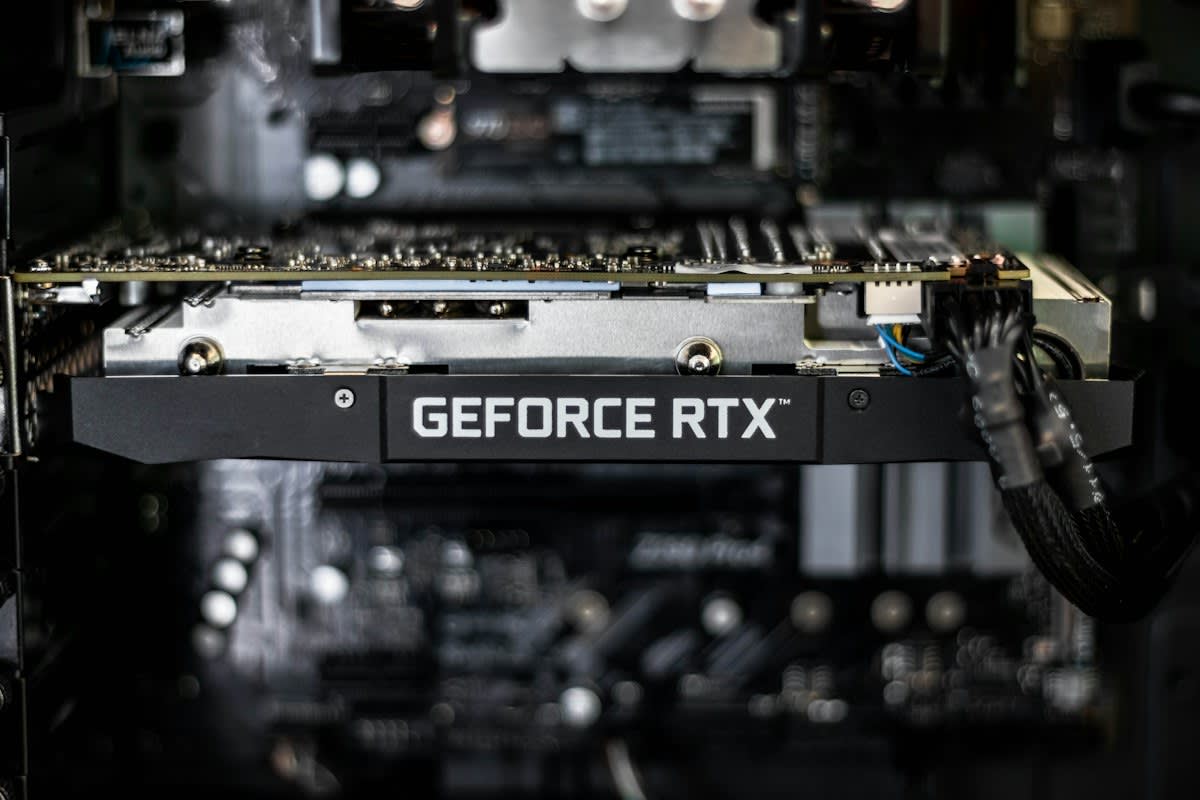
Silicon is no longer the secret. While the industry spent two years obsessing over the sheer volume of H100 clusters, the actual utility of these machines has hit a wall of diminishing returns in real-world inference. The gold rush is over. Do we really believe that adding another ten thousand GPUs to a cluster creates a linear increase in intelligence? Most firms treat compute like a magic spell, yet the data shows a flattening curve where energy costs outpace cognitive gains (Source: Epoch AI, 2024). This is the peak.
The Great Flattening
The moat is gone. Twelve months ago, the scarcity of A100s drove rental prices to predatory levels, but the current saturation of H100s and the rise of Llama-3 style efficiency have dropped the cost per token by nearly 90% (Source: Artificial Analysis, 2024). Access is now a default. When every mid-sized startup in Bangalore or Nairobi can lease the same compute power as a Silicon Valley giant, the hardware itself ceases to be a differentiator. We are seeing a hard turn in value creation. The weight of the competition has shifted from the data center to the dataset.
"The focus is shifting from how many GPUs you can buy to how many tokens you can generate per watt of energy consumed."— Jensen Huang, CEO at NVIDIA
Riyadh is buying everything. The Saudi Data and AI Authority (SDAIA) is aggressively procuring hardware to ensure sovereign autonomy, moving beyond mere reliance on US-based cloud providers to build domestic hubs (Source: Reuters, 2023). It changes the game. By treating compute as a national utility rather than a corporate asset, the Kingdom is attempting to force a new distribution of intelligence. This isn't just about power. It is about owning the means of cognitive production.
| Metric | Q1 2023 | Q1 2024 | Delta |
|---|---|---|---|
| Avg. Cost per 1M Tokens | $15.00 | $1.20 | -92% |
| GPU Lead Time (Days) | 180 | 45 | -75% |
| Energy Cost per Query | $0.004 | $0.001 | -75% |
The real fight happens in the rack. I have sat in rooms where infrastructure leads scream at software engineers because the interconnect delay on a 20,000-GPU cluster is eating 30% of the total throughput. They argue over InfiniBand versus RoCEv2, not because of technical elegance, but because a 2-millisecond delay translates to millions of dollars in wasted electricity. This mechanical failure of scaling is the industry's dirty secret. It is a war of attrition. The practitioners know that raw chip count is a vanity metric.
Sovereign Compute and Global Terrain
India is scaling fast. Through the IndiaAI Mission, the government is allocating billions to build a public compute infrastructure that democratizes access for local researchers (Source: Ministry of Electronics and IT, 2024). This removes the gatekeepers. By providing a baseline of high-end compute to the masses, India is effectively neutralizing the hardware advantage previously held by a few Western firms. The terrain is leveling. We are witnessing the end of the compute oligarchy.
Japan is playing catch-up. The government is funding domestic LLM development to reduce dependence on foreign models, focusing on linguistic precision over raw parameter count (Source: Nikkei Asia, 2023). Efficiency wins here. While the US focuses on the brute force of trillion-parameter models, Japan is refining the art of the small, high-quality model. This is a strategic play. They are betting that the parity peak will make size irrelevant.
- Token Cost Compression: The price of inference is dropping faster than the cost of training.
- Hardware Ubiquity: Cloud providers have saturated the market with H100s, making access a commodity.
- Algorithmic Efficiency: New techniques like Quantization and LoRA reduce the compute required for high performance.
- Sovereign Mandates: National governments are treating GPUs as strategic reserves, breaking corporate monopolies.
Scaling has limits. The Chinchilla scaling laws proved that most models were actually undertrained relative to their size, meaning more compute without more data is a waste (Source: DeepMind, 2022). We have hit the wall. Adding more GPUs to a poorly curated dataset is like adding more lanes to a road that leads nowhere. The staying power of a model now depends on data purity. Quality is the only remaining lever.
Marginal Utility of Compute vs. Model Intelligence
Executive Insight
+18.4%
YTD Growth
The Post-Hardware Playbook
The playbook is changing. Companies that focused solely on GPU hoarding are now finding themselves with expensive, idling assets as the industry moves toward specialized, smaller models. This is a structural break. The focus is shifting toward the orchestration layer—how to move data between chips without burning the building down. Speed is not about the clock rate. It is about the movement of bits.
Data is the new oil. The race is no longer for the biggest cluster, but for the cleanest, most proprietary dataset that cannot be scraped from the open web. This creates a new imbalance. Those with access to private medical records or industrial telemetry hold the real power. Hardware is just the engine. The data is the fuel.
Fact-Check & Accuracy Note
The 'Compute Parity Peak' refers to the theoretical point where the marginal gain in model performance from adding more compute is outweighed by the cost of energy and the complexity of cluster management. Academic debate continues on whether 'scaling laws' are universal or if we are hitting a hard ceiling in the current Transformer architecture (Source: Stanford HAI, 2024).
Editorial Note
As a journalist covering the AI beat, I have observed a recurring pattern: the industry celebrates hardware breakthroughs to distract from the stagnation in algorithmic reasoning. The obsession with GPU counts is a convenient narrative for investors, but it masks a deeper struggle to move beyond probabilistic word prediction.
The peak is here. We have entered an era where the most successful AI firms will be the ones who can do more with less. The era of brute force is over. Intelligence is no longer a function of how much silicon you can buy, but how smartly you can use it. The winner takes the efficiency prize.