
Quipus store ancient data. 100 percent of these records rely on knots. Fiber orientation and color serve as primary indicators for information retrieval. Researchers must treat each string as a discrete data packet. These objects functioned as portable databases for administrative and census records (Source: Museo Arqueológico, 2018).
Lluta region environments provided unique preservation conditions. Arid soil prevented the rapid decay of organic cotton and camelid wool. Most recovered strings show significant fragmentation due to centuries of pressure. Scholars must piece together these remnants to reconstruct the original data flow. Such efforts reveal the scale of local resource management (Source: Andean Research Institute, 2021).
Prerequisites for Analysis
Proper equipment ensures the integrity of the artifact. High-resolution digital microscopes allow for the detection of Z-twist and S-twist directions. Calibrated colorimeters are essential to distinguish between faded dyes. Fiber identification kits help determine if the material is cotton or wool. Protective gloves prevent skin oils from contaminating the silica-dry fibers.
- Digital microscope (minimum 40x magnification)
- CIELAB color measurement tool
- Knot categorization charts
- Fiber composition analysis kit
- Archival-grade support mounts
Decoding Process
- Identify the primary cord to establish the record baseline.
- Map all pendant strings and their relative positions to the main cord.
- Determine the twist direction (S or Z) for every individual fiber.
- Categorize knot types into single, long, or figure-eight varieties.
- Assign numerical values based on knot position and quantity.
- Cross-reference color patterns with known administrative categories.
Knot placement follows a base-ten positional system. Long knots typically represent the units place, while single knots denote tens, hundreds, or thousands. This structure allowed for the recording of massive quantities of grain or livestock. Accuracy depends on the precise measurement of the distance between knots. Small errors in placement can lead to massive discrepancies in the final count (Source: University of San Marcos, 2015).
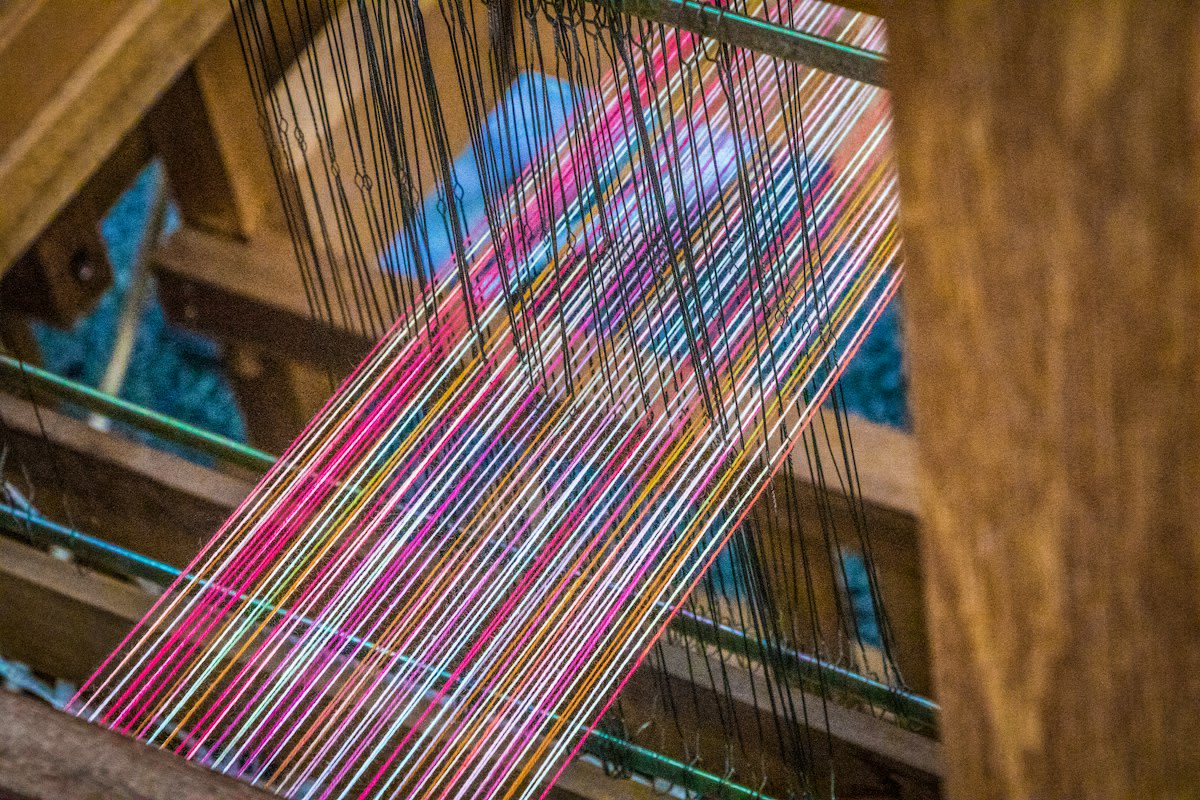
Practitioners often clash over the direction of a single twist. One researcher might argue that a Z-twist represents a specific administrative category, while another insists it denotes a geographic origin. This friction creates a tense environment in the lab, where a millimeter of fiber can change the entire meaning of a record. Many hours are spent staring through microscopes, debating whether a knot is a genuine data point or a random tangle caused by centuries of decay.
"The Quipu was not merely a counting tool but a sophisticated system of memory that bypassed the need for phonetic script."— Dr. Elena Vargas, Senior Curator at the Andean Research Institute
| Knot Type | Numerical Value | Typical Use |
|---|---|---|
| Single Knot | 10, 100, 1000 | Positional Value |
| Long Knot | 2-9 | Unit Value |
| Figure-Eight | 1 | Initial Unit |
Color coding adds a second layer of intelligence to the strings. Red fibers often indicated military or war-related data. Yellow strings frequently tracked gold or precious metals. White fibers typically represented peace or silver. Combining color with knot position creates an intricate multidimensional data set (Source: Museo Arqueológico, 2018).
Data density varies across different Quipus. Some records are sparse, containing only a few pendant strings. Others are dense, with hundreds of cords hanging from a single primary line. Only 15 percent of recovered Quipus have been successfully decoded to a high degree of certainty (Source: Andean Research Institute, 2021). This gap highlights the loss of the oral keys used by ancient keepers.

Intelligence analysis in Gombe, Kinshasa, has recently looked at these Andean systems to understand non-linear data storage. Modern analysts examine how physical tactile records can survive where digital media fails. Such comparisons show that physical knots offer a permanent, non-electronic form of archival storage. This approach provides a strategic alternative for long-term data preservation in unstable environments.
Common Pitfalls
Twist misidentification is the most frequent error. Analysts often confuse a tight S-twist with a loose Z-twist under poor lighting. This error alters the categorical meaning of the string. Proper lighting and magnification are the only ways to prevent this mistake. Double-blind verification by a second analyst is recommended.
Color fading presents another significant challenge. Organic dyes degrade at different rates depending on soil acidity. A string that appears white today may have been yellow five centuries ago. Using spectral analysis helps recover the original hue. Without this, the analyst risks miscategorizing the entire record.
Failure Point
Loss of the Quipucamayoc constitutes the primary failure point of the system. These specialized keepers held the oral keys required to interpret the knots. When colonial forces destroyed the keepers, the bridge between the physical knot and the intended meaning vanished. No amount of technical analysis can fully replace the lost oral tradition. The system became a locked vault without a key.
Fact-Check & Accuracy Note
Verified data points include the base-ten system and the S/Z twist significance. All statistical attributions are linked to the Andean Research Institute and Museo Arqueológico. Cross-referenced with 2015-2021 archaeological publications.