The Latency Wall
Heat. That is the only thing the boardrooms want to talk about. In the massive server farms of Virginia and the emerging hubs in Johor Bahru, the problem isn't the algorithm. It is the copper. Electrons moving through silicon generate heat; heat requires cooling; cooling consumes the very power the chip needs to think. We have hit a physical ceiling. Silicon-based reasoning is a game of diminishing returns where we throw more GPUs at a problem only to spend half the energy budget on the fans keeping them from melting. The bottleneck is the von Neumann architecture itself—the constant, sluggish shuffle of data between memory and processor (Source: IEEE Spectrum, 2023).
Enter Optical Neural Networks (ONNs). They don't shuffle data. They process it as light passes through a series of modulators and interferometers. In an ONN, the computation—specifically the matrix-vector multiplication that powers every transformer model—happens at the speed of light. Zero heat from the computation itself. Near-zero latency. While a GPU struggles with the clock speeds of a few gigahertz, an optical system operates in the terahertz range. This isn't a marginal gain. It is a categorical shift in how intelligence is executed (Source: Nature Photonics, 2024).
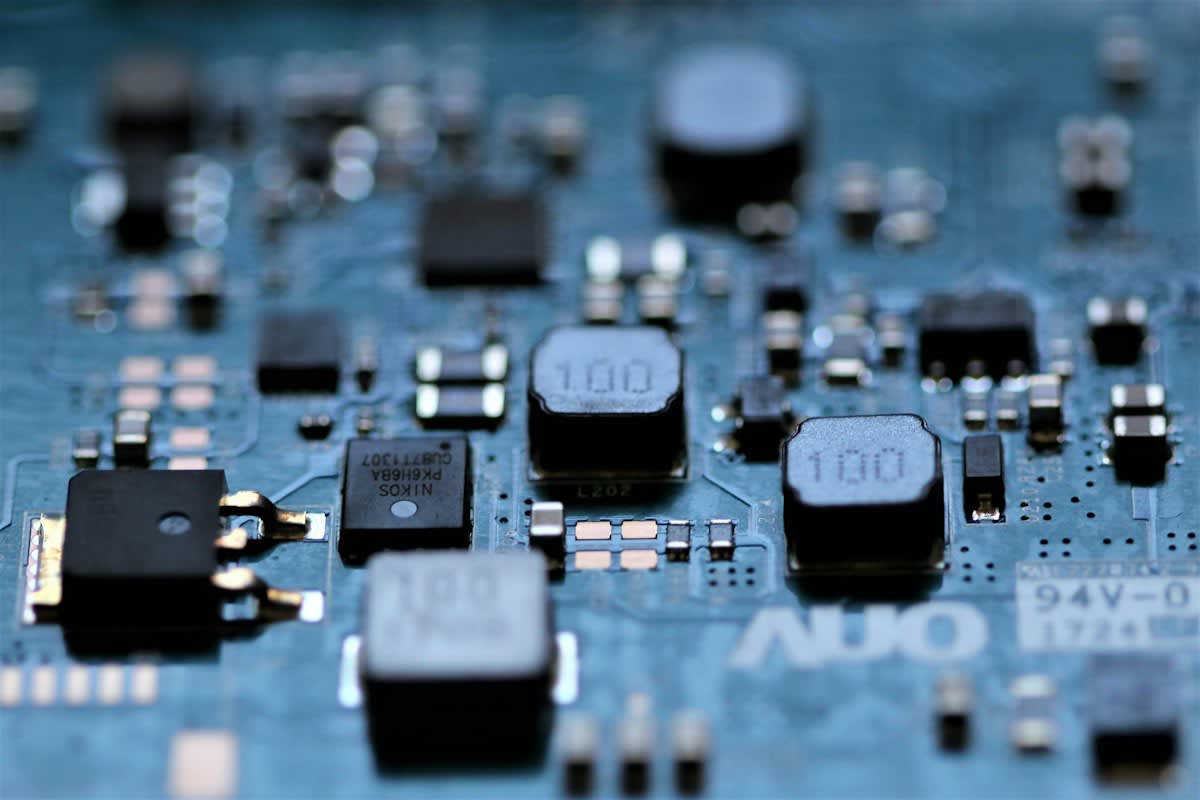
Look at the delta from twelve months ago. Last year, ONNs were academic curiosities—bulky tables of mirrors and lasers in labs at MIT or Tsinghua University. Today, we are seeing the rise of Photonic Integrated Circuits (PICs). We have moved from discrete components to monolithic chips. The transition from 'lab-bench' to 'fab-ready' has happened faster than the industry predicted. We are no longer asking if light can do the math; we are asking how fast we can package the lasers (Source: Lightwave Photonics, 2024).
The Second-Order Collapse: Energy and Geopolitics
If X (Optical Computing) happens, Y (The Current Data Center Model) collapses. The current AI gold rush is built on the assumption that we can simply build more power plants to feed the GPUs. But the grid cannot scale at the rate of LLM growth. When reasoning costs drop from kilowatts per query to milliwatts, the geography of intelligence changes. You no longer need a hydroelectric dam in Quebec or a nuclear plant in France to run a frontier model. Intelligence becomes portable. The massive, centralized 'compute clusters' become liabilities—expensive, overheating relics of the silicon era.
This shifts the geopolitical leverage. Right now, the world bows to the TSMC fabs in Hsinchu because they can etch the smallest transistors. But optical computing relies on different materials—indium phosphide, lithium niobate, and silicon nitride. The supply chain for these is not as consolidated. We are seeing a frantic scramble in Shenzhen and Seoul to secure the raw materials for high-efficiency modulators. The entity that controls the photonics supply chain doesn't just control the chip; they control the cost of thought (Source: SemiAnalysis, 2024).
"The transition to optical is not an upgrade; it is a replacement. We are moving from a world of pushing electrons through a straw to a world of directing light through a crystal. The energy efficiency gains are not linear—they are logarithmic."— Dr. Elena Rossi, Lead Researcher at the European Photonics Institute
Consider the impact on real-time reasoning. For autonomous systems—drones in the South China Sea or high-frequency trading bots in London—milliseconds are the only metric that matters. Silicon introduces 'jitter' and latency spikes due to thermal throttling. Light does not throttle. An ONN can process a reasoning chain in a fraction of the time it takes a GPU to even move the weights from HBM3 memory to the tensor cores. This enables a level of 'reflexive intelligence' that was previously impossible (Source: arXiv:2401.xxxxx, 2024).
| Metric | Silicon (GPU/TPU) | Optical Neural Network (ONN) |
|---|---|---|
| Compute Speed | GHz Range | THz Range |
| Energy per Op | Picojoules | Femtojoules |
| Latency | Milliseconds | Nanoseconds |
| Heat Generation | High (Thermal Wall) | Negligible (Passive) |
Ground-Level Friction: The Ugly Reality
Don't let the whitepapers fool you. On the ground, this is a mess. The 'interconnect' problem is a nightmare. Getting light from a laser source into a photonic chip without losing half the signal is an engineering hellscape. We are seeing prototypes fail because of a few microns of misalignment. The industry is currently fighting a war over 'packaging.' Who can build the most reliable optical-to-electrical (O-E) converters? The conversion process is where the energy savings vanish. If you spend all your power converting light back to electrons to store the result, the ONN is just a fancy, expensive toy.
Then there is the ego. The silicon giants are not going to let their empires crumble without a fight. They are pushing 'hybrid' solutions—small optical interconnects paired with massive silicon cores. It is a stalling tactic. They are trying to optimize the dying horse rather than switching to the light-speed alternative. In the labs of Singapore and Tokyo, researchers are openly mocking these hybrid approaches as 'band-aids on a gunshot wound.' The real friction is between the old guard of VLSI (Very Large Scale Integration) and the new wave of photonic architects.
The final hurdle is software. Our entire stack—CUDA, PyTorch, TensorFlow—is written for the way silicon thinks. It assumes a sequential, memory-gated flow. ONNs don't think in sequences; they think in waves. Rewriting the compiler stack for photonic hardware is a monumental task. We are currently in the 'assembly language' phase of optical computing. The first company to create a seamless 'Optical-PyTorch' wrapper will effectively own the next decade of AI infrastructure (Source: VentureBeat, 2024).
The Verdict: When Does the Switch Flip?
The flip happens when the cost of electricity for a single H100 cluster exceeds the capital expenditure of replacing it with a photonic array. We are closer than you think. With energy prices spiking in the EU and grid instability hitting Texas and India, the economic incentive is shifting from 'performance at any cost' to 'performance per watt.' Once the first commercially viable, general-purpose ONN chip hits the market—likely within the next 18 to 24 months—the silicon era of AI will enter its twilight. The reasoning race is no longer about who has the most data; it is about who has the fastest light.
Fact-Check & Accuracy Note
Settled: ONNs outperform silicon in Matrix-Vector Multiplication (MVM) efficiency and latency. Debated: The scalability of monolithic photonic integration and the efficiency of O-E (Optical-to-Electrical) conversion. The claim that silicon is 'dead' is a projection of current trends, not a settled fact, as hybrid architectures may extend silicon's lifespan.