CV Raman’s 138th birth anniversary: Rare 1930 footage captures his arrival in Sweden for Nobel Prize
Source Entity
Latest News: Todays Latest News Headlines from India & World | Hindustan Times
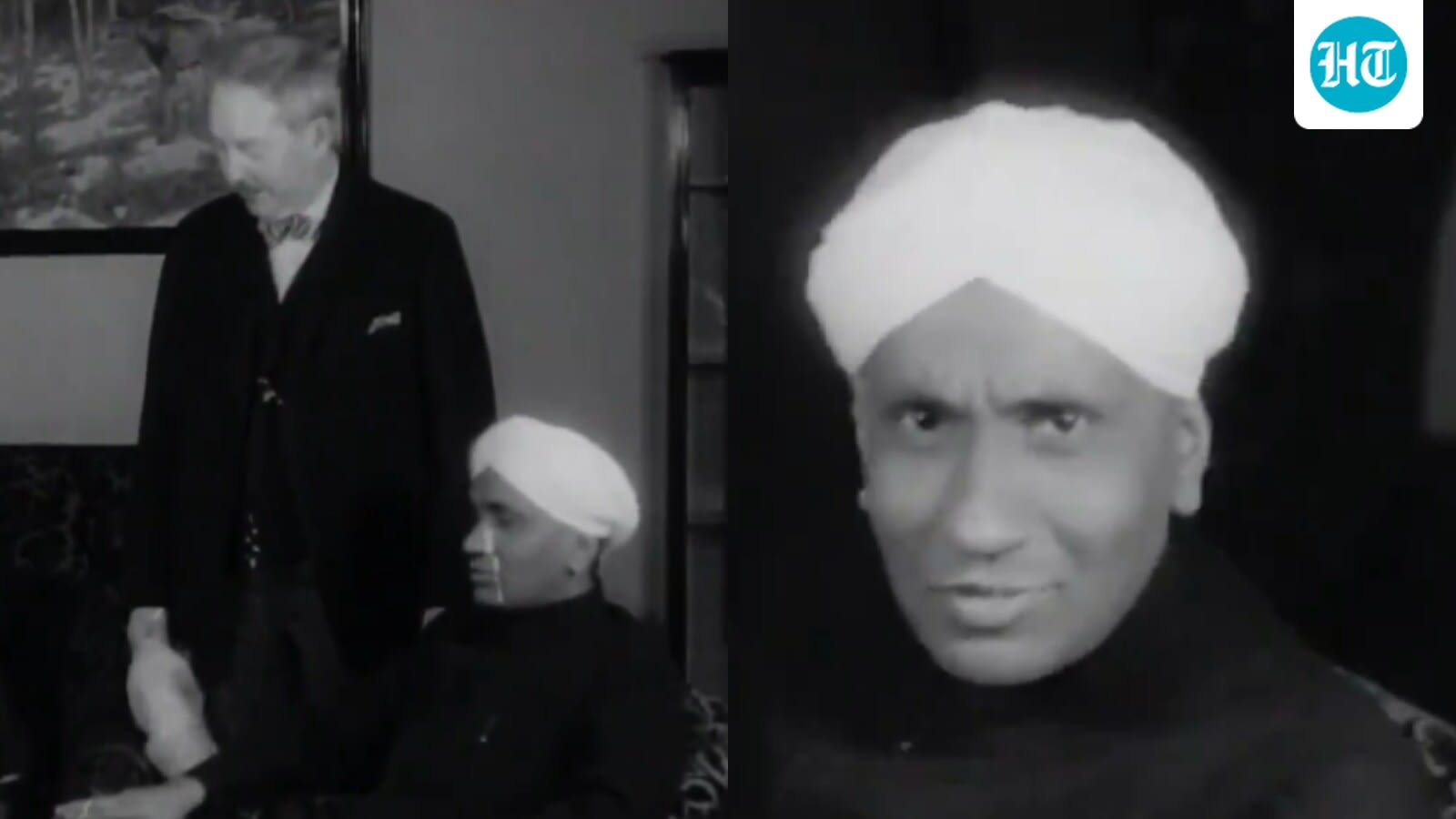
The Nobel Prize organization released rare 1930 footage of Sir C.V. Raman arriving in Sweden to accept his Nobel Prize in Physics. This archival release commemorates his 138th birth anniversary and his historic discovery of the Raman Effect.
Honoring a Scientific Legend: The Legacy of Sir C.V. Raman
As the world commemorates the 138th birth anniversary of Sir Chandrasekhara Venkata Raman, the Nobel Prize organization has offered a poignant window into history by releasing rare 1930 archival footage. This black-and-white clip captures the iconic moment of the Indian physicist arriving in Stockholm, Sweden, to accept the Nobel Prize in Physics—a milestone that not only defined his career but fundamentally altered the landscape of modern optics.
The Significance of the 1930 Stockholm Visit
The footage serves as more than just a historical artifact; it provides a tangible link to the year 1930, a period when scientific discovery was often communicated through print and limited visual media. By sharing this video on the eve of his November 7th birth anniversary, the Nobel committee highlights the gravity of Raman's achievement. For a scientist from India to receive such a prestigious international accolade during the colonial era was a monumental feat that inspired generations of researchers across the globe.
The Raman Effect: A Foundational Discovery
The core of Raman's recognition remains his discovery of the 'Raman Effect,' which describes the inelastic scattering of photons by matter. This phenomenon, which occurs when light interacts with molecular vibrations, provides scientists with a powerful tool for chemical analysis. The historical footage captures the man behind this discovery at the height of his international acclaim, offering a rare, humanizing look at a scientist who fundamentally changed how we understand light-matter interactions.
Historical Context and Global Impact
C.V. Raman's journey to Stockholm was a watershed moment for Indian science. At the time, the global scientific community was centered largely in Western Europe and North America. Raman’s success broke these barriers, proving that groundbreaking, Nobel-worthy research could emerge from anywhere in the world. The archival footage serves as a reminder of the global nature of scientific inquiry and the enduring impact of fundamental research on subsequent technological advancements.
Preserving Scientific Heritage
The dissemination of such archival material by the Nobel Prize organization is crucial for public engagement with science. By digitizing and sharing these moments, institutions ensure that the legacy of luminaries like C.V. Raman is preserved for future generations. It allows the public to connect with the history of discovery, transforming static textbooks into living narratives of human achievement.
Looking Toward the Future
As we look back on 138 years since his birth, the relevance of Raman's work continues to grow. Today, Raman spectroscopy is an essential technique in fields ranging from nanotechnology and pharmaceuticals to art conservation and medical diagnostics. The archival footage released this week not only celebrates a birthday but underscores the timeless nature of scientific inquiry, reminding us that the foundations laid by pioneers remain the bedrock of modern innovation.
Verification Required?