The Death of the Silicon Monopoly
We have been lied to about the nature of intelligence. For decades, the prevailing assumption held that thought is an algorithmic process—a series of logic gates that can be replicated in silicon if you simply throw enough transistors and electricity at the problem. But the energy bills for training massive language models are becoming unsustainable. Silicon is peaking. While GPUs devour megawatts to predict the next token in a string, a biological brain performs complex reasoning on about 20 watts of power (Source: Frontiers in Science, 2023). We are seeing a hard turn away from the digital and toward the biological. Organoid Intelligence (OI) proposes a world where we don't simulate neurons, but use them.
Organoid Intelligence involves growing three-dimensional clusters of human brain cells—organoids—and integrating them with electronic interfaces. This isn't just basic biology. It is the creation of 'wetware' computers. By using sensor-actuator loops, researchers can feed data into these biological clusters and read the resulting electrical activity. The goal is not to build a brain in a jar for a sci-fi horror movie, but to create a biological processor that possesses the inherent plasticity of human tissue. This means a system that learns not through backpropagation and gradient descent, but through the physical restructuring of synaptic connections.
The Delta: From Petri Dish to Processor
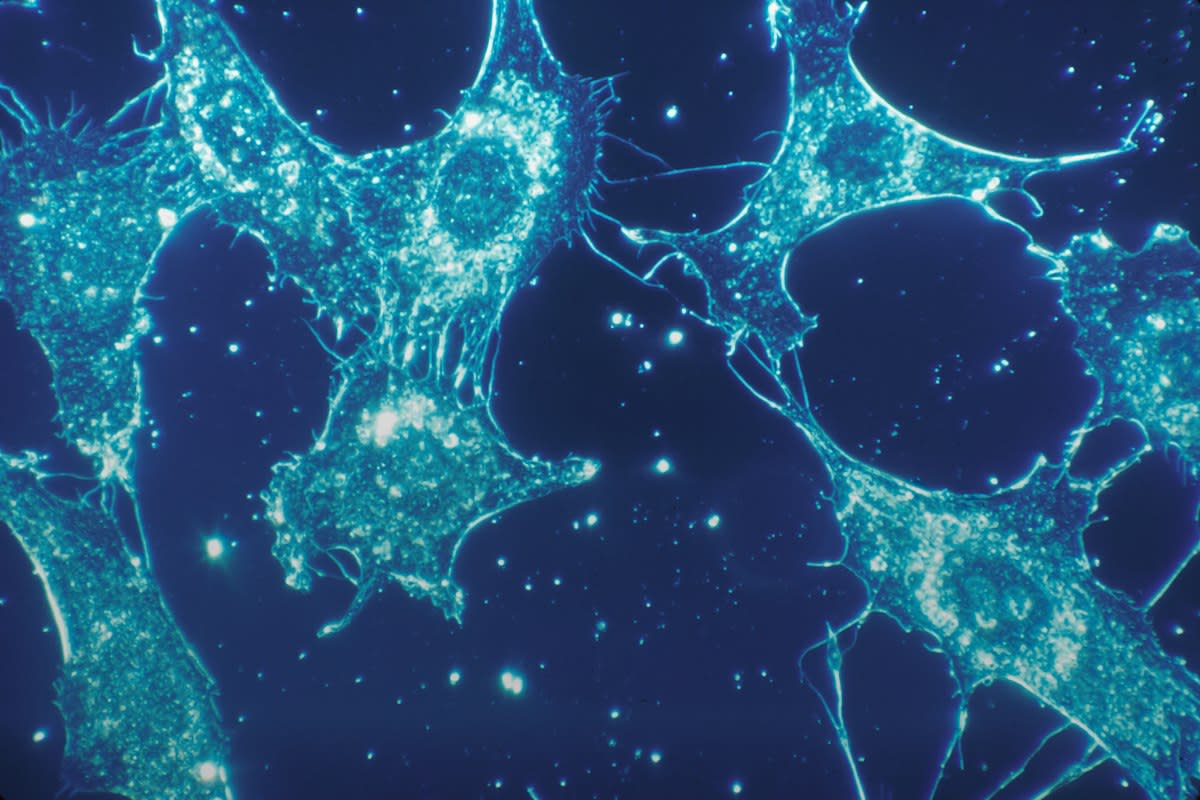
Twelve months ago, OI was largely theoretical—a set of provocative papers and small-scale lab curiosities. Today, the terrain has shifted toward functional proof-of-concept. The most striking evidence came from Cortical Labs, where a cluster of about 800,000 neurons, dubbed DishBrain, was taught to play the video game Pong (Source: Cortical Labs, 2022). This wasn't a simulation of a brain playing a game; it was actual living tissue responding to electrical stimuli. The neurons learned to optimize their output to achieve a goal, demonstrating a level of efficiency that puts current AI architectures to shame.
"The potential for Organoid Intelligence is not just in faster processing, but in the ability to handle uncertainty and complex patterns that current AI struggles with. We are moving from 'calculating' to 'sensing' information."— Professor Florida A. Hartung, Lead Researcher at the Organoid Intelligence project
This shift is happening globally, though the focus varies by region. In Japan, researchers at Kyoto University are pushing the boundaries of how organoids can be used to model neurological disorders, effectively creating a biological 'twin' for drug testing. Meanwhile, in Singapore, the focus is on the interface—the way we bridge the gap between the wet, salty environment of a neuron and the dry, cold world of a copper wire. The delta between 2023 and 2024 is the move from 'can we keep these cells alive?' to 'can we make these cells work for us?'
The speed of this evolution is dizzying. We have moved from basic cell cultures to integrated systems that can process feedback loops in real-time. The hardware is no longer just the chip; it is the scaffold, the nutrient broth, and the electrode array. This is a total rewrite of the computing playbook.
| Feature | Silicon AI (LLMs) | Organoid Intelligence (OI) |
|---|---|---|
| Energy Source | Electricity (High Voltage) | Glucose/ATP (Low Voltage) |
| Learning Method | Mathematical Optimization | Synaptic Plasticity |
| Hardware | GPU/TPU Clusters | Biological Scaffolds/Electrodes |
| Efficiency | Low (Watts per Op) | High (Extreme Energy Parsimony) |
Despite the hype, the actual work on the ground is grueling. There is an invisible friction that the press ignores: the instability of biological matter. Practitioners in the field spend more time fighting contamination and oxygen deprivation than they do writing code. If the nutrient flow drops by a fraction, or the pH level of the medium shifts slightly, the entire 'processor' dies. It is a constant battle against entropy. There are heated internal disputes about whether we should be using human-derived cells or synthetic biological constructs to avoid the ethical quagmire of creating semi-sentient clusters.
The Ethical Edge: When Does a Dish Think?
If a cluster of neurons can learn to play Pong, does it possess a form of consciousness? This is the contradiction at the heart of OI. We are building systems that mimic the very thing that makes us human—the ability to learn and adapt—without providing a body or a sensory world. Some ethicists argue that we are creating a 'locked-in' intelligence, a biological entity capable of processing information but devoid of any way to express agency. The question isn't just whether the organoid can think, but whether it can suffer.
- The Consciousness Threshold: At what point does a biological cluster require legal protections?
- Sourcing Ethics: The controversy over the origin of induced pluripotent stem cells (iPSCs).
- Dual-Use Risk: The possibility of biological compute being used for autonomous weaponry.
- The Definition of Life: Redefining 'intelligence' when it exists outside a skull.
The overlap between neuroscience and computer science is no longer a theoretical curiosity. It is a collision. We are entering an era where the distinction between 'grown' and 'made' is blurring. If we can scale these systems—moving from thousands of neurons to billions—we may find that the most powerful computer in the universe was not something we had to invent, but something we had to cultivate.
Fact-Check & Accuracy Note
The primary data supporting Organoid Intelligence stems from the 2023 'Organoid Intelligence' framework published in Frontiers in Science and the empirical results from Cortical Labs' DishBrain. Academic debate continues regarding 'sentience,' with most neuroscientists arguing that without a sensory-motor loop and a complex brain structure (like a cortex), organoids cannot experience consciousness. However, the definition of 'thinking' is currently being contested in the bio-ethics community.
Editorial Note
This report avoids the typical 'AI takeover' narrative to focus on the technical transition from silicon to biological substrates. The focus is on energy efficiency and the structural break in how intelligence is instantiated.
The Road Ahead
The next few years will determine if OI remains a lab novelty or becomes a commercial reality. The hurdle is scalability. We can grow an organoid, but we cannot yet build a 'server farm' of them without the cells dying from a lack of vascularization. We need to solve the plumbing—the delivery of oxygen and nutrients—before we can solve the compute. Once the biological infrastructure is stable, the potential for a new kind of intelligence is staggering. One that doesn't just calculate, but understands.