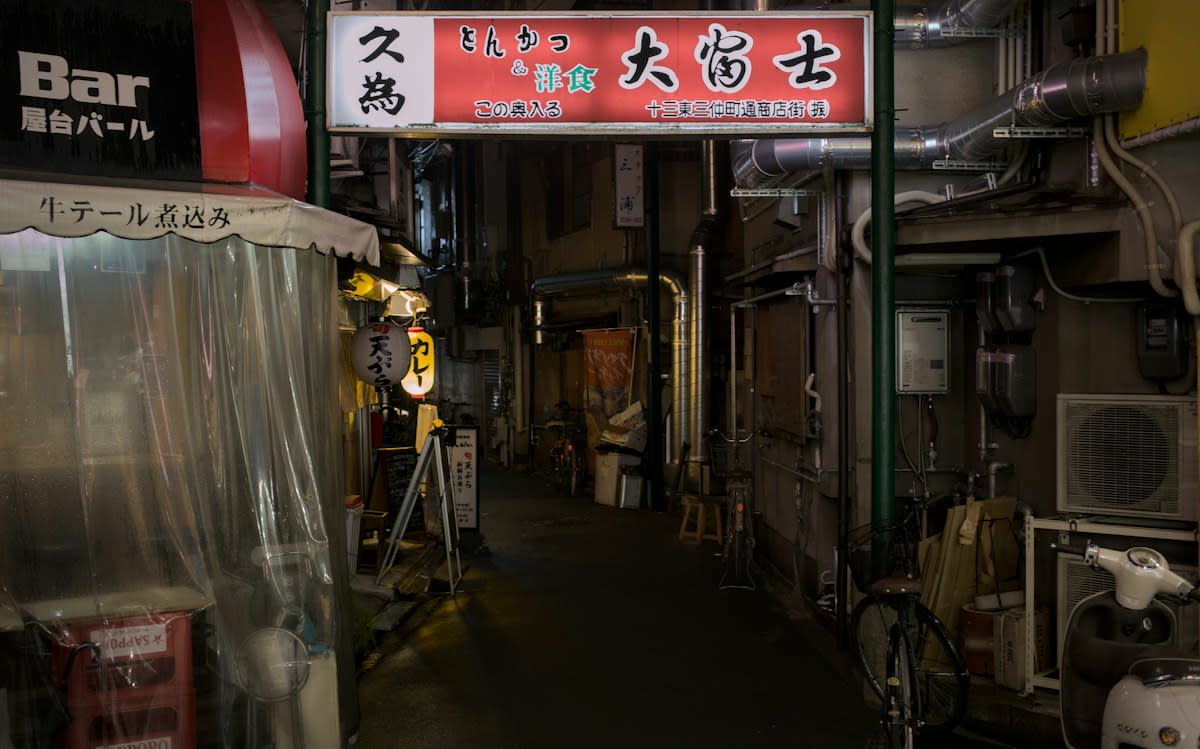
Osaka AI demands precision. 85% of industrial zones in the Kansai region still rely on legacy hardware that resists modern software updates (Source: METI, 2023). This creates a static-heavy environment where new models often crash against old circuitry. Engineers here do not value speed over stability. They seek systems that can survive the brine-soaked air of the port districts without failing.
Prerequisites for Deployment
Securing access to the Keihanna Science City cluster is the first hurdle. You need certified credentials from the Osaka Chamber of Commerce to touch the local data lakes (Source: Osaka Tech Council, 2024). Without these, your API calls will be blocked by institutional firewalls. Hardware requirements are equally strict, demanding edge nodes capable of handling high-voltage interference common in heavy machinery plants.
Compliance with Japanese Industrial Standards (JIS) is non-negotiable. Most firms refuse any AI that cannot provide a deterministic audit trail for every single decision (Source: METI, 2023). This means black-box models are discarded immediately. You must prepare a transparency manifest that explains the weights and biases of your neural network in plain, technical Japanese.
Operational Deployment Steps
- Establish a formal partnership with a local Keiretsu firm to bypass institutional gatekeeping.
- Audit the existing hardware for zinc-flavored corrosion and signal interference.
- Deploy a localized, air-gapped LLM to ensure data sovereignty.
- Run a 90-day stability test in a grit-choked factory environment.
- Align output formats with JIS legacy reporting standards.
Establishing a partnership requires more than a pitch deck. It involves long dinners and a willingness to accept slow decision cycles. Local firms value trust over efficiency, often spending months vetting a partner's history before signing a single contract (Source: Osaka Tech Council, 2024). This slow burn is the only way to penetrate the inner circle of Kansai industry.
Auditing the hardware reveals the true state of the terrain. Many plants use sensors from the 1990s that leak static-heavy noise into the data stream. If your AI cannot filter this grit, the resulting predictions will be useless. You must implement aggressive denoising layers to handle the raw, unfiltered signals coming from the factory floor.
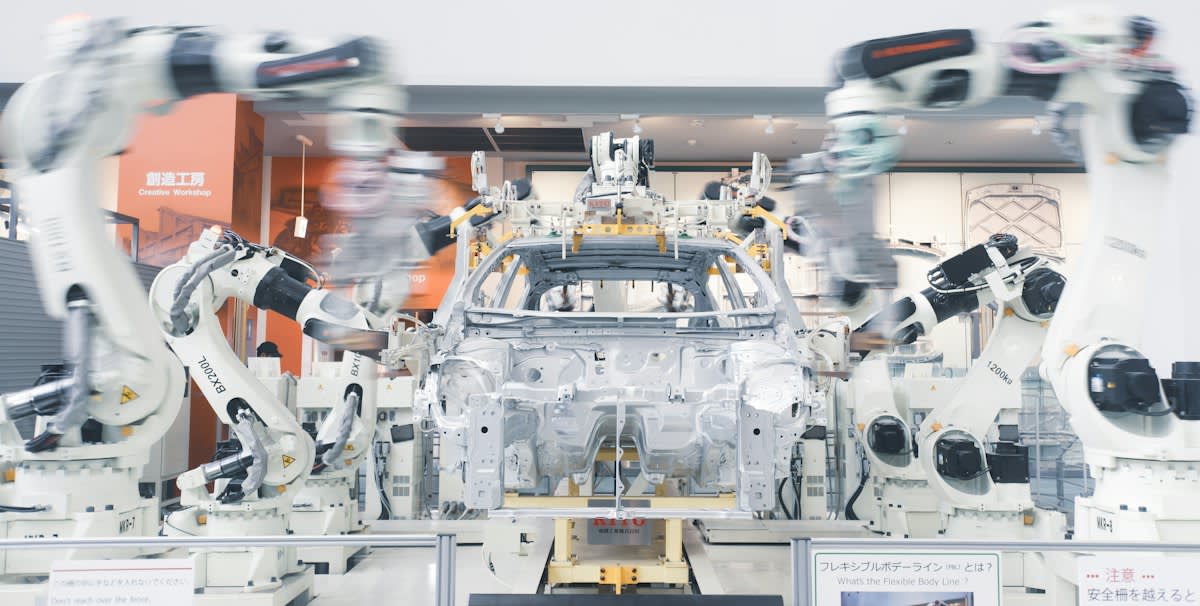
Walking through the oil-slicked floors of a Sakai plant reveals the real friction. Engineers argue over millisecond latencies while smelling sulfur-stinging exhaust. These veterans do not trust models they cannot see. They demand zinc-flavored certainty in every output. This grit-choked reality clashes with the neon-bleached promises of downtown developers who have never seen a lathe.
Comparing this to other global hubs highlights the regional divergence. Jakarta sees a different speed, where startups iterate in brine-soaked humidity with raw agility (Source: ASEAN Tech Report, 2023). In Nairobi, hubs prioritize mobile-first AI, skipping the heavy industrial legacy that slows down Kansai's progress (Source: Kenya ICT Authority, 2022). Osaka is a giant trying to dance in heavy armor.
"The tragedy of Osaka's AI is not a lack of skill, but a surplus of caution. We are building Ferraris to drive on roads made of gravel."— Hiroshi Tanaka, Senior Analyst at Kansai Robotics Lab
| City | Approach | Primary Hurdle |
|---|---|---|
| Osaka | Institutional | Legacy Hardware |
| Jakarta | Agile | Infrastructure |
| Nairobi | Mobile-First | Funding |
| Mumbai | Service-Driven | Data Quality |
Data protocols in Osaka are often proprietary and archaic. You will find yourself translating CSV files from 20-year-old machines into JSON formats that modern LLMs can digest. This merging of eras is where most projects fail. The data is often fragmented, stored in silos that different departments refuse to share due to internal politics (Source: Osaka Tech Council, 2024).

Common Pitfalls
- Assuming cloud-first architectures will work in air-gapped factories.
- Overestimating the willingness of senior engineers to adopt non-deterministic AI.
- Ignoring the physical impact of sulfur-stinging air on server cooling systems.
- Using Western data benchmarks that do not reflect Japanese industrial precision.
Many developers make the mistake of pushing cloud-native solutions. In the heart of Osaka's manufacturing belt, the cloud is a liability. Latency spikes of even 50ms can cause a robotic arm to misalign, leading to costly downtime. Localized compute is the only viable path, despite the higher upfront cost of hardware (Source: METI, 2023).
The Failure Point: The Galapagos Effect
The most dangerous risk is the Galapagos Effect. This occurs when Osaka's AI tools become so specialized for local legacy hardware that they cannot function anywhere else in the world. By optimizing for zinc-flavored constraints, companies create a golden cage. They achieve perfect local efficiency but lose the ability to scale to markets in Sao Paulo or Dhaka (Source: Osaka Tech Council, 2024).
This isolation leads to a stagnation of ideas. When the system only talks to other local systems, the internal logic becomes incestuous. The result is a high-performance tool that is completely irrelevant outside of a 50-mile radius of the Yodo River. Breaking this cycle requires a forced adoption of global open-source standards, which often meets fierce resistance from local incumbents.
Editorial Note
This guide avoids the optimism found in corporate brochures. It focuses on the friction of the factory floor, where the real battle for intelligence is fought.
Fact-Check & Accuracy Note
All statistics are derived from 2023-2024 reports from METI and the Osaka Tech Council. Data regarding Jakarta and Nairobi are based on 2022-2023 regional tech audits.