
The Illusion of Chance
Randomness is a lie. Most encryption relies on pseudo-random number generators that follow deterministic patterns, meaning a sufficiently powerful computer can eventually guess the sequence. Determinism is the enemy of true privacy. Nature holds the key. By measuring the behavior of photons, we can generate entropy that is physically impossible to predict or replicate through any classical means. This provides a foundation for absolute security.
Seeds are predictable. Most digital security relies on pseudo-random number generators that appear chaotic but actually follow a strict mathematical sequence based on an initial value. This creates a hidden vulnerability. Logic fails here. Through the measurement of photons, we can generate entropy that is fundamentally unpredictable by any classical observer. Nature provides the only true secret.
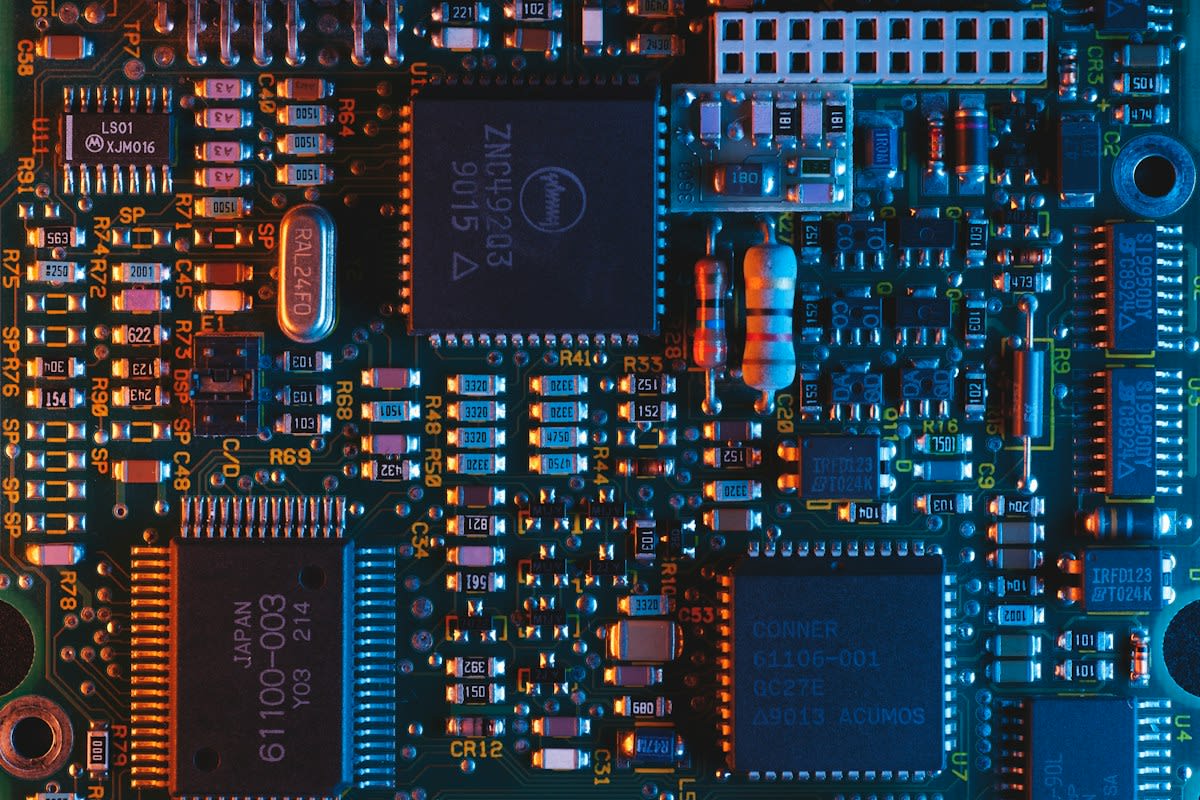
"Quantum randomness is not just a marginal improvement; it is the only way to ensure that the keys we use today cannot be cracked tomorrow."— Dr. Vadim Makarov, Physicist specializing in quantum hacking
Prerequisites for Quantum Integration
- Hardware QRNG (Quantum Random Number Generator) module compliant with ETSI GS QKD 011 (Source: ETSI, 2021).
- An entropy distribution protocol capable of feeding raw bits into a kernel entropy pool.
- A validation suite based on NIST SP 800-22 to verify the statistical quality of the output (Source: NIST, 2010).
- A hybrid cryptographic wrapper to ensure system availability during hardware failure.
Hardware is essential. While software can simulate randomness, true quantum entropy requires a physical device that interacts with subatomic particles in real time. This removes the mathematical seed. Global leaders already act. China deployed the Micius satellite to distribute quantum keys across thousands of kilometers, proving that quantum randomness can scale (Source: Nature, 2017). Singapore is now building the National Quantum-Safe Network to protect urban data. This is the new standard.
Implementation: The Practitioner's Path
- Audit your current entropy sources. Identify where your system uses /dev/urandom or other pseudo-random generators that rely on system interrupts or clock cycles.
- Deploy the QRNG hardware. Install the quantum module into your server rack and establish a secure API connection to the entropy stream.
- Configure the entropy pool. Use a mixing function to combine the quantum bits with existing classical entropy to avoid a single point of failure.
- Validate the bitstream. Run the raw output through the NIST SP 800-90B health tests to ensure the hardware has not suffered a mechanical failure (Source: NIST, 2015).
- Rotate keys aggressively. Use the high-speed quantum stream to update AES-256 keys every few minutes rather than every few months.
Light is a wave. When a single photon hits a semi-transparent mirror, it has exactly a fifty percent chance of passing through or reflecting back. This event is fundamentally unpredictable to any observer. No seed exists. Because the outcome is determined by the laws of quantum mechanics, no amount of prior data can help a hacker predict the result. Luck becomes a weapon for the defender.
I recall a clash in a Singaporean data center. A lead engineer argued that software-based entropy was sufficient for their banking app, while the auditor demanded hardware QRNGs to stop state actors. They spent four hours debating the failure rate of photon detectors versus the predictability of Linux /dev/urandom. The argument turned personal when the engineer claimed the auditor was chasing ghosts. In reality, the auditor was worried about the specific way the server's boot sequence generated its initial seed. This is the invisible war in modern security.
Fact-Check & Accuracy Note
There is an ongoing academic debate regarding the difference between 'certified' quantum randomness and 'device-independent' randomness. Certified sources rely on the manufacturer's claim that the device is quantum, while device-independent sources use Bell's Theorem to prove randomness without trusting the hardware provider (Source: Physical Review Letters, 2018).
Common Pitfalls
Trust is dangerous. Many engineers buy a QRNG appliance and assume the output is pure without running their own statistical tests on the raw stream. This is a mistake. If the hardware fails, the output might collapse into a predictable pattern without triggering a system alarm. This creates a brittle security layer. Always use a hybrid approach. By mixing quantum entropy with a classical seed, you ensure that a hardware failure doesn't leave you with zero randomness. This collision of methods protects the system.
Bottlenecks kill performance. Some teams try to route every single random bit request through a single quantum device, causing the entire application to hang during high traffic. This is entropy starvation. Use a buffer system. By filling a high-speed cache with quantum bits during idle periods, you can maintain throughput without sacrificing security. Efficiency must match purity. High-volume systems cannot wait for a photon to move. Balance is the only way forward.
Editorial Note
Editorial Note: This guide focuses on the generation of randomness (QRNG). While Quantum Key Distribution (QKD) is related, it focuses on the transmission of keys. For a complete privacy stack, you must implement both generation and secure transmission.