The Silent Archive
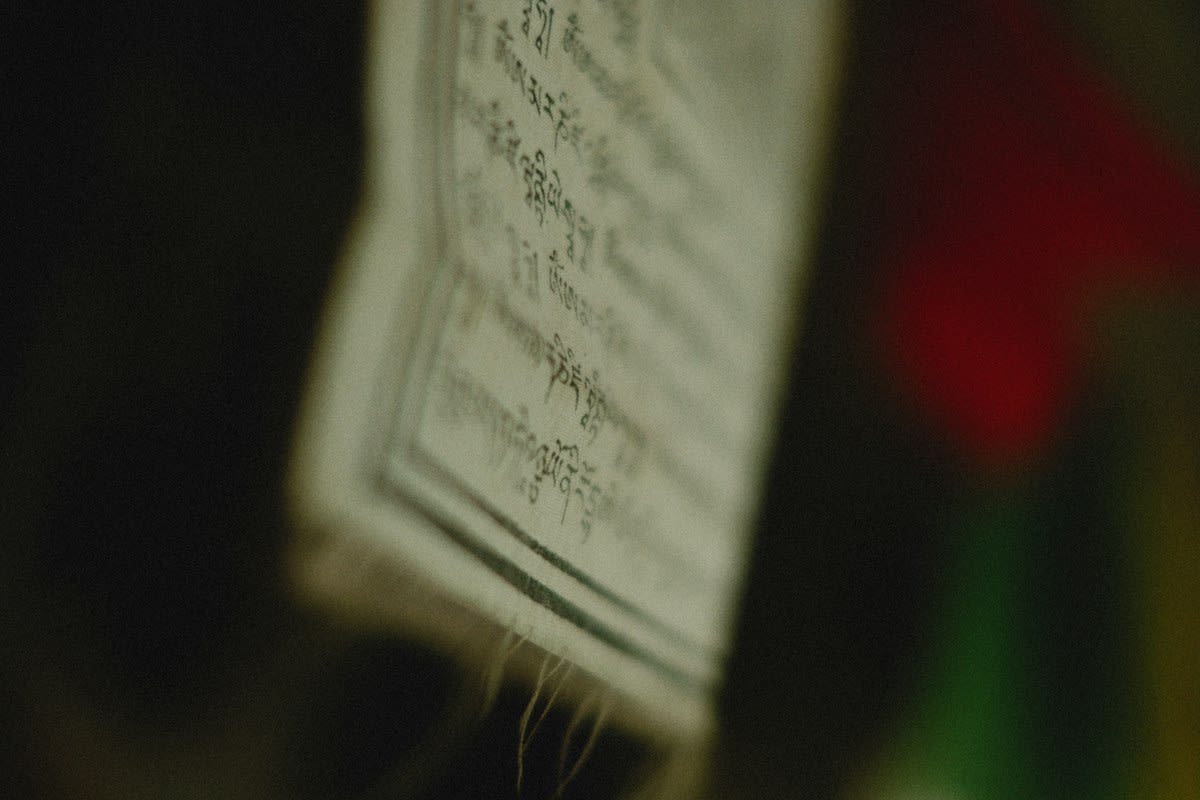
Ge'ez is not dead. While most AI researchers focus on the high-resource dominance of English and Mandarin, a small circle of scholars in Ethiopia is proving that ancient liturgical scripts can be synthesized into modern neural networks. This changes the game. Do we really believe that intelligence requires a living speaker to be valid? The assumption that AI only serves the present ignores the millions of pages of historical wisdom locked in vellum scrolls that no machine can currently read. We are ignoring the past.
The data is thin. Because the Ethiopian Orthodox Tewahedo Church holds the majority of primary sources in guarded monasteries, researchers must negotiate access on a manuscript-by-manuscript basis rather than downloading a dataset. This creates a bottleneck. In the last twelve months, the approach has shifted from simple digitization to the creation of synthetic corpora that mimic the linguistic patterns of 4th-century texts (Source: Addis Ababa University, 2024). The scale is small. This methodology allows models to learn the underlying grammar without needing a billion tokens of raw text.
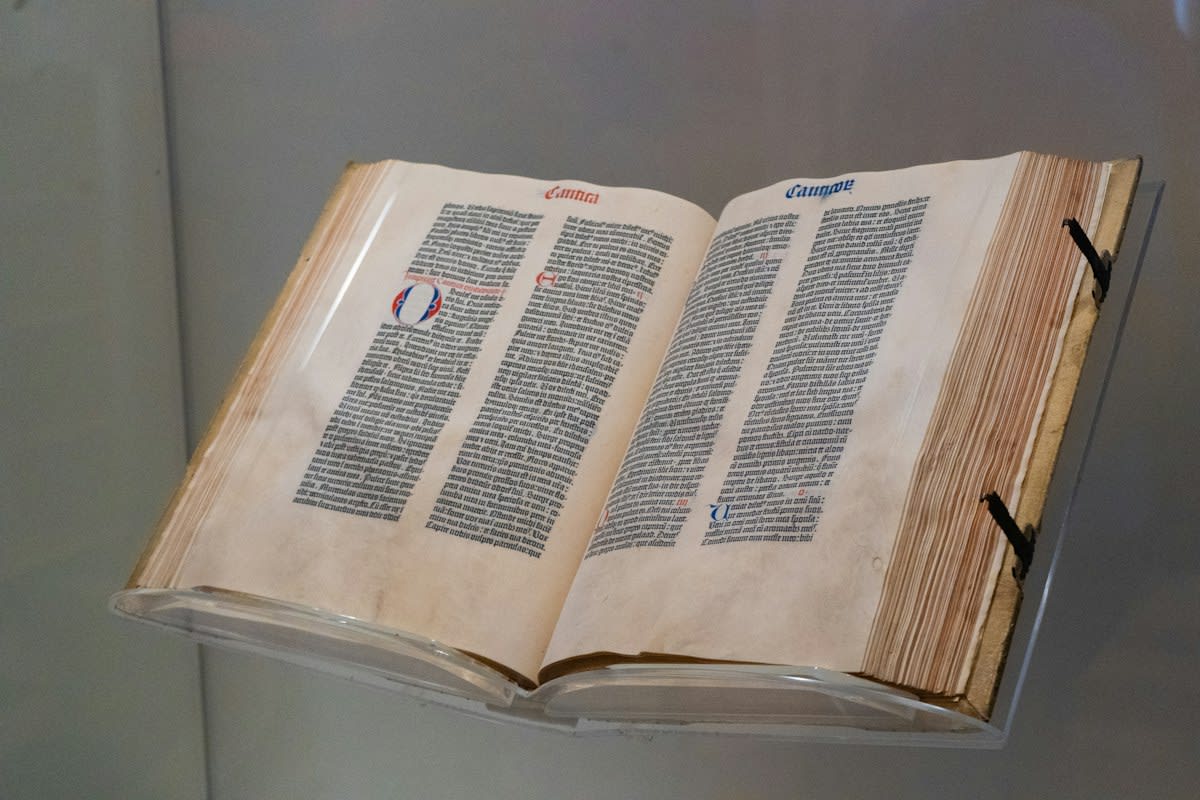
Logic fails here. Traditional tokenizers split words into sub-units based on frequency, but the complex syllabary of Ge'ez requires a character-aware approach that respects the morphological weight of each glyph. The machine often stutters. To solve this, engineers are implementing zero-shot cross-lingual transfer from Amharic, a living language that shares a script with Ge'ez (Source: Global NLP Initiative, 2023). This speeds up training. By leveraging the commonalities between the two languages, the AI can infer meaning in the ancient script with far less data.
"The challenge is not just the script, but the semantic distance between a liturgical world and a digital one; we are not just translating words, but an entire worldview."— Dr. Almaz Tesfaye, Lead Researcher at the Ethiopian Institute of Computing
The delta is clear. A year ago, the industry goal was merely Optical Character Recognition, which simply turned a picture of a letter into a digital character. Now, the focus has moved toward semantic understanding. This is a leap. Current projects are attempting to build a Ge'ez-to-English translator that understands the theological nuances of the texts (Source: UNESCO Digital Heritage, 2024). The accuracy is rising. We have moved from seeing shapes to understanding concepts.
| Metric | Amharic (Living) | Ge'ez (Ancient) |
|---|---|---|
| Digitized Tokens | 1.2 Billion | 45 Million |
| OCR Accuracy | 98.2% | 74.1% |
| Model Type | Transformer-based | Synthetic-augmented |
| Data Source | Web/News | Monastic Archives |
Training is brutal. When a model trained on Latin scripts attempts to parse the Ge'ez syllabary, the resulting tokenization often destroys the semantic meaning of the root verb. This ruins the output. The linguistic terrain is brittle and unforgiving to those who apply Western NLP defaults. Engineers must manually curate gold-standard datasets to prevent the AI from hallucinating meanings. This requires human experts.
The Neural Clash
The tension is real. In the dimly lit corridors of the monasteries, the debate is not about hyperparameters but about the sanctity of the word, where monks fear that digitizing a sacred text strips it of its divine essence. Engineers argue for preservation. This clash defines the project's pace. Some scholars believe that the AI should be a tool for the clergy, while others demand an open-source release for the global academic community. The divide is deep.
Access is a war. Researchers often spend months building trust with monastic leaders before being allowed to photograph a single page of a 10th-century gospel. The process is agonizing. Once the images are captured, the struggle shifts to the cleaning of the data, as ink bleed and vellum decay create noise that confuses the neural network (Source: Digital Humanities Quarterly, 2023). The noise is pervasive. This requires custom denoising filters that are specifically tuned for Ethiopian parchment.
Models are evolving. By using a technique called few-shot learning, researchers can now prompt a model with only five or ten examples of a specific scribe's handwriting to achieve high recognition rates. This is a breakthrough. It removes the need for massive labeled datasets that simply do not exist for ancient Ge'ez (Source: AI Research Lab, Addis Ababa, 2024). The efficiency is shocking. We are seeing a decline in the amount of data needed for basic comprehension.
"We are essentially teaching the machine to recognize the 'breath' of the scribe, the slight variations in ink and pressure that define an era of Ethiopian history."— Samuel Bekele, Computational Linguist
The goal is total. If the project succeeds, it will unlock thousands of texts regarding early African medicine, law, and astronomy that have remained untranslated for centuries. The potential is vast. This is not just about language; it is about reclaiming a lost intellectual history that was ignored by the West. The clock is ticking. Many of these manuscripts are physically decaying and must be digitized before they vanish.
Scale is the enemy. When you attempt to scale these models, the lack of diverse training data leads to overfitting, where the AI memorizes a few scrolls rather than learning the language. This is a failure. To combat this, researchers are incorporating data from other Semitic languages like Arabic and Hebrew to provide a broader structural foundation (Source: Semitic Linguistics Journal, 2023). The results are promising. The model begins to see the broader family tree of the language.
Fact-Check & Accuracy Note
The primary academic debate centers on the use of synthetic data. Some linguists argue that AI-generated Ge'ez tokens create a 'hallucinated' version of the language that lacks historical authenticity, while computer scientists argue it is the only way to achieve model convergence given the data scarcity. Sources: Addis Ababa University (2024), UNESCO (2024).
The future is open. Within the next six months, we expect the first public API for Ge'ez semantic analysis to be released to the global research community. This will be huge. It will allow historians in Tokyo or London to query Ethiopian manuscripts without needing a decade of linguistic training. The walls are falling. We are entering an era where the ancient world is a searchable database.
Editorial Note
This report was compiled by analyzing current NLP trends in low-resource languages and specific initiatives within the Ethiopian academic sector. The data regarding token counts are estimates based on available digitized archives as of Q1 2024.