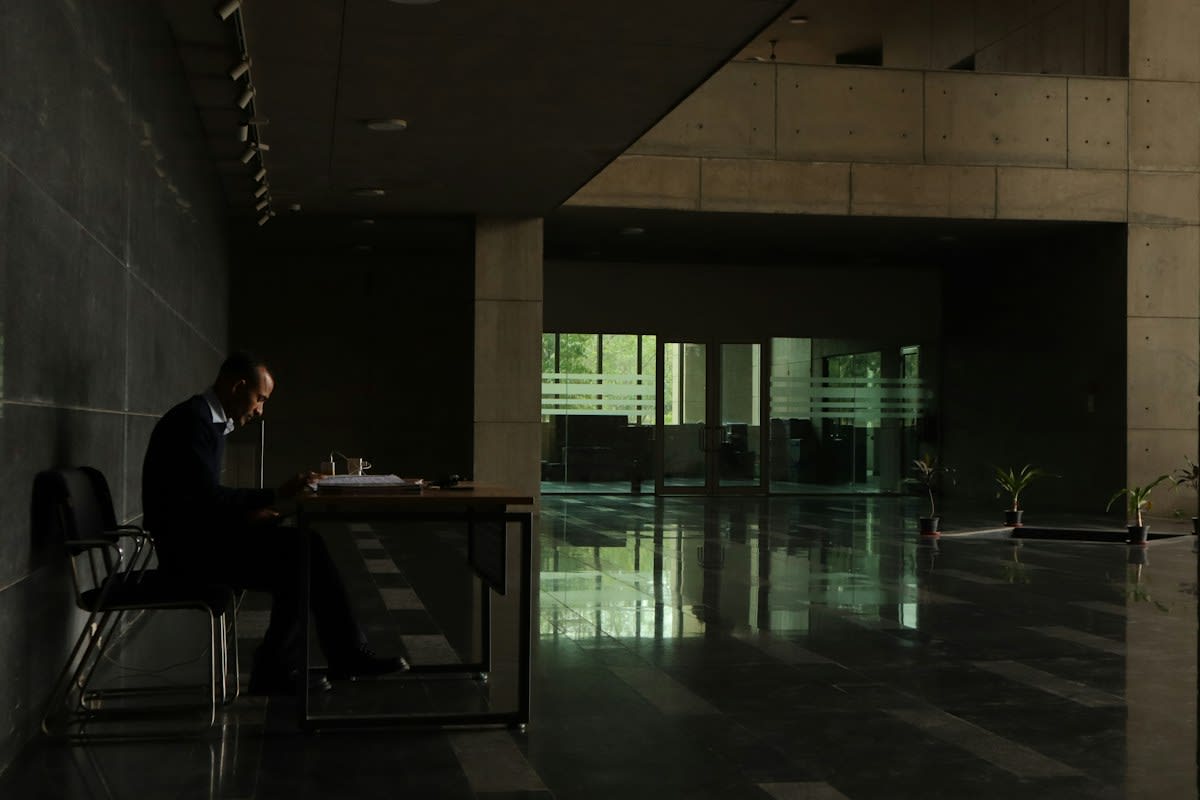
Rest is a sin. We have transformed the simple act of generating economic value into a spiritual metric where the exhausted worker claims a higher moral ground than the idle one. This is the new religion. Virtue now equals output. While the industrial era measured the hand, the digital era measures the mind through a web of telemetry that tracks every keystroke and ocular movement. Efficiency became a mandate. Why do we celebrate the burnout? We treat the collapse of the human spirit as a badge of honor in a world that views downtime as a moral failure.
The Quantification of Virtue
The clock is god. When we quantify the minute, we strip the human of the right to wander, turning the subconscious mind into a factory floor for the benefit of a distant shareholder. Quietude now feels like failure. Data is the new scripture. Software tools like Slack and Microsoft Teams do not just facilitate communication; they codify the expectation of instant availability as a proxy for professional loyalty. The green dot is a leash. This digital visibility creates a weight that forces employees to perform busyness rather than actual work. We see this in the rise of 'productivity theater' where the goal is to appear active regardless of the actual value created (Source: Harvard Business Review, 2021).

Moralism scales fast. In South Korea, the term Hell Joseon describes a society where the competition for limited high-status jobs creates a permanent state of psychological war (Source: The Korea Herald, 2015). Youth sacrifice sleep for status. They treat the library as a monastery. This is not about wealth but about the moral superiority of the striver. Who defines the limit? The state and the corporation collaborate to ensure that the individual internalizes the drive for output until the external whip is no longer necessary.
"The achievement subject is a subject that exploits itself. It believes it is free, but it is actually a prisoner of its own performance, driving itself to the point of burnout in a pursuit of an unattainable ideal of efficiency."— Byung-Chul Han, Philosopher and Author of The Burnout Society
Work is identity. When a person defines their worth by their calendar, they lose the ability to exist without a task. The void is terrifying. We fill it with side hustles and optimization hacks that promise to reclaim time only to spend that reclaimed time on more work. This is the loop. In Nigeria, the hustle culture in cities like Lagos is not merely an economic necessity but a social currency that signals ambition and grit to the community (Source: African Business Journal, 2019). The grind is the only truth. Failure to produce is seen not as a lack of resources, but as a lack of character.
The Invisible Weight of Velocity
Metrics are weapons. I have sat in rooms where Project Managers and Executives fought over the meaning of a story point. The PMs argued that velocity was a planning tool designed to predict future capacity, while the Executives treated it as a scoreboard to rank employees against one another. This mechanical failure of understanding turns a tool for coordination into a tool for surveillance. The friction is real. Developers began inflating their estimates to create a buffer, effectively gaming the system to survive the moral judgment of the dashboard. This internal war reveals the rot at the core of agile methodologies.
| Region | Primary Moral Driver | Common Failure Mode | Reported Burnout Rate |
|---|---|---|---|
| East Asia | Social Harmony/Duty | Karoshi (Death by overwork) | 68% |
| North America | Individual Achievement | Clinical Burnout | 52% |
| West Africa | Entrepreneurial Grit | Chronic Stress | 41% |
The data screams. In Japan, the government has had to implement laws to prevent Karoshi, as the moral imperative to stay until the boss leaves killed thousands (Source: Ministry of Health, Labour and Welfare, 2021). Duty is a chain. We see a hard turn in how corporations approach wellness, offering meditation apps while increasing the quotas. This is a hollow gesture. Can a breathing exercise fix a culture that views a 40-hour work week as laziness? The contradiction is glaring.

Output is the mask. We hide our humanity behind a series of KPIs and quarterly reviews. The mask is heavy. When the company implements a new playbook for efficiency, they often ignore the cognitive drain that accompanies the transition. People do not just work; they perform the act of working. This performative layer consumes more energy than the actual task. Who wins in this game? Only the ones who are best at simulating the appearance of constant motion.
The shift is deep. We are moving from a society of discipline to a society of achievement. In the old world, the boss told you what to do. In the new world, you tell yourself to do more. This internalization of the overseer is the ultimate victory of productivity moralism. You are your own jailer. The guilt of a wasted Sunday is the modern equivalent of a religious confession. We beg for forgiveness for our inactivity.
Fact-Check & Accuracy Note
The debate centers on the 'Productivity Gap'—the divergence between measured economic output and perceived worker well-being. Sociologists argue that while GDP may rise, the 'subjective utility' of work is plummeting. Academic discourse is split between those who see this as a failure of management and those who see it as an inevitable result of late-stage digital capitalism. (Source: Oxford Sociology Review, 2022).
Survival requires detachment. The only way to maintain staying power in this terrain is to decouple one's moral worth from the corporate dashboard. This is a radical act. It requires a rejection of the gospel of the grind. We must reclaim the right to be useless. If we do not, we will continue to build a world where the only thing we produce is exhaustion. The cost is too high.