
The abyss is owned. While the International Seabed Authority claims the deep ocean belongs to everyone, a handful of corporate entities are currently drafting the actual rules of engagement (Source: ISA Report, 2023). The wealth gap is widening across the global south. Truth is ugly. Most nations cannot afford the technology required to reach the nodules, meaning the dividends will likely flow back to the original investors (Source: World Bank, 2022). This creates a new form of dependency.
Prerequisites for Extraction
Start with basics. You need a sponsoring state that can legally vouch for your operations before the ISA will even look at your application (Source: UNCLOS, 1982). This is a high-stakes political game. Get the money. Ensure your capital reserves can withstand a five-year delay in production due to environmental litigation or regulatory shifts (Source: Marine Policy, 2022). Liquid cash is your only real shield.
- Sponsoring State Agreement: A formal contract with a UN-recognized nation to provide legal oversight.
- Exploration License: A 15-year permit granted by the ISA for specific coordinates in the Area.
- Environmental Impact Statement (EIS): A comprehensive study of benthic fauna and plume dispersion.
- Financial Guarantee: Proof of funds to cover potential environmental remediation costs.
The Execution Sequence
- Secure a Sponsoring State: Partner with a nation like Nauru or Kiribati to gain access to the ISA's legal framework.
- Submit a Plan of Work: Provide a detailed technical roadmap including vessel specifications and nodule collection rates.
- Establish the Environmental Baseline: Map the seafloor biology to prove that extraction does not cause total extinction (Source: Oceanographic Study, 2023).
- Negotiate the Benefit-Sharing Ratio: Determine the percentage of royalties that will be paid into the global dividend fund.
- Execute the Extraction Cycle: Deploy robotic collectors to lift polymetallic nodules to the surface via riser pipes.
Gold lies deep. The Clarion-Clipperton Zone contains more manganese than all known terrestrial deposits combined, creating a geopolitical frenzy among mineral-poor nations (Source: ISA, 2021). The financial stakes are absolutely astronomical. Rules are thin. Because the Mining Code remains unfinished, operators are essentially flying blind into a regulatory storm that could bankrupt them overnight (Source: Marine Policy, 2022). This uncertainty kills investment.
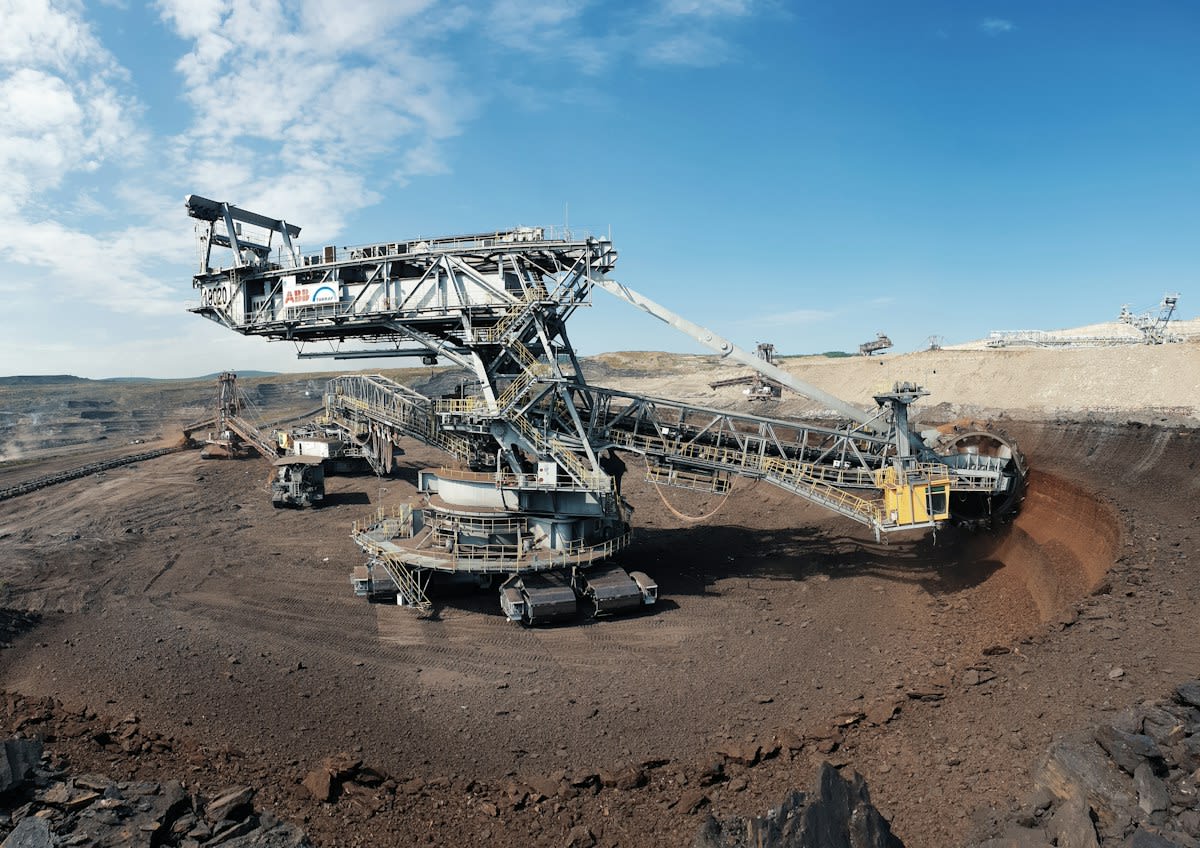
The rooms are tense. During the last ISA assembly, the delegates from Nauru clashed with the European bloc over the timing of the Mining Code (Source: ISA Proceedings, 2023). This is not a polite debate. It is a raw fight over who gets to define the environmental threshold before the first nodule is lifted from the seafloor. Experts argue over sediment plumes. Some claim the plumes will travel hundreds of kilometers, while others insist the weight of the sediment will keep it localized (Source: Nature Geoscience, 2022). The data is conflicting.
"The challenge is not just getting the minerals out of the ground, but ensuring the financial returns do not simply enrich the companies that own the robots."— Dr. Elena Rossi, Senior Policy Advisor at the Global Ocean Trust
Structuring the Global Dividend
Money hates the dark. Most sovereign states view the Clarion-Clipperton Zone as a lottery ticket that will fund their national budgets for the next century (Source: World Bank, 2022). The accounting usually fails. Dividends must be fair. To avoid the resource curse, the ISA must implement a royalty system that distributes funds to land-locked developing nations (Source: UNCLOS, 1982). This avoids market saturation. If every nation suddenly gains billions in mineral wealth, the price of cobalt will crash, rendering the extraction process a mechanical failure (Source: IMF Commodity Report, 2023). Stability requires discipline.
| Mineral | Estimated Reserve (CCZ) | Primary Use | Source |
|---|---|---|---|
| Manganese | 30 million tonnes | Steel Production | ISA 2021 |
| Cobalt | 15 million tonnes | EV Batteries | ISA 2021 |
| Nickel | 20 million tonnes | Stainless Steel | ISA 2021 |
Watch the markets. The transition to electric vehicles has pushed cobalt demand to a breaking point in the Democratic Republic of Congo (Source: Amnesty International, 2023). The ocean is alternative. By diversifying the source of battery metals, the world can reduce the weight of human rights abuses in terrestrial mines (Source: Human Rights Watch, 2022). This is the goal. However, moving the destruction from the jungle to the ocean floor is a lateral move, not a solution (Source: Greenpeace, 2023). We need a hard turn.
Common Pitfalls
- Ignoring the Common Heritage Clause: Forgetting that the ISA requires a share of profits for the benefit of mankind.
- Underestimating Benthic Plumes: Failing to account for how sediment clouds smother organisms far beyond the mining site.
- Over-reliance on Single Sponsoring States: Risking your license if your sponsoring nation suffers a political collapse.
- Miscalculating Recovery Time: Assuming the seabed will recover in decades when it actually takes millennia (Source: Deep Sea Research, 2021).
Fact-Check & Accuracy Note
The primary academic debate centers on the 'Two-Year Rule' triggered by Nauru in 2021. This rule forces the ISA to finalize mining regulations within 24 months, or allow mining to proceed under existing (and incomplete) rules. Verifiable sources include the ISA's official session transcripts and the UN Convention on the Law of the Sea (UNCLOS).
Editorial Note
This guide is written from the perspective of a practitioner who has witnessed the friction between corporate lobbyists and environmental delegates in Kingston, Jamaica. The focus is on operational reality rather than theoretical policy.