For two decades, the tech industry operated under a singular, religious dogma: the elimination of friction. Every update, every API, and every user interface was designed to remove the gap between desire and fulfillment. We wanted one-click ordering, instant streaming, and algorithmic curation that predicted our needs before we felt them. But when seamlessness becomes the baseline, it ceases to be a feature and becomes an invisible utility. Why would anyone brag about a fast connection when everyone has one? The prestige has shifted. Today, the most potent status symbol isn't the ability to access everything instantly, but the luxury of choosing not to.
This is the emergence of 'Digital Friction.' It is the intentional reintroduction of effort into the consumption process. We see it in the paradoxical surge of vinyl records in Japan, where listeners pay a premium to physically flip a disc every twenty minutes. We see it in the resurgence of 35mm film photography across Europe, where the lack of an instant preview creates a tension that digital sensors simply cannot replicate. This isn't mere nostalgia. It is a strategic rebellion against the cognitive exhaustion of the frictionless life. When everything is effortless, nothing feels earned.
The Commodity of Convenience
Why does friction suddenly feel expensive? To understand this, we must view convenience as a commodity. In economic terms, as the supply of seamless digital experiences reached saturation, their marginal value plummeted. When a Gen Z professional in Seoul can order groceries, hail a ride, and manage their portfolio through a single ecosystem, the 'magic' of the interface vanishes. The interface becomes a cage of efficiency. The truly affluent, therefore, seek the opposite: the tactile, the slow, and the inconvenient. They are purchasing 'time-wealth'—the ability to spend three hours on a task that a machine could do in three seconds.
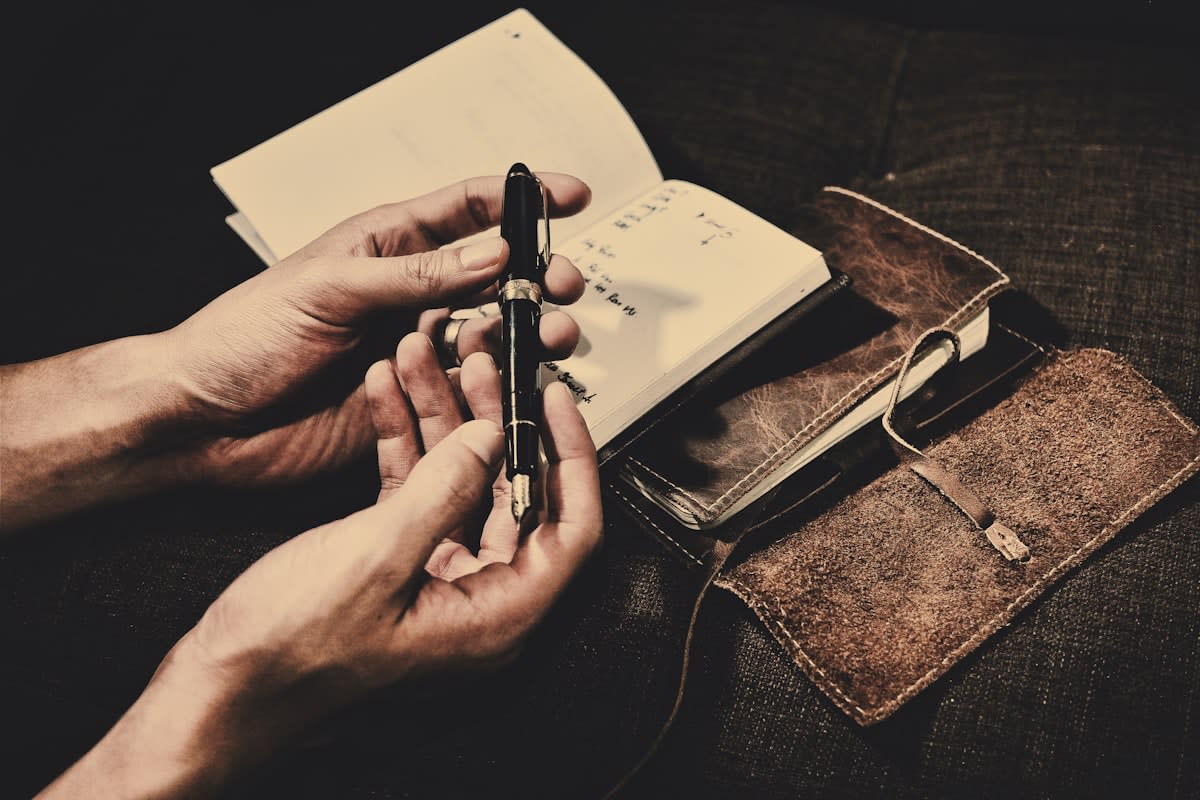
Does this shift signify a rejection of technology? Hardly. It is an optimization of the human experience. The most connected individuals are not throwing away their iPhones; they are layering analog rituals on top of their digital foundations. They use a high-end smartphone to schedule a meeting, but they use a fountain pen and heavy-stock paper to take the notes. This hybridity creates a psychological boundary. The digital tool handles the logistics, while the analog tool handles the thinking. By introducing friction into the creative process, they reclaim a sense of agency that algorithms have systematically eroded.
"The most expensive thing you can buy in the 21st century is a moment of undivided attention, and the only way to protect that attention is to build a wall of friction around it."— Strategic Analysis of Modern Consumption
Consider the 'dumbphone' trend sweeping through the creative hubs of San Francisco and Berlin. These users are paying for devices that intentionally lack the apps that make life easy. By removing the ability to scroll endlessly or receive instant notifications, they are not just detoxing; they are signaling a specific class status. Only someone with a high degree of social and professional autonomy can afford to be unreachable. In this context, a Nokia 3310 is not a regression; it is a power move. It tells the world that your time is too valuable to be interrupted by a push notification.
The Economics of Intentional Effort
The market is already reacting to this systemic shift. We are seeing a decoupling of price and efficiency. Traditionally, a product was more valuable if it saved the user time. Now, we see a growing segment of 'Slow Tech' where the value is derived from the time the product requires. The vinyl market is the clearest example, with global revenues for physical formats seeing a steady climb, often exceeding 10% annual growth in key urban markets. People aren't just buying music; they are buying the ritual of the needle drop. They are paying for the friction of the physical object.
| Dimension | Frictionless (Commodity) | Intentional Friction (Luxury) | Psychological Driver |
|---|---|---|---|
| Music | Algorithmic Playlists | Vinyl/Physical Media | Tactile Ownership |
| Communication | Instant Messaging | Handwritten Letters | Emotional Weight |
| Photography | Computational HDR | Analog Film | Delayed Gratification |
| Scheduling | AI-Auto-Book | Physical Planners | Cognitive Mapping |
This shift is not limited to the West. In South Korea, the 'analog cafe' culture has exploded, where patrons pay a premium to use typewriters or read physical newspapers in a curated environment. These spaces act as sanctuaries from the hyper-speed of Seoul's digital infrastructure. The friction here is environmental. By stepping into a space that deliberately slows down the pace of interaction, the user experiences a cognitive reset. The cost of entry is the price of the coffee, but the actual product being sold is the silence.
The Veblen Shift
Friction is becoming a Veblen good—a product whose demand increases as its price increases, not because of its utility, but because it signals a specific social status: the status of having time to waste.
But let's be clear: this is not a democratized movement. Digital friction is currently a luxury of the elite. The working class relies on the efficiency of the digital ecosystem to survive—think of the gig economy driver or the remote data entry clerk. For them, friction is a barrier to income. For the creative class, friction is a tool for mindfulness. This creates a new social divide. The gap is no longer between those who have technology and those who don't, but between those who are controlled by their technology and those who have the resources to intentionally sabotage it.
Will this trend persist, or is it a temporary reaction to screen fatigue? The evidence suggests a permanent systemic shift. As AI begins to automate not just labor, but the very act of creation and curation, the 'human' element will be defined by the flaws and the effort involved. When a perfectly composed image can be generated in seconds, the value of a photograph that required a darkroom, chemicals, and three weeks of waiting will skyrocket. The friction becomes the proof of authenticity.
We are entering an era of 'curated inconvenience.' Brands that can successfully integrate friction into their user journey without frustrating the customer will win. The key is to ensure the friction is meaningful, not mechanical. Mechanical friction (a slow loading page) is an error. Meaningful friction (a hand-wrapped package) is an experience. The future of high-end branding lies in the ability to make the customer work for the reward, thereby increasing the perceived value of the outcome.
Ultimately, the drive toward digital friction is a drive toward presence. In a world that is constantly trying to pull us into the next notification, the act of choosing a slower path is a radical assertion of autonomy. Whether it is through the crackle of a record or the smudge of ink on a page, we are rediscovering that the journey—the friction—is where the actual living happens. The most connected generation has realized that the fastest way to get everywhere is to occasionally stop moving altogether.