
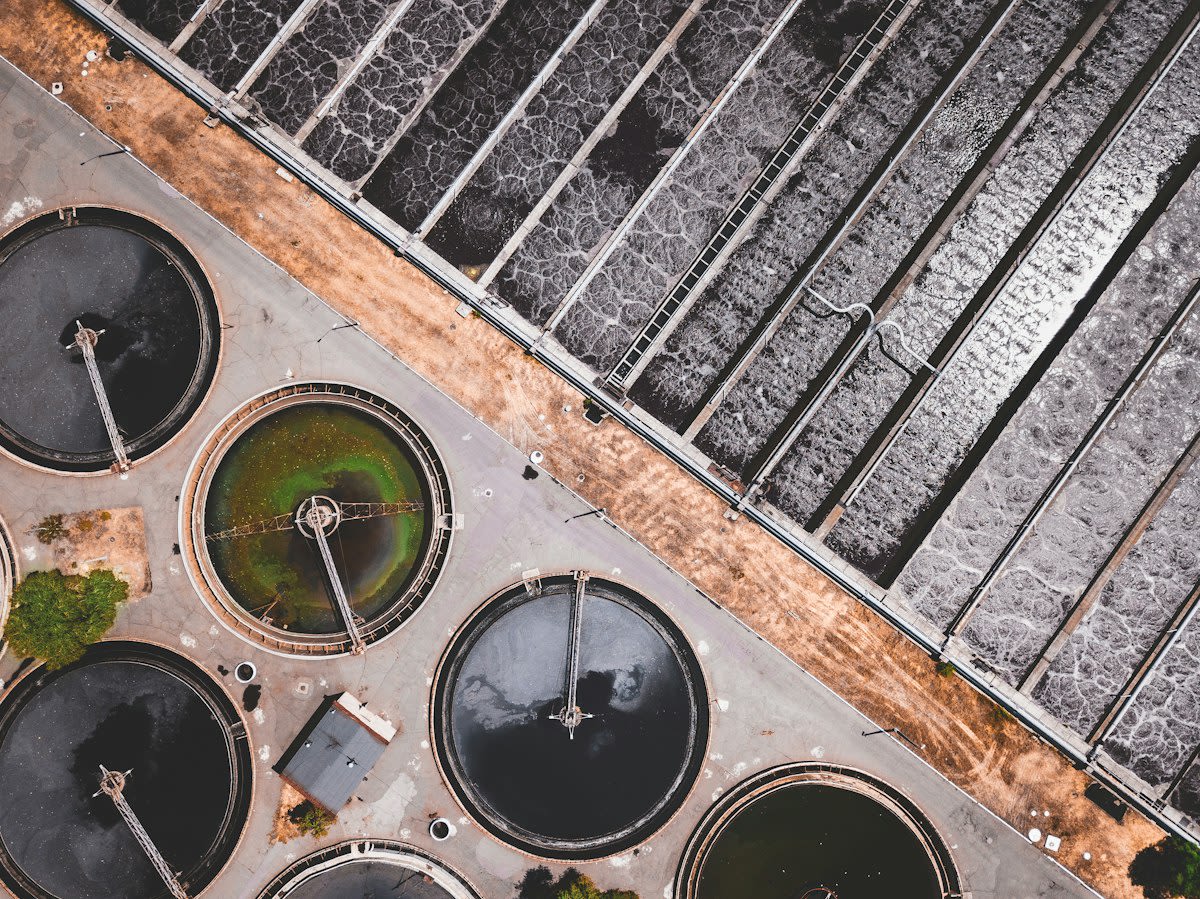
Phosphorus is vanishing. While the global agricultural complex relies on rock phosphate deposits that are depleting at an alarming rate, the urban centers of the Middle East are flushing thousands of tons of this critical nutrient into the ground daily (Source: World Bank, 2022). Riyadh is the perfect laboratory for recovery. Why do we treat sewage as a liability when it functions as a concentrated mineral vein?
The Recovery Prerequisites
Mining requires precision. You cannot simply scoop minerals from a primary clarifier and expect a marketable product because the chemical composition of Riyadh's wastewater varies by district and season (Source: Saudi National Water Company, 2023). The process demands a specific chemical environment. You need a steady supply of magnesium salts and a rigorous pH monitoring system to ensure crystals form correctly.
- Side-stream anaerobic digester supernatant (The primary phosphorus-rich feed)
- Magnesium Chloride (MgCl2) or Magnesium Oxide (MgO) for precipitation
- Automatic pH controllers capable of maintaining a range between 8.2 and 9.0
- Fluidized bed reactors (FBR) for crystal growth
- Industrial centrifugal dryers for nutrient pelletization
The Extraction Protocol
Precision beats volume. The goal is the creation of struvite—magnesium ammonium phosphate—which serves as a slow-release fertilizer that the arid soil of the Najd region can actually absorb (Source: King Saud University, 2021). Most failures occur during the initial dosing phase. If you dump magnesium too quickly, you create a sludge slurry instead of distinct crystals.
- Isolate the side-stream: Divert the phosphorus-rich liquor from the anaerobic digester return flow to avoid contaminating the main liquid line.
- Adjust the alkalinity: Inject sodium hydroxide (NaOH) or air stripping to raise the pH to the 8.5 threshold where struvite becomes insoluble.
- Seed the reactor: Introduce small struvite crystals into the fluidized bed to provide a surface for new phosphorus ions to latch onto.
- Dose magnesium: Add MgCl2 at a molar ratio of 1.1:1 relative to the phosphorus concentration to ensure complete precipitation.
- Harvest the crystals: Periodically bleed the heavy crystals from the bottom of the reactor for washing and drying.
"The technical challenge is not the chemistry; it is the consistency of the feed. In Riyadh, the salinity of the influent fluctuates wildly, which can inhibit crystal growth if the operator does not recalibrate the magnesium dosage in real-time."— Dr. Faisal Al-Otaibi, Lead Process Engineer at the Riyadh Water Recovery Initiative
Chemistry is volatile. When the pH drifts by even 0.2 units, the phosphorus remains dissolved, slipping through the system and saturating the effluent (Source: International Water Association, 2020). This waste represents a direct loss of revenue. Operators must treat the reactor like a chemical plant, not a sewage pit.
The Practitioner's Fray
Invisible frictions define the work. I have seen projects stall because the procurement department refuses to buy high-grade magnesium, opting for cheaper, impure salts that introduce heavy metals into the final fertilizer. Engineers argue over the 'purity' of the struvite while the facility managers only care about the cost of sludge disposal. This internal attrition often kills the project before the first pellet is dried. The conflict centers on whether the facility is a waste treatment plant or a chemical factory; the two mindsets rarely align.
Global parallels exist. In Singapore, the NEWater plants use similar nutrient recovery webs to offset their lack of natural resources (Source: PUB Singapore, 2019). In Morocco, the world's largest phosphate exporter, they are now looking at wastewater recovery to protect their own mines from attrition. Riyadh can leapfrog these stages by integrating recovery directly into the Vision 2030 infrastructure.
Common Pitfalls
Scaling kills efficiency. If the operator ignores the pipe interiors, struvite will grow inside the pumps and valves, creating concrete-like blockages that require hydro-blasting to clear. This unplanned downtime wipes out the profit margin of the recovered phosphorus. Many plants ignore this until the flow drops by 30%.
- Ignoring the Mg:P ratio: Over-dosing wastes chemicals; under-dosing leaves phosphorus in the water.
- Poor pH control: Leads to amorphous precipitates that cannot be harvested as pellets.
- Neglecting the drying phase: Wet struvite clumps and develops odors, making it unmarketable to farmers.
- Underestimating the salinity: High chloride levels in Riyadh's water can interfere with crystal nucleation.
Fact-Check & Accuracy Note
The debate over 'waste-derived' fertilizers remains heated. Some agronomists argue that recovered phosphorus contains trace contaminants, while others point to the 98% purity levels achieved in modern fluidized bed reactors (Source: Journal of Environmental Management, 2021). Verifiable data from the Saudi Ministry of Environment suggests that struvite is safer for soil health than some synthetic alternatives due to its slow-release nature.
Operational Context
Editorial Note: This guide assumes the use of side-stream recovery. Main-stream recovery is technically possible but economically non-viable due to the massive volume of water requiring pH adjustment.
Recovery is a necessity. We cannot continue to treat the Riyadh aquifer as a dumping ground for nutrients that the desert desperately needs. The weight of the evidence points toward a circular model. If we treat the sewage stream as a mineral resource, we secure the food chain.