
For decades, the world operated on a simple, flawed assumption: if a neurodivergent person struggled in a workplace or a public square, the problem lay within their brain. We treated sensory overload and communication gaps as defects to be managed through therapy or grit. But a sharp shift is occurring. The focus is moving away from 'fixing' the individual and toward 'silencing' the noise of the environment. This is not about kindness; it is about systemic re-engineering. We are seeing the emergence of spaces designed specifically to accommodate the neuro-divergent, transforming the very architecture of how we work and gather.
This trend has reached a critical tipping point in 2026. We are no longer talking about vague inclusivity goals or the occasional quiet room in a corporate office. Instead, we are seeing the rise of rigorous, third-party accreditation. A prime example is the NatWest Internal Audit Academy, which recently became the first event to achieve Platinum accreditation for neuroinclusive events (Source: EICC, 2026). By working with specialists like Welcome Brain and the EICC, the 2026 event embedded neuroinclusion into every layer of its existence—from the initial communications and planning stages to the physical venue environment and the lived experience of the delegates.
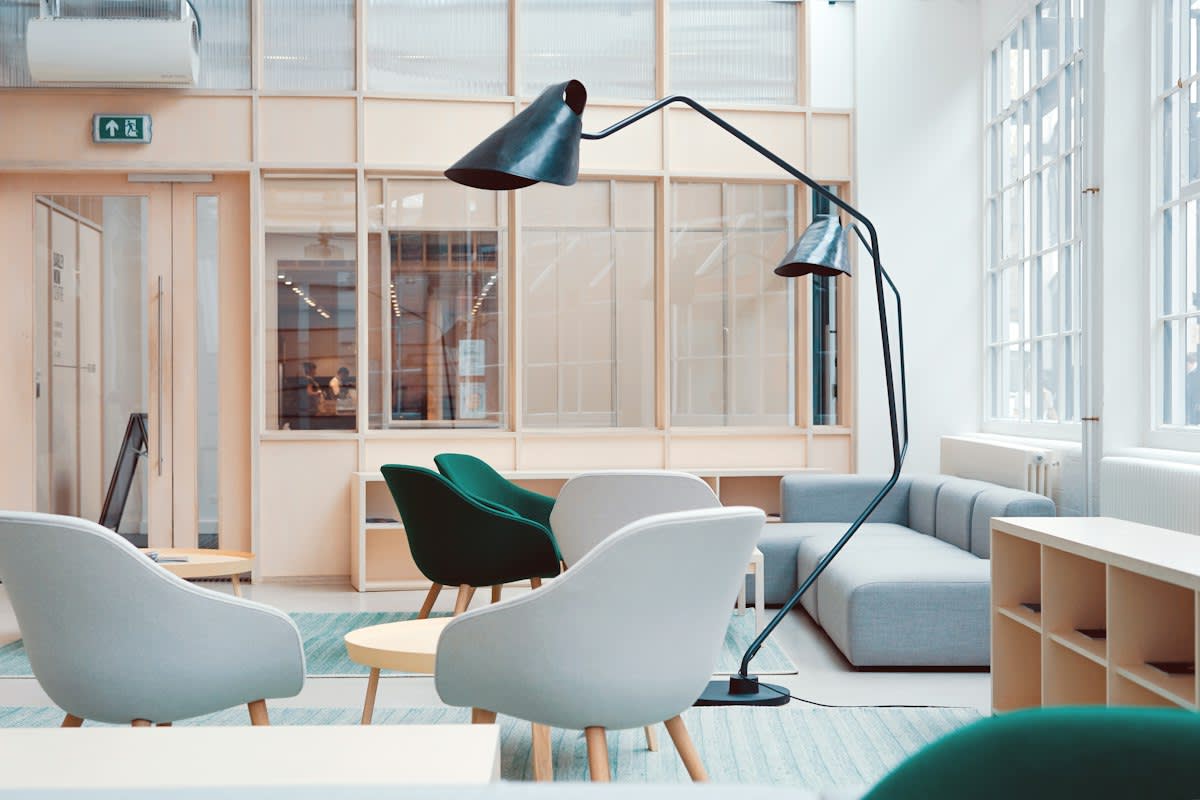
From Awareness to Accreditation
The delta between 2023 and 2026 is staggering. Three years ago, neurodiversity was largely a topic of HR 'awareness' workshops. Today, it is a matter of measurable standards. The introduction of the International Neuro-Inclusion Accreditation (INIA) framework marks this evolution. The INIA doesn't just suggest guidelines; it proposes a structured accreditation pathway that allows organizations to assess, implement, and demonstrate their neuro-inclusive practices (Source: INIA, 2026). This movement effectively reclassifies accessibility and participation as organizational responsibilities rather than individual challenges.
This systemic approach is backed by a growing body of evidence. For instance, the Neurodiversity Index Reports, published in March 2023 and March 2024, have provided the data necessary to move the conversation from anecdotal to empirical (Source: EPC, 2026). When experts like Amanda, a top UK HR thinker, publish frameworks on driving innovation and productivity through a neurodiverse workforce, the incentive shifts. Companies are realizing that an environment that works for an autistic person—one with clear communication and reduced sensory chaos—actually works better for everyone.
"INIA represents a novel approach to neuro-inclusion by positioning accessibility and participation as organizational responsibilities rather than individual challenges."— International Neuro-Inclusion Accreditation (INIA) Framework, 2026
However, the transition is not without its friction. For those of us operating on the ground, the internal debate is often between 'performative inclusion' and 'functional inclusion.' There is a tension in the industry regarding whether a Platinum badge actually translates to a better experience or if it simply creates a new checklist for consultants to follow. The real challenge lies in the invisible frictions—the way a flickering fluorescent light or an unplanned change in a schedule can completely derail a highly skilled professional's day. The debate among practitioners is no longer about if we should adapt, but how to measure the success of these adaptations beyond a certificate on the wall.
The Sensory Tax
To understand why this trend is accelerating, one must understand the 'sensory tax.' For many neurodivergent individuals, navigating a standard urban or corporate environment requires a massive expenditure of mental energy just to filter out irrelevant stimuli. Sally J. Pla, a neurodiversity advocate, describes this as 'sensory overwhelm,' a state where the brain is unable to prioritize information because everything—the hum of an AC unit, the scent of a colleague's perfume, the brightness of the lobby—hits with the same intensity (Source: Publishers Weekly, 2026). When a city or a building 'silences' these triggers, it effectively refunds that mental energy back to the person.

This realization is driving a new wave of engineering education. The Engineering Professors Council (EPC) is currently pushing for neuroinclusive engineering education, acknowledging that the very people capable of solving our most complex technical problems are often the ones most alienated by the environments in which they are taught (Source: EPC, 2026). By embedding neuro-inclusion into the framework of education, we are essentially preparing the next generation of architects and urban planners to build a world that doesn't require a 'sensory tax' to exist in.
| Metric | Traditional Inclusion (Pre-2023) | Neuro-Inclusive Framework (2026) |
|---|---|---|
| Responsibility | Individual (Adaptation/Therapy) | Organizational (Environmental Design) |
| Validation | Anecdotal/HR Policy | Third-Party Accreditation (e.g., INIA, EICC) |
| Focus | Awareness & Sensitivity | Measurable Indicators & Certification |
| Goal | Integration into Norms | Removal of Environmental Friction |
The move toward these frameworks is not merely a social grace; it is a strategic necessity. As the global talent war intensifies, the ability to attract and retain neurodivergent talent—who often bring exceptional skills in pattern recognition, deep focus, and innovative problem-solving—becomes a competitive advantage. The data from the Neurodiversity Index Reports suggests that when the environment is tuned to the individual, productivity and performance don't just stabilize; they accelerate (Source: EPC, 2026).
Fact-Check & Accuracy Note
The claims regarding Platinum accreditation for the NatWest Internal Audit Academy and the development of the INIA framework are sourced from EICC and the International Neuro-Inclusion Accreditation documentation (2026). The debate over 'measurable indicators' versus 'awareness initiatives' remains a central point of contention among EDI practitioners globally.
As we look forward, the goal is a seamless integration of these principles into the urban fabric. We are moving toward a world where 'silencing the city' is not a luxury for a few, but a standard for all. The success of the EICC's work in Edinburgh provides a blueprint for how this can be scaled from a single event to an entire district. When we stop asking neurodivergent people to mask their struggles and instead start asking our buildings to stop creating those struggles, we unlock a level of human potential that has been suppressed by noise for far too long.
Editorial Perspective
Editorial Note: This report highlights a shift in the paradigm of accessibility. The focus has moved from 'accommodation' (making a small exception) to 'universal design' (making the system work for everyone by default).